Guide
7 Historic Sites to Explore in Tulsa
By Emma Peters
Nicknamed the “Capital of Route 66,” Tulsa is home to 28 miles of the iconic highway. Neon signs and late-night diners glitter along the route, which runs through the city center.
Efforts to preserve the city’s architectural heritage date back to the 1960s and 1970s, when residents mobilized after the loss of several historic landmarks. In 1971, the University of Tulsa organized the Tulsa Landmarks Committee. In 1988, the Tulsa Preservation Commission was established to safeguard the city’s architectural and cultural heritage.
The National Trust for Historic Preservation supports this mission, helping to preserve the city’s landmarks and history. Next time you’re in Tulsa, consider visiting one of the historic sites listed below. If you’re interested in architecture and design, look to the Tulsa Foundation for Architecture for tours that showcase the city’s architectural legacy.
-
Stay connected with us via email. Sign up today.
-
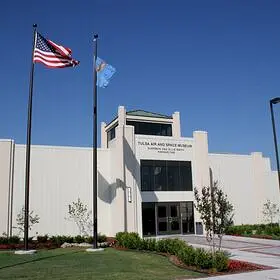
Photo By: Tulsaboy, Wikimedia Commons
Tulsa Air and Space Museum
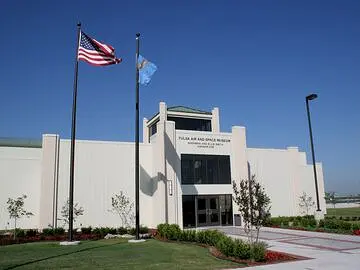
The Tulsa Air and Space Museum, a Preserve Route 66 grant recipient, was founded in 1998 to showcase the aviation history of Tulsa and to inspire science-based learning. In 2005, it moved to its current location on the property of Tulsa International Airport. In 2006, the museum opened its James E. Bertelsmeyer Planetarium. Today, visitors can explore the museum’s exhibits, catch a screening at the planetarium, and peruse the museum’s aircraft collection.
Learn More
-
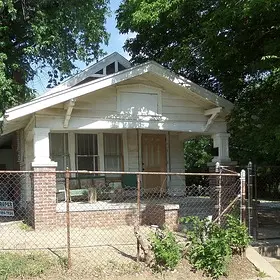
Photo By: TheDoctorWho, Wikimedia Commons
The Outsiders House Museum
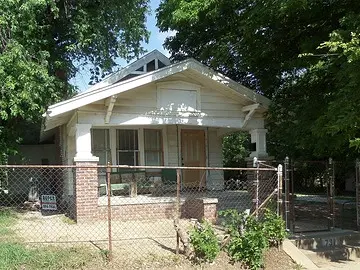
The Outsiders House Museum is located in the house that served as the primary filming location for “The Outsiders" (1983), based on the novel by Tulsa author S. E. Hinton. The site was purchased by hip-hop artist Danny Boy O’Connor, who sought to restore it and create a museum dedicated to the novel and film. In 2019, O’Connor, Hinton, and actor C. Thomas Howell formally opened the museum to the public. Today, visitors can explore the restored house and its artifacts.
Learn More
-
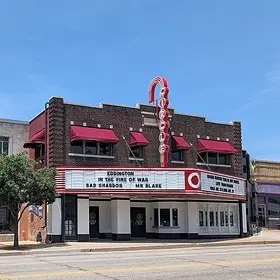
Photo By: Lorax, Wikimedia Commons
Circle Cinema
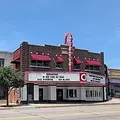
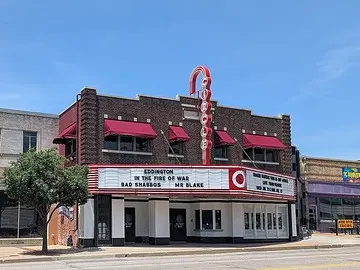
Circle Cinema originally opened in 1928 but closed in the 1990s due to economic decline. In 2002, the Circle Cinema Foundation was founded by Clark Wiens and George Kravis. They worked to revitalize the theater, which reopened to the public in 2004. Today, the site—a Preserve Route 66 grant recipient—operates as a nonprofit theater. In addition to its auditoriums, it also houses an art gallery and regularly hosts events for the community.
Learn More
-
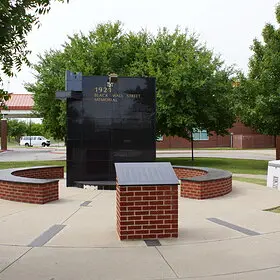
Photo By: Marc Carlson via Flickr CC By 2.0
Historic Greenwood District
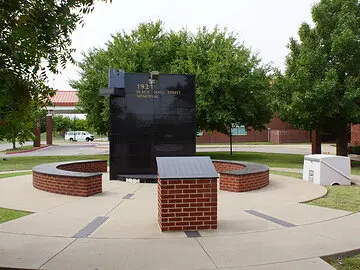
Also known as “Black Wall Street,” the Greenwood District was established in the early 1900s. A self-sufficient district, it had its own newspaper, businesses, medical offices, grocery stores, and schools. That changed in 1921, when white residents attacked the district in a coordinated effort, razing 35 city blocks. While reconstruction took place in 1922, most businesses closed in the decades that followed as a result of both desegregation and the construction of Interstate 244. Today, the district celebrates resilience and unity. Visitors can explore its many independent businesses and learn more about its history at the Greenwood Rising Black Wall Street History Center, a recipient of a Preserve Route 66 grant.
Learn More
-
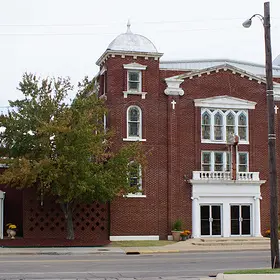
Photo By: Marc Carlson via Flickr CC-BY-2.0
Vernon A.M.E. Church
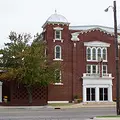
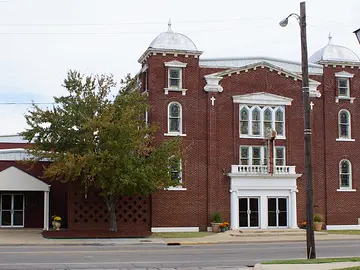
Located in the Historic Greenwood District, Vernon A.M.E. Church was founded in 1905. It is the only structure in the district that survived the 1921 Tulsa Race Massacre. An African American Cultural Heritage Fund grant recipient, the site is currently undergoing a renovation project to create the Vernon Witness Interpretive Center, which will house thousands of recovered artifacts and narratives showcasing the history of the district. While tours are temporarily paused due to renovation, visitors can view the church exterior or join its regular Sunday worship services.
Learn More
-
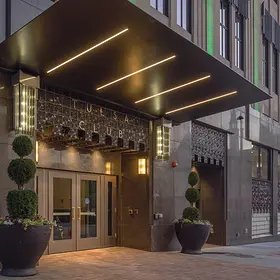
Photo By: Photitect
Tulsa Club
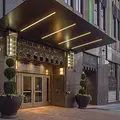
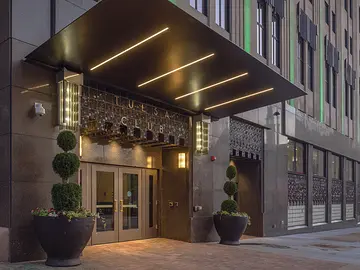
Designed by architect Bruce Goff, Tulsa Club opened in 1927. It provided recreational spaces for members in addition to practical services such as dormitories and a barbershop. It also housed the Tulsa Chamber of Commerce until the 1950s. However, membership declined over time, and in 1994 the club disbanded. In 2010, the city of Tulsa took ownership of the property. It was later purchased by new owners and reopened in 2019 as part of the Curio Collection by Hilton. Visitors are welcome to explore the Art Deco hotel’s public spaces.
Learn More
-
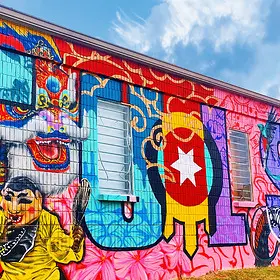
Photo By: Alejandro Garcia
Tulsa Global District
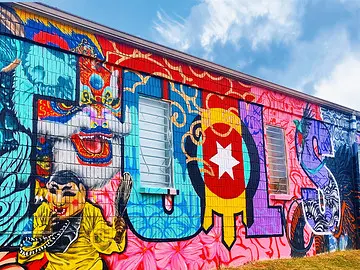
Established in 2020, Tulsa Global District is a nonprofit organization and a Main Street America program that works to revitalize the city’s international district. A multicultural hub representing the languages and cultures of more than 25 countries, the district—long undervalued—is now a thriving community. Today, Tulsa Global District houses independent businesses, murals, and public art. It also hosts a suite of seasonal events, including festivals, movie screenings, and a night market.
Learn More
Stay connected with us via email. Sign up today.
Emma Peters is an associate manager at the National Trust for Historic Preservation. A history graduate, she is constantly humbled by the ways past lives and societies have shaped how we experience the present.
7 Historic Sites to Explore in Tulsa
-
1
Tulsa Air and Space Museum
The Tulsa Air and Space Museum, a Preserve Route 66 grant recipient, was founded in 1998 to showcase the aviation history of Tulsa and to inspire science-based learning. In 2005, it moved to its current location on the property of Tulsa International Airport. In 2006, the museum opened its James E. Bertelsmeyer Planetarium. Today, visitors can explore the museum’s exhibits, catch a screening at the planetarium, and peruse the museum’s aircraft collection. -
2
The Outsiders House Museum
The Outsiders House Museum is located in the house that served as the primary filming location for “The Outsiders" (1983), based on the novel by Tulsa author S. E. Hinton. The site was purchased by hip-hop artist Danny Boy O’Connor, who sought to restore it and create a museum dedicated to the novel and film. In 2019, O’Connor, Hinton, and actor C. Thomas Howell formally opened the museum to the public. Today, visitors can explore the restored house and its artifacts. -
3
Circle Cinema
Circle Cinema originally opened in 1928 but closed in the 1990s due to economic decline. In 2002, the Circle Cinema Foundation was founded by Clark Wiens and George Kravis. They worked to revitalize the theater, which reopened to the public in 2004. Today, the site—a Preserve Route 66 grant recipient—operates as a nonprofit theater. In addition to its auditoriums, it also houses an art gallery and regularly hosts events for the community. -
4
Historic Greenwood District
Also known as “Black Wall Street,” the Greenwood District was established in the early 1900s. A self-sufficient district, it had its own newspaper, businesses, medical offices, grocery stores, and schools. That changed in 1921, when white residents attacked the district in a coordinated effort, razing 35 city blocks. While reconstruction took place in 1922, most businesses closed in the decades that followed as a result of both desegregation and the construction of Interstate 244. Today, the district celebrates resilience and unity. Visitors can explore its many independent businesses and learn more about its history at the Greenwood Rising Black Wall Street History Center, a recipient of a Preserve Route 66 grant. -
5
Vernon A.M.E. Church
Located in the Historic Greenwood District, Vernon A.M.E. Church was founded in 1905. It is the only structure in the district that survived the 1921 Tulsa Race Massacre. An African American Cultural Heritage Fund grant recipient, the site is currently undergoing a renovation project to create the Vernon Witness Interpretive Center, which will house thousands of recovered artifacts and narratives showcasing the history of the district. While tours are temporarily paused due to renovation, visitors can view the church exterior or join its regular Sunday worship services. -
6
Tulsa Club
Designed by architect Bruce Goff, Tulsa Club opened in 1927. It provided recreational spaces for members in addition to practical services such as dormitories and a barbershop. It also housed the Tulsa Chamber of Commerce until the 1950s. However, membership declined over time, and in 1994 the club disbanded. In 2010, the city of Tulsa took ownership of the property. It was later purchased by new owners and reopened in 2019 as part of the Curio Collection by Hilton. Visitors are welcome to explore the Art Deco hotel’s public spaces. -
7

Tulsa Global District
Established in 2020, Tulsa Global District is a nonprofit organization and a Main Street America program that works to revitalize the city’s international district. A multicultural hub representing the languages and cultures of more than 25 countries, the district—long undervalued—is now a thriving community. Today, Tulsa Global District houses independent businesses, murals, and public art. It also hosts a suite of seasonal events, including festivals, movie screenings, and a night market.
-
1
Tulsa Air and Space Museum
The Tulsa Air and Space Museum, a Preserve Route 66 grant recipient, was founded in 1998 to showcase the aviation history of Tulsa and to inspire science-based learning. In 2005, it moved to its current location on the property of Tulsa International Airport. In 2006, the museum opened its James E. Bertelsmeyer Planetarium. Today, visitors can explore the museum’s exhibits, catch a screening at the planetarium, and peruse the museum’s aircraft collection. -
2
The Outsiders House Museum
The Outsiders House Museum is located in the house that served as the primary filming location for “The Outsiders" (1983), based on the novel by Tulsa author S. E. Hinton. The site was purchased by hip-hop artist Danny Boy O’Connor, who sought to restore it and create a museum dedicated to the novel and film. In 2019, O’Connor, Hinton, and actor C. Thomas Howell formally opened the museum to the public. Today, visitors can explore the restored house and its artifacts. -
3
Circle Cinema
Circle Cinema originally opened in 1928 but closed in the 1990s due to economic decline. In 2002, the Circle Cinema Foundation was founded by Clark Wiens and George Kravis. They worked to revitalize the theater, which reopened to the public in 2004. Today, the site—a Preserve Route 66 grant recipient—operates as a nonprofit theater. In addition to its auditoriums, it also houses an art gallery and regularly hosts events for the community. -
4
Historic Greenwood District
Also known as “Black Wall Street,” the Greenwood District was established in the early 1900s. A self-sufficient district, it had its own newspaper, businesses, medical offices, grocery stores, and schools. That changed in 1921, when white residents attacked the district in a coordinated effort, razing 35 city blocks. While reconstruction took place in 1922, most businesses closed in the decades that followed as a result of both desegregation and the construction of Interstate 244. Today, the district celebrates resilience and unity. Visitors can explore its many independent businesses and learn more about its history at the Greenwood Rising Black Wall Street History Center, a recipient of a Preserve Route 66 grant. -
5
Vernon A.M.E. Church
Located in the Historic Greenwood District, Vernon A.M.E. Church was founded in 1905. It is the only structure in the district that survived the 1921 Tulsa Race Massacre. An African American Cultural Heritage Fund grant recipient, the site is currently undergoing a renovation project to create the Vernon Witness Interpretive Center, which will house thousands of recovered artifacts and narratives showcasing the history of the district. While tours are temporarily paused due to renovation, visitors can view the church exterior or join its regular Sunday worship services. -
6
Tulsa Club
Designed by architect Bruce Goff, Tulsa Club opened in 1927. It provided recreational spaces for members in addition to practical services such as dormitories and a barbershop. It also housed the Tulsa Chamber of Commerce until the 1950s. However, membership declined over time, and in 1994 the club disbanded. In 2010, the city of Tulsa took ownership of the property. It was later purchased by new owners and reopened in 2019 as part of the Curio Collection by Hilton. Visitors are welcome to explore the Art Deco hotel’s public spaces. -
7
Tulsa Global District
Established in 2020, Tulsa Global District is a nonprofit organization and a Main Street America program that works to revitalize the city’s international district. A multicultural hub representing the languages and cultures of more than 25 countries, the district—long undervalued—is now a thriving community. Today, Tulsa Global District houses independent businesses, murals, and public art. It also hosts a suite of seasonal events, including festivals, movie screenings, and a night market.