Guide
8 Preservation Projects Helping to Expand Education
By Madelyn Livingtson
Across the country, historic buildings of all kinds, from former factories and warehouses to historic school buildings, are being revitalized to provide critical educational opportunities to students in their communities. With funding support from the National Trust Community Investment Corporation (NTCIC), a member of the National Trust family of companies, these preservation projects have helped transform often neglected historic places into dynamic spaces for learning, creating new opportunities for students nationwide.
Over the last 26 years, NTCIC has facilitated $312 million in funding for buildings supporting primary and post-secondary education. From Head Start preschool programs and renowned charter schools to iconic college campuses, these investments are helping to shape the lives of our future generations. Take a look at the map to explore just a handful of impactful education projects supported by NTCIC.
-
Stay connected with us via email. Sign up today.
-
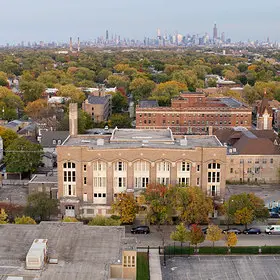
The Field School (Chicago, Illinois)
Built in 1907, the Francis Scott Key Public School served Chicago’s South Austin neighborhood for more than a century before sitting vacant for decades. It is now the Field School, an independent elementary school helping to meet the needs of low-income students on Chicago’s West Side by providing rigorous and holistic education with a strong emphasis on arts programming, family engagement, and community revitalization for 400 local students.
Learn More
-
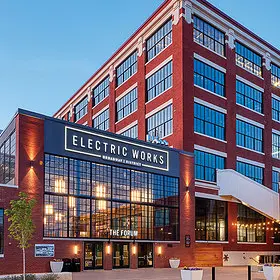
Electric Works (Fort Wayne, Indiana)
Fort Wayne’s Electric Works transformed the former General Electric campus into a lively 730,000+ square foot innovation district. A true live, work, play campus, Electric Works is now the global headquarters of Do It Best, as well as a variety of healthcare resources, housing, food and retail options, a school, and more. The AMP Lab at Electric Works is a half-day high school for 11th and 12th grade students, helping to bring learning to life through hands-on, real-world experiences.
Learn More
-
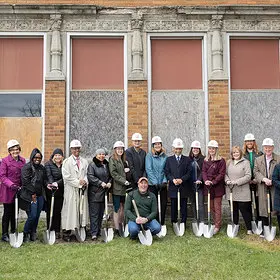
Webster Community Center (Pontiac, Michigan)
Opened in 1921 as the Webster School, the building served the Pontiac, Michigan community for nearly a century before closing. It is now the Webster Community Center, bringing a variety of critical community resources, including healthcare, childcare, and educational opportunities to this historically underserved community. In addition to housing a free Head Start preschool led by the Oakland-Livingston Human Services agency, the center is also home to Accent Pontiac, a free music education nonprofit for children, and FIRST Robotics, a STEM-focused, hands-on robotics learning program.
Learn More
-
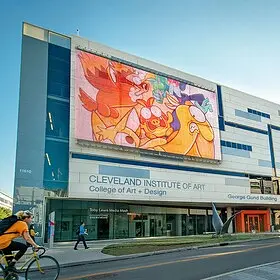
Cleveland Institute of Art (Cleveland, Ohio)
Once a Ford assembly plant, the Center gives young artists, designers, filmmakers, photographers, and coders a unique, adaptable space to hone their crafts. The 250,000 square foot space, owned by the Cleveland Institute of Art, has been a catalyst for its burgeoning neighborhood, now being called “Uptown.” The revitalized space has also allowed the school to strengthen its admissions and nearly double the number of students it can support.
Learn More
-
Provident Health (Philadelphia, Pennsylvania)
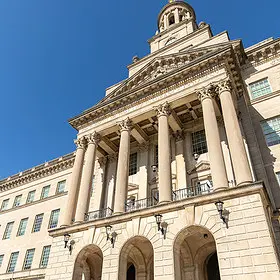
Provident Health Campus, located in the former Provident Mutual Life Insurance Company of Philadelphia building in West Philadelphia, is an integrated center that provides health, social, and educational services to the community. In an area that previously lacked adequate access to schools serving kindergarten through fourth grade, the project is now home to KIPP Philadelphia Octavius Catto Elementary, a 400-student charter school.
Learn More
-
KIPP Durham (Durham, North Carolina)
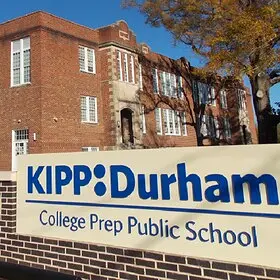
KIPP Durham Charter School opened in 2016 at the renovated former Holloway Street School. Serving roughly 600 sixth through eighth grade students, the school has given neighborhood children better access to local, high-quality educational opportunities. The school has also generated around 75 full-time and part-time jobs, making it a catalyst for growth and change in a historically underinvested community.
Learn More
-
Cristo Rey (Charleston, South Carolina)
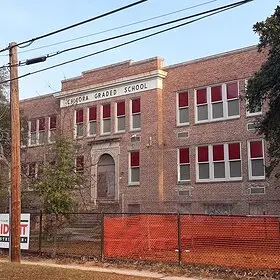
Opened in 1935, the former Chicora Graded School will be rehabilitated into Cristo Rey, a college preparatory high school serving exclusively low-income students from the greater Charleston region. The school combines rigorous college preparatory coursework with a corporate work study model that allows students to gain real‑world professional experience while offsetting the cost of tuition. Ultimately, this school model creates an education environment intentionally structured to expand access to opportunities for underserved families.
Learn More
-
Crosstown Concourse (Memphis, Tennessee)
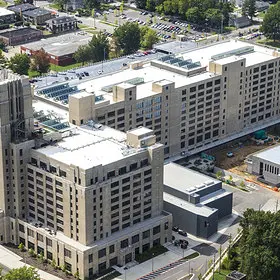
After sitting vacant for over 20 years, 1 million square feet of Memphis’ historic Sears Roebuck distribution center and store were revitalized to create a mixed-use vertical urban village with roots in arts, education, and healthcare. Crosstown Concourse’s scale and versatility have made it the perfect home for Crosstown High, a public charter high school, as well as several educational organizations, including Teach for America and the Memphis Education Fund.
Learn More
Stay connected with us via email. Sign up today.
The National Trust Community Investment Corporation (NTCIC), a subsidiary of the National Trust for Historic Preservation, is a mission-driven, impact investment asset management firm focused on the adaptive reuse of historic properties and renewable energy solutions across the country. Founded in 2000, NTCIC makes transformational impact investments in low-income & disinvested communities, promoting a brighter, more equitable future by revitalizing historic properties and expanding our nation’s renewable energy accessibility through innovative community development & tax credit investment strategies.
Madelyn Livingston is the marketing coordinator for NTCIC, a subsidiary of the National Trust for Historic Preservation.
8 Preservation Projects Helping to Expand Education
-
1
The Field School (Chicago, Illinois)
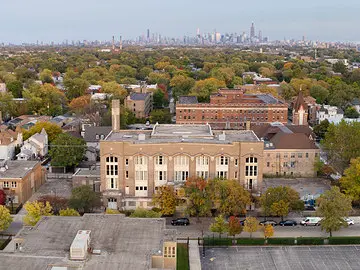
Built in 1907, the Francis Scott Key Public School served Chicago’s South Austin neighborhood for more than a century before sitting vacant for decades. It is now the Field School, an independent elementary school helping to meet the needs of low-income students on Chicago’s West Side by providing rigorous and holistic education with a strong emphasis on arts programming, family engagement, and community revitalization for 400 local students. -
2
Electric Works (Fort Wayne, Indiana)
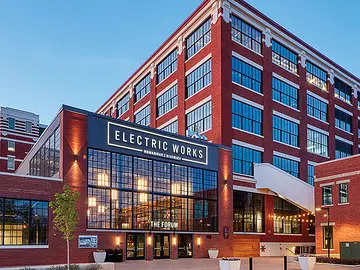
Fort Wayne’s Electric Works transformed the former General Electric campus into a lively 730,000+ square foot innovation district. A true live, work, play campus, Electric Works is now the global headquarters of Do It Best, as well as a variety of healthcare resources, housing, food and retail options, a school, and more. The AMP Lab at Electric Works is a half-day high school for 11th and 12th grade students, helping to bring learning to life through hands-on, real-world experiences. -
3
Webster Community Center (Pontiac, Michigan)
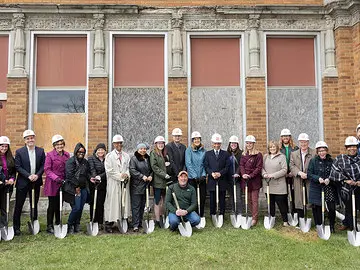
Opened in 1921 as the Webster School, the building served the Pontiac, Michigan community for nearly a century before closing. It is now the Webster Community Center, bringing a variety of critical community resources, including healthcare, childcare, and educational opportunities to this historically underserved community. In addition to housing a free Head Start preschool led by the Oakland-Livingston Human Services agency, the center is also home to Accent Pontiac, a free music education nonprofit for children, and FIRST Robotics, a STEM-focused, hands-on robotics learning program. -
4
Cleveland Institute of Art (Cleveland, Ohio)
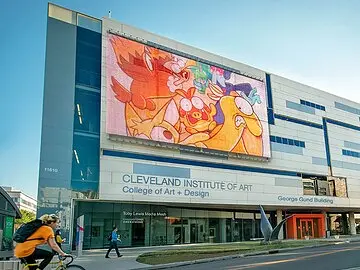
Once a Ford assembly plant, the Center gives young artists, designers, filmmakers, photographers, and coders a unique, adaptable space to hone their crafts. The 250,000 square foot space, owned by the Cleveland Institute of Art, has been a catalyst for its burgeoning neighborhood, now being called “Uptown.” The revitalized space has also allowed the school to strengthen its admissions and nearly double the number of students it can support. -
5
Provident Health (Philadelphia, Pennsylvania)
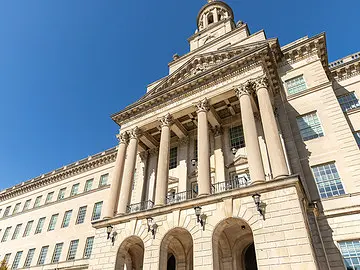
Provident Health Campus, located in the former Provident Mutual Life Insurance Company of Philadelphia building in West Philadelphia, is an integrated center that provides health, social, and educational services to the community. In an area that previously lacked adequate access to schools serving kindergarten through fourth grade, the project is now home to KIPP Philadelphia Octavius Catto Elementary, a 400-student charter school. -
6
KIPP Durham (Durham, North Carolina)
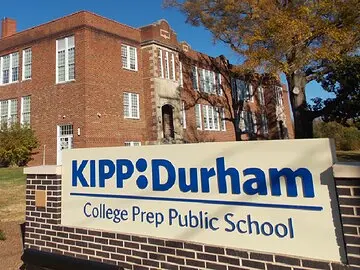
KIPP Durham Charter School opened in 2016 at the renovated former Holloway Street School. Serving roughly 600 sixth through eighth grade students, the school has given neighborhood children better access to local, high-quality educational opportunities. The school has also generated around 75 full-time and part-time jobs, making it a catalyst for growth and change in a historically underinvested community. -
7
Cristo Rey (Charleston, South Carolina)
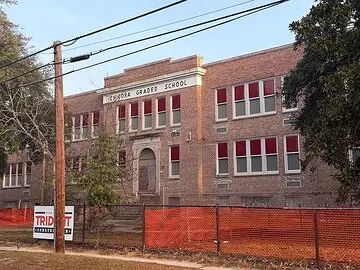
Opened in 1935, the former Chicora Graded School will be rehabilitated into Cristo Rey, a college preparatory high school serving exclusively low-income students from the greater Charleston region. The school combines rigorous college preparatory coursework with a corporate work study model that allows students to gain real‑world professional experience while offsetting the cost of tuition. Ultimately, this school model creates an education environment intentionally structured to expand access to opportunities for underserved families. -
8
Crosstown Concourse (Memphis, Tennessee)
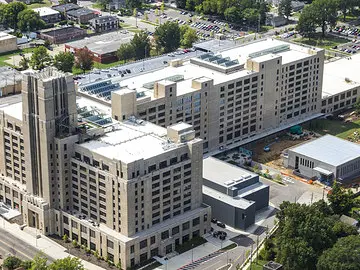
After sitting vacant for over 20 years, 1 million square feet of Memphis’ historic Sears Roebuck distribution center and store were revitalized to create a mixed-use vertical urban village with roots in arts, education, and healthcare. Crosstown Concourse’s scale and versatility have made it the perfect home for Crosstown High, a public charter high school, as well as several educational organizations, including Teach for America and the Memphis Education Fund.
-
1
The Field School (Chicago, Illinois)
Built in 1907, the Francis Scott Key Public School served Chicago’s South Austin neighborhood for more than a century before sitting vacant for decades. It is now the Field School, an independent elementary school helping to meet the needs of low-income students on Chicago’s West Side by providing rigorous and holistic education with a strong emphasis on arts programming, family engagement, and community revitalization for 400 local students. -
2
Electric Works (Fort Wayne, Indiana)
Fort Wayne’s Electric Works transformed the former General Electric campus into a lively 730,000+ square foot innovation district. A true live, work, play campus, Electric Works is now the global headquarters of Do It Best, as well as a variety of healthcare resources, housing, food and retail options, a school, and more. The AMP Lab at Electric Works is a half-day high school for 11th and 12th grade students, helping to bring learning to life through hands-on, real-world experiences. -
3
Webster Community Center (Pontiac, Michigan)
Opened in 1921 as the Webster School, the building served the Pontiac, Michigan community for nearly a century before closing. It is now the Webster Community Center, bringing a variety of critical community resources, including healthcare, childcare, and educational opportunities to this historically underserved community. In addition to housing a free Head Start preschool led by the Oakland-Livingston Human Services agency, the center is also home to Accent Pontiac, a free music education nonprofit for children, and FIRST Robotics, a STEM-focused, hands-on robotics learning program. -
4
Cleveland Institute of Art (Cleveland, Ohio)
Once a Ford assembly plant, the Center gives young artists, designers, filmmakers, photographers, and coders a unique, adaptable space to hone their crafts. The 250,000 square foot space, owned by the Cleveland Institute of Art, has been a catalyst for its burgeoning neighborhood, now being called “Uptown.” The revitalized space has also allowed the school to strengthen its admissions and nearly double the number of students it can support. -
5
Provident Health (Philadelphia, Pennsylvania)
Provident Health Campus, located in the former Provident Mutual Life Insurance Company of Philadelphia building in West Philadelphia, is an integrated center that provides health, social, and educational services to the community. In an area that previously lacked adequate access to schools serving kindergarten through fourth grade, the project is now home to KIPP Philadelphia Octavius Catto Elementary, a 400-student charter school. -
6
KIPP Durham (Durham, North Carolina)
KIPP Durham Charter School opened in 2016 at the renovated former Holloway Street School. Serving roughly 600 sixth through eighth grade students, the school has given neighborhood children better access to local, high-quality educational opportunities. The school has also generated around 75 full-time and part-time jobs, making it a catalyst for growth and change in a historically underinvested community. -
7
Cristo Rey (Charleston, South Carolina)
Opened in 1935, the former Chicora Graded School will be rehabilitated into Cristo Rey, a college preparatory high school serving exclusively low-income students from the greater Charleston region. The school combines rigorous college preparatory coursework with a corporate work study model that allows students to gain real‑world professional experience while offsetting the cost of tuition. Ultimately, this school model creates an education environment intentionally structured to expand access to opportunities for underserved families. -
8
Crosstown Concourse (Memphis, Tennessee)
After sitting vacant for over 20 years, 1 million square feet of Memphis’ historic Sears Roebuck distribution center and store were revitalized to create a mixed-use vertical urban village with roots in arts, education, and healthcare. Crosstown Concourse’s scale and versatility have made it the perfect home for Crosstown High, a public charter high school, as well as several educational organizations, including Teach for America and the Memphis Education Fund.