White House Ballroom Proposal
East Wing Modernization
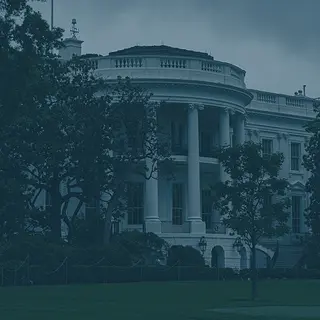
The White House is more than a residence or workplace. It is a National Historic Landmark and National Park, owned by the American people and stewarded by the National Park Service. Home to every U.S. president since 1800, it is perhaps the most significant historic site in the country. When nationally significant places are permanently altered, the public has the right to be heard and to help shape decisions that affect our shared national heritage.
Federal law exists to ensure that right. Before new construction takes place at the White House, the government is required to complete a series of legally mandated reviews — reviews designed to ensure transparency, accountability, and meaningful public participation:
- The National Capital Planning Commission (NCPC) holds review authority over new construction on federal properties in the capital region, including the White House.
- The U.S. Commission of Fine Arts (CFA) provides advisory review before new construction takes place at the White House.
- Congress must expressly authorize the erection of any building on federal land in the District of Columbia before it can proceed.
- Projects must also comply with the National Environmental Policy Act (NEPA)
These are not bureaucratic formalities. They are safeguards — hard-won protections that give the American public a voice in decisions that shape our shared national heritage.
On December 12, 2025, the National Trust filed suit in the US District Court for the District of Columbia against various individuals and agencies of the government asserting that ongoing construction of the White House ballroom is unlawful and asking the court to halt further construction activities until the government complies with the law by going through the legally mandated review processes, including a public comment period.
On August 7, 2026, the United States Court of Appeals for the D.C. Circuit upheld the District Court’s preliminary injunction which, although stayed for 14-days, blocks above-ground construction on the Ballroom unless and until Congress takes action.
In response to a U.S. Supreme Court ruling on August 31, National Trust for Historic Preservation President and CEO Brent Leggs stated: “We are deeply disappointed in the Supreme Court’s ruling today and respectfully disagree with the majority’s opinion on standing. It is noteworthy that the majority did not weigh in on whether the ballroom project was in fact legal."
National Capital Planning Commission (NCPC)
- East Wing modernization and ballroom addition were on the NCPC meeting agenda on April 2, with a vote by the commission. Materials are available on the NCPC website.
- More than 32,000 public comments were submitted to NCPC before a March 5 meeting—setting a record—and approximately 98% of the comments were critical of the proposal.
U.S. Commission of Fine Arts (CFA)
- East Wing modernization and ballroom addition were on the agenda for the February 19 meeting. Materials for this meeting including submitted documents are available on the CFA website.
- CFA received 2,000 public comments—setting a record—and 99% of the comments were critical of the proposal.
Crucial Insights and Viable Alternatives for a More Sensitive White House Ballroom
Recorded February 25, 2026. Featuring National Trust trustees and fellows of The American Institute of Architects, David Scott Parker and Bill Bates, who share design modifications to protect the carefully balanced classical design of the White House. The conversation was facilitated by Tom Mayes, the chief legal officer of the National Trust for Historic Preservation.
Download the comments submitted by David Scott Parker, FAIA to U.S. Commission of Fine Arts.
Stay connected with us via email. Sign up today.
Related Documents and Resources
Go to ResourcesWhite House Ballroom Frequently Asked Questions
Go to FAQ