An Island Home With a Colorful and Complicated Past: Sylvester Manor Farm’s Rich History
Three hours from Manhattan and just north of the Hamptons sits Shelter Island, an island town in Suffolk County, New York. The island was acquired in the 17th century by English colonist Nathaniel Sylvester, whose impact and legacy would touch all 8,000 acres, international borders, and history itself.
The island was inhabited by the indigenous Manhanssett people for at least a thousand years until Englishman James Farrett became the first white man to touch the land in 1638. He was on a mission from Sir William Alexander, Earl of Stirling, who’d acquired large grants of land in the New World from King James I of England. Farrett negotiated with the Manhasset people for the island, which became known as “Mr. Farrett’s Island.”
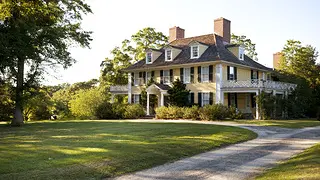
photo by: Steve Gross and Susan Daley
Sylvester Manor Farm in Shelter Island, New York received a grant from the National Trust's African American Cultural Heritage Action Fund in 2025.
Three years later, Farrett sold the land to a New Haven merchant named Stephen Goodyear (subsequently turning it into “Mr. Goodyear’s Island”) and a decade later, the island landed in the hands of four sugar merchants: Thomas Middleton, Thomas Rouse, Constant Sylvester, and Nathaniel Sylvester.
Nathaniel Sylvester decided to make Shelter Island his home base and built a home not too far from the current location of Sylvester Manor, a historic site that received a grant from the African American Cultural Heritage Action Fund’s National Grant Program in 2025.
From there, the Sylvester family prospered. The present-day manor was built by Nathaniel’s grandson Brinley in 1737 and became the home of eleven generations of Nathaniel’s descendants, helping to build Shelter Island’s broader community along the way.
“They were leading patriots during the Revolution,” Donnamarie Barnes, Sylvester Manor’s Director of History and Heritage, explained. “They were instrumental in town, from governing to cultural aspects.”
But the manor wasn’t just home for the Sylvesters. It was also home to enslaved Africans and indentured Native and European laborers. At the time of Nathaniel’s death in 1680, his will contained 23 pieces of “human property,” which made the manor one of the largest slaveholding sites on Long Island.
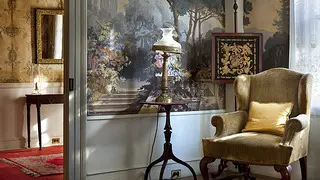
photo by: Steve Gross and Susan Daley
Interior photo of the Sylvester Manor house.
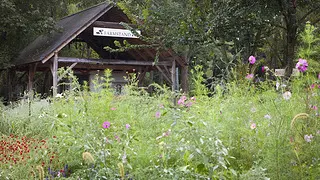
photo by: Steve Gross and Susan Daley
The Sylvester Manor barn in the property's farmland.
Sylvester Manor was a provisional plantation for the family’s sugar plantation in Barbados. Where their Caribbean plantation was devoted solely to sugar production, the New York manor and plantation provided crops, livestock, and lumber to feed those working on the site.
Some formerly enslaved Black people who’d been brought up on the New York plantation—like Julia Johnson, a free mixed-race woman who worked as a housekeeper at the manor—were able to buy land from the family for their own use. After Johnson's death in 1906, she was laid to rest in Afro-Indigenous burial grounds in an unmarked grave despite living and working on the land for nearly a century. Today, the burial grounds are open for visitation. Through a partnership with the UMass Boston Fiske Center of Archaeological Research, they are currently being archaeologically examined using ground-penetrating radar technology to learn more about the manor’s colorful history along racial lines.
The site's Action Fund grant is supporting additional work at the manor house itself, where its attic preservation project is working to further explore the material culture and craftsmanship of the enslaved Black people who lived there.
"The manor is engaged in a program of telling a dark yet complicated history,” Nedra Lee, an associate professor of anthropology at UMass Boston, said. “And complicated doesn’t come with a set of simplistic value judgments of good or bad.” She pointed out that the story of Sylvester Manor is a microcosm of the United States—that is, the ideological pluralism that's built the nation into what it is.
"Pluralism doesn't mean that you pick one story over another," Lee said. "It means that you make room for multiple stories, multiple truths, to exist in one place."
In 2010, the manor was turned into a 501(c)3 nonprofit organization, and today the site boasts a large organic farm, educational and cultural programs, public tours, and partnerships with colleges and universities in the U.S. and Barbados.
Save Historic Places That Tell Our Full American Story
When you join the National Trust, you help save historic and culturally significant places nationwide.
