Guide
13 Remarkable Historic Artists' Homes and Studios to Spark Your Imagination
By Kat LoPalo
In 2026 the Historic Artists' Homes and Studios (HAHS), a program of the National Trust for Historic Preservation, added 13 new member sites to its coalition, comprising six full members and seven affiliate members. The announcement, timed to coincide with National Preservation Month, brings the total number of HAHS member sites to 93, spanning 32 states.
As a peer-to-peer coalition of museums, HAHS brings together sites that were the homes and working studios of significant American artists, leveraging collective experience in historic preservation, visitor programming, and community engagement.
The 2026 class reflects the breadth and depth of American artistic practice across more than two centuries. The new sites span the South, Northeast, West, and Southwest, and represent painting, sculpture, ceramics, and furniture making. These additions deepen a coalition that continues to grow in geographic reach, cultural representation, and artistic range.
-
Stay connected with us via email. Sign up today.
-
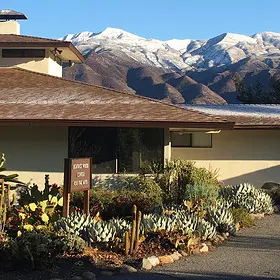
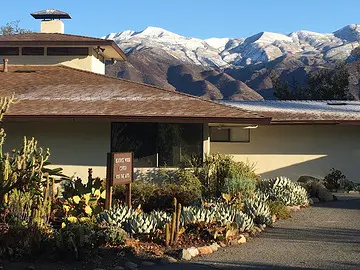
Photo By: Beatrice Wood Center for the Arts
Beatrice Wood Center for the Arts (Ojai, California)
Full Member: The Beatrice Wood Center preserves the studio and legacy of ceramicist Beatrice Wood (1893-1998), a central figure in the New York Dada movement whose luminous lusterware glazes earned her recognition as a California Living Treasure and Esteemed American Artist by the Smithsonian. She lived and worked in Ojai’s Happy Valley until her death at 105. The center presents exhibitions, workshops, and programs rooted in her artistic and philosophical legacy.
Learn More
-
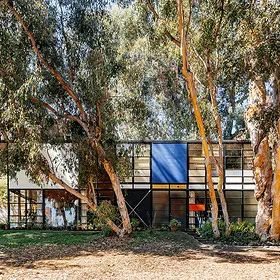
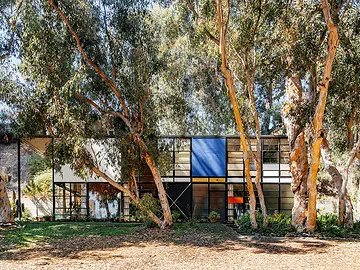
Photo By: Photograph by Ramin Kohanteb © 2025 Eames Office, LLC. All rights reserved.
Charles & Ray Eames Foundation (Los Angeles, California)
Full Member: The Eames House (Case Study House No. 8), designed and built in 1949 by Charles (1907-1978) and Ray Eames (1912-1988), is a National Historic Landmark and celebrated work of postwar architecture embodying the couple’s pioneering use of prefabricated industrial materials. The Charles & Ray Eames Foundation is dedicated to preserving the house for future generations while stewarding the Eameses’ broader legacy across design, architecture, and culture.
Learn More
-
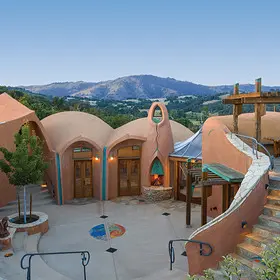
Photo By: ©JohnDurant/Ilan-Lael Foundation
Ilan-Lael: James Hubbell Home and Studio (Julian, California)
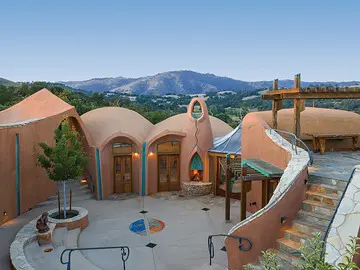
Full Member: Ilan-Lael is the hand-built compound of artist James Hubbell (1931-2024), whose organic architecture, mosaics, stained glass, and ironwork grace hundreds of spaces across Southern California and the Pacific Rim. Over six decades, Hubbell and his wife Anne constructed thirteen structures on ten acres of oak woodland east of San Diego, creating an environment where art, architecture, and nature merge. The Ilan-Lael Foundation stewards the property and continues educational programming in his spirit.
Learn More
-
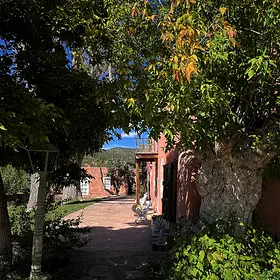
Photo By: Judy Kohn
Randall Davey Audubon Center and Sanctuary (Santa Fe, New Mexico)
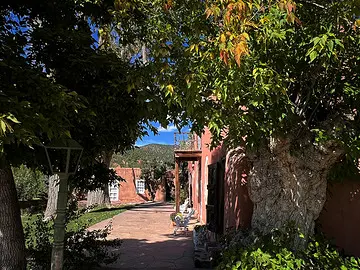
Affiliate Member: The Randall Davey Audubon Center and Sanctuary encompasses 135 acres of canyon landscape on the edge of Santa Fe, centered on the home and studio of painter Randall Davey (1887-1964), a leading figure of the Santa Fe Art Colony. In 1920, Davey converted an 1847 Army sawmill into his studio and residence. Listed on the National Register and gifted to the National Audubon Society in 1983, the property functions today as both wildlife sanctuary and preserved artists’ site.
Learn More
-
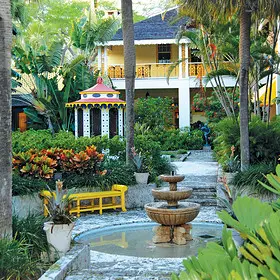
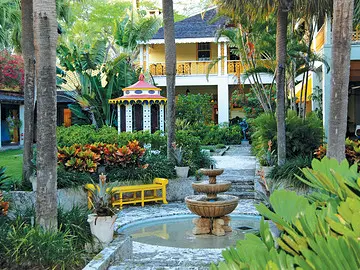
Photo By: Sandy Dolan/Bonnet House Museum & Gardens
Bonnet House (Fort Lauderdale, Florida)
Full Member: Built beginning in 1920, Bonnet House was the winter retreat of Chicago artists Frederic Clay Bartlett (1873-1953) and Evelyn Fortune Bartlett (1878-1997), who filled the estate with their paintings and objects gathered from travels worldwide. Frederic designed the whimsical plantation-style home himself and painted murals throughout its interiors. The 35-acre estate on Fort Lauderdale Beach is listed on the National Register of Historic Places and operates today as a museum and gardens.
Learn More
-
.webp)
Photo By: North Carolina Historic Sites.
Thomas Day Historic Site (Milton, North Carolina)
Affiliate Member: The Thomas Day Historic Site preserves the home and workshop of Thomas Day (c. 1801-1861), a free Black master cabinetmaker who became the largest furniture maker in North Carolina by 1850. Day’s work blends Greek Revival, Gothic, and Italianate influences with elements reflecting his cultural heritage and can be found throughout the Virginia and North Carolina Piedmont. The site tells the story of his life and craft within the broader history of free Black life in the antebellum South.
Learn More
-
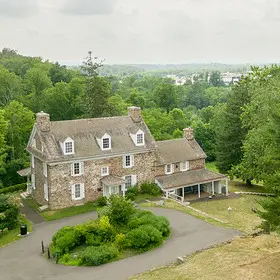
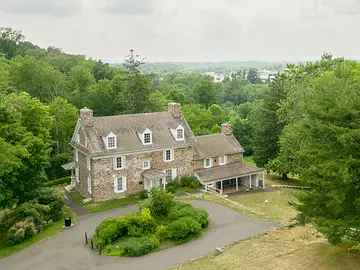
Photo By: Sydney Walsh
John James Audubon Center at Mill Grove (Audubon, Pennsylvania)
Affiliate Member: Mill Grove is a National Historic Landmark and the first American home of painter and naturalist John James Audubon (1785-1851), who arrived at the 175-acre Pennsylvania estate in 1803 and developed there the methods that would produce The Birds of America. Managed today by Audubon Mid-Atlantic, the property operates as a museum, wildlife sanctuary, and conservation action center.
Learn More
-
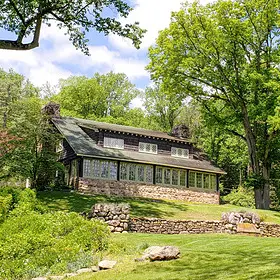
Photo By: Stickley Museum at Craftsman Farms.
The Stickley Museum at Craftsman Farms (Morris Plains, New Jersey)
Full Member: Craftsman Farms was designed and built between 1908 and 1917 by Gustav Stickley (1858-1942), defining figure of the American Arts and Crafts movement. The centerpiece of this 30-acre National Historic Landmark is Stickley’s Log House, the most complete expression of his philosophy of building in harmony with nature. The Stickley Museum preserves the site with original Craftsman furniture, textiles, ceramics, and metalwork.
Learn More
-
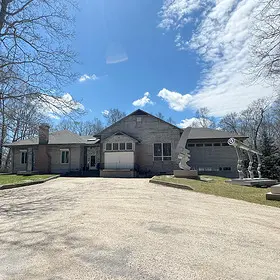
Photo By: Strong-Cuevas Sculpture Foundation.
Elizabeth Strong-Cuevas Foundation (East Hampton, New York)
Affiliate Member: The Elizabeth Strong-Cuevas Foundation preserves the studio and legacy of sculptor Elizabeth Strong-Cuevas (1929-2023), known for monumental stainless steel and bronze sculptures drawing on ancient Egyptian, Aztec, and Mayan forms. Her large-scale works are held in the permanent collections of Grounds for Sculpture, Guild Hall of East Hampton, the Bruce Museum, and other institutions. The foundation stewards her studio, archives, and six decades of work.
Learn More
-
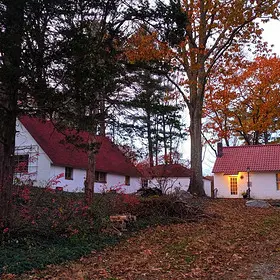
Photo By: Andrew DeSa/Carl Schmitt Foundation archives
Carl Schmitt Foundation (Wilton, Connecticut)
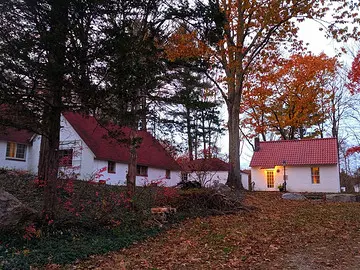
Affiliate Member: The Carl Schmitt Foundation preserves the home and studio of painter Carl Schmitt (1889-1989) in the historic Silvermine arts community of Wilton, Connecticut. A founding member of the Silvermine Guild of Artists, Schmitt exhibited at Carnegie International, the Art Institute of Chicago, and the Brooklyn Museum across a career spanning most of the twentieth century. The foundation’s studio-gallery holds his paintings, etchings, pastels, and extensive writings on art and aesthetics.
Learn More
-
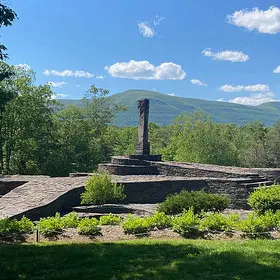
Photo By: Lisa Ven Vertloh
Opus 40 (Saugerties, New York)
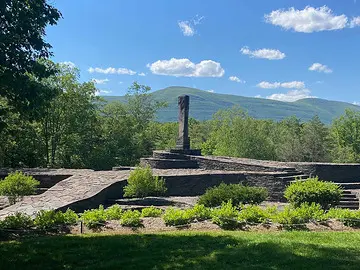
Full Member: Opus 40 is a monumental earthwork created by Harvey Fite (1903-1976) from an abandoned bluestone quarry in the Hudson Valley. Inspired by Mayan dry-stone techniques, Fite worked alone for 37 years, fitting together hundreds of thousands of stones without mortar to create 6.5 acres of interlocking terraces, ramps, and platforms crowned by a nine-ton monolith, left incomplete at his death. Opus 40 is listed on the National Register of Historic Places.
Learn More
-
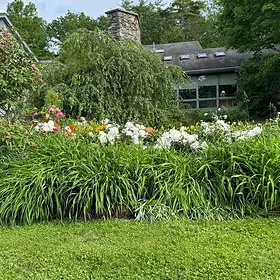
Photo By: Richard Schmid House
Richard Schmid Foundation (Walpole, New Hampshire)
Affiliate Member: The Richard Schmid Fine Art Foundation preserves the home and legacy of American master painter Richard Schmid (1934-2021), whose influence on contemporary realist painting has been felt worldwide. A recipient of virtually every major award in American art, including the John Singer Sargent Medal for Lifetime Achievement, Schmid’s instructional books became canonical texts for painters across generations. The foundation stewards his artwork and archives, presents curated exhibitions, and carries forward his belief in art’s power to do good.
Learn More
-
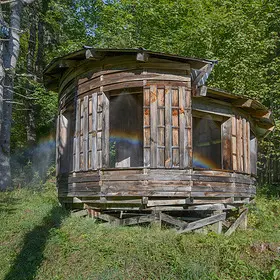
Photo By: Stephen Petergorsky
Vermont Village, Harpo Foundation (South Royalton, Vermont)
Affiliate Member: Vermont Village is a singular artist-built environment created by sculptor and educator Ed Levine (1935-2020) over three decades on a ten-acre property in rural Vermont. Deeply inspired by Thoreau, Levine constructed more than fifty site-specific wooden structures exploring humanity’s relationship to the natural world. Harpo Foundation, which Levine established in 2006 to support under-recognized visual artists, stewards the property and operates the Back River Road Residency program there.
Learn More
Stay connected with us via email. Sign up today.
Katherine Lanza LoPalo is the former managing editor of The Magazine ANTIQUES and currently works with Historic Artists’ Homes and Studios, a program of the National Trust for Historic Preservation.
13 Remarkable Historic Artists' Homes and Studios to Spark Your Imagination
-
1
Beatrice Wood Center for the Arts (Ojai, California)
Full Member: The Beatrice Wood Center preserves the studio and legacy of ceramicist Beatrice Wood (1893-1998), a central figure in the New York Dada movement whose luminous lusterware glazes earned her recognition as a California Living Treasure and Esteemed American Artist by the Smithsonian. She lived and worked in Ojai’s Happy Valley until her death at 105. The center presents exhibitions, workshops, and programs rooted in her artistic and philosophical legacy. -
2
Charles & Ray Eames Foundation (Los Angeles, California)
Full Member: The Eames House (Case Study House No. 8), designed and built in 1949 by Charles (1907-1978) and Ray Eames (1912-1988), is a National Historic Landmark and celebrated work of postwar architecture embodying the couple’s pioneering use of prefabricated industrial materials. The Charles & Ray Eames Foundation is dedicated to preserving the house for future generations while stewarding the Eameses’ broader legacy across design, architecture, and culture. -
3
Ilan-Lael: James Hubbell Home and Studio (Julian, California)
Full Member: Ilan-Lael is the hand-built compound of artist James Hubbell (1931-2024), whose organic architecture, mosaics, stained glass, and ironwork grace hundreds of spaces across Southern California and the Pacific Rim. Over six decades, Hubbell and his wife Anne constructed thirteen structures on ten acres of oak woodland east of San Diego, creating an environment where art, architecture, and nature merge. The Ilan-Lael Foundation stewards the property and continues educational programming in his spirit. -
4
Randall Davey Audubon Center and Sanctuary (Santa Fe, New Mexico)
Affiliate Member: The Randall Davey Audubon Center and Sanctuary encompasses 135 acres of canyon landscape on the edge of Santa Fe, centered on the home and studio of painter Randall Davey (1887-1964), a leading figure of the Santa Fe Art Colony. In 1920, Davey converted an 1847 Army sawmill into his studio and residence. Listed on the National Register and gifted to the National Audubon Society in 1983, the property functions today as both wildlife sanctuary and preserved artists’ site. -
5
Bonnet House (Fort Lauderdale, Florida)
Full Member: Built beginning in 1920, Bonnet House was the winter retreat of Chicago artists Frederic Clay Bartlett (1873-1953) and Evelyn Fortune Bartlett (1878-1997), who filled the estate with their paintings and objects gathered from travels worldwide. Frederic designed the whimsical plantation-style home himself and painted murals throughout its interiors. The 35-acre estate on Fort Lauderdale Beach is listed on the National Register of Historic Places and operates today as a museum and gardens. -
6
.webp)
.webp)
Thomas Day Historic Site (Milton, North Carolina)
Affiliate Member: The Thomas Day Historic Site preserves the home and workshop of Thomas Day (c. 1801-1861), a free Black master cabinetmaker who became the largest furniture maker in North Carolina by 1850. Day’s work blends Greek Revival, Gothic, and Italianate influences with elements reflecting his cultural heritage and can be found throughout the Virginia and North Carolina Piedmont. The site tells the story of his life and craft within the broader history of free Black life in the antebellum South. -
7
John James Audubon Center at Mill Grove (Audubon, Pennsylvania)
Affiliate Member: Mill Grove is a National Historic Landmark and the first American home of painter and naturalist John James Audubon (1785-1851), who arrived at the 175-acre Pennsylvania estate in 1803 and developed there the methods that would produce The Birds of America. Managed today by Audubon Mid-Atlantic, the property operates as a museum, wildlife sanctuary, and conservation action center. -
8
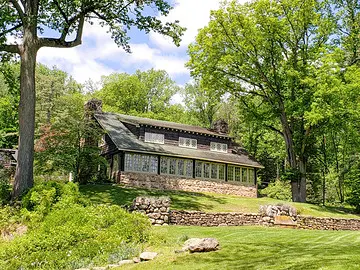
The Stickley Museum at Craftsman Farms (Morris Plains, New Jersey)
Full Member: Craftsman Farms was designed and built between 1908 and 1917 by Gustav Stickley (1858-1942), defining figure of the American Arts and Crafts movement. The centerpiece of this 30-acre National Historic Landmark is Stickley’s Log House, the most complete expression of his philosophy of building in harmony with nature. The Stickley Museum preserves the site with original Craftsman furniture, textiles, ceramics, and metalwork. -
9
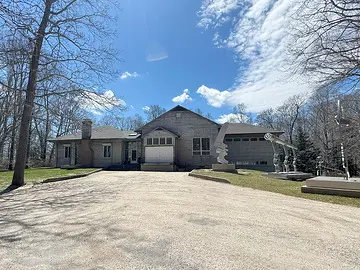
Elizabeth Strong-Cuevas Foundation (East Hampton, New York)
Affiliate Member: The Elizabeth Strong-Cuevas Foundation preserves the studio and legacy of sculptor Elizabeth Strong-Cuevas (1929-2023), known for monumental stainless steel and bronze sculptures drawing on ancient Egyptian, Aztec, and Mayan forms. Her large-scale works are held in the permanent collections of Grounds for Sculpture, Guild Hall of East Hampton, the Bruce Museum, and other institutions. The foundation stewards her studio, archives, and six decades of work. -
10
Carl Schmitt Foundation (Wilton, Connecticut)
Affiliate Member: The Carl Schmitt Foundation preserves the home and studio of painter Carl Schmitt (1889-1989) in the historic Silvermine arts community of Wilton, Connecticut. A founding member of the Silvermine Guild of Artists, Schmitt exhibited at Carnegie International, the Art Institute of Chicago, and the Brooklyn Museum across a career spanning most of the twentieth century. The foundation’s studio-gallery holds his paintings, etchings, pastels, and extensive writings on art and aesthetics. -
11
Opus 40 (Saugerties, New York)
Full Member: Opus 40 is a monumental earthwork created by Harvey Fite (1903-1976) from an abandoned bluestone quarry in the Hudson Valley. Inspired by Mayan dry-stone techniques, Fite worked alone for 37 years, fitting together hundreds of thousands of stones without mortar to create 6.5 acres of interlocking terraces, ramps, and platforms crowned by a nine-ton monolith, left incomplete at his death. Opus 40 is listed on the National Register of Historic Places. -
12
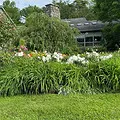
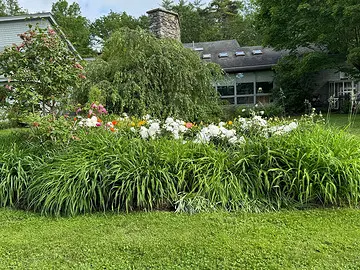
Richard Schmid Foundation (Walpole, New Hampshire)
Affiliate Member: The Richard Schmid Fine Art Foundation preserves the home and legacy of American master painter Richard Schmid (1934-2021), whose influence on contemporary realist painting has been felt worldwide. A recipient of virtually every major award in American art, including the John Singer Sargent Medal for Lifetime Achievement, Schmid’s instructional books became canonical texts for painters across generations. The foundation stewards his artwork and archives, presents curated exhibitions, and carries forward his belief in art’s power to do good. -
13
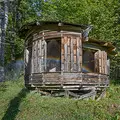
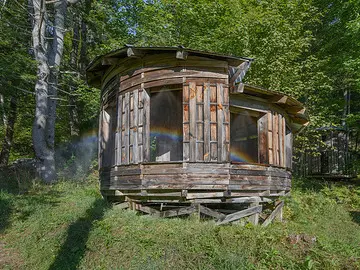
Vermont Village, Harpo Foundation (South Royalton, Vermont)
Affiliate Member: Vermont Village is a singular artist-built environment created by sculptor and educator Ed Levine (1935-2020) over three decades on a ten-acre property in rural Vermont. Deeply inspired by Thoreau, Levine constructed more than fifty site-specific wooden structures exploring humanity’s relationship to the natural world. Harpo Foundation, which Levine established in 2006 to support under-recognized visual artists, stewards the property and operates the Back River Road Residency program there.
-
1
Beatrice Wood Center for the Arts (Ojai, California)
Full Member: The Beatrice Wood Center preserves the studio and legacy of ceramicist Beatrice Wood (1893-1998), a central figure in the New York Dada movement whose luminous lusterware glazes earned her recognition as a California Living Treasure and Esteemed American Artist by the Smithsonian. She lived and worked in Ojai’s Happy Valley until her death at 105. The center presents exhibitions, workshops, and programs rooted in her artistic and philosophical legacy. -
2
Charles & Ray Eames Foundation (Los Angeles, California)
Full Member: The Eames House (Case Study House No. 8), designed and built in 1949 by Charles (1907-1978) and Ray Eames (1912-1988), is a National Historic Landmark and celebrated work of postwar architecture embodying the couple’s pioneering use of prefabricated industrial materials. The Charles & Ray Eames Foundation is dedicated to preserving the house for future generations while stewarding the Eameses’ broader legacy across design, architecture, and culture. -
3
Ilan-Lael: James Hubbell Home and Studio (Julian, California)
Full Member: Ilan-Lael is the hand-built compound of artist James Hubbell (1931-2024), whose organic architecture, mosaics, stained glass, and ironwork grace hundreds of spaces across Southern California and the Pacific Rim. Over six decades, Hubbell and his wife Anne constructed thirteen structures on ten acres of oak woodland east of San Diego, creating an environment where art, architecture, and nature merge. The Ilan-Lael Foundation stewards the property and continues educational programming in his spirit. -
4
Randall Davey Audubon Center and Sanctuary (Santa Fe, New Mexico)
Affiliate Member: The Randall Davey Audubon Center and Sanctuary encompasses 135 acres of canyon landscape on the edge of Santa Fe, centered on the home and studio of painter Randall Davey (1887-1964), a leading figure of the Santa Fe Art Colony. In 1920, Davey converted an 1847 Army sawmill into his studio and residence. Listed on the National Register and gifted to the National Audubon Society in 1983, the property functions today as both wildlife sanctuary and preserved artists’ site. -
5
Bonnet House (Fort Lauderdale, Florida)
Full Member: Built beginning in 1920, Bonnet House was the winter retreat of Chicago artists Frederic Clay Bartlett (1873-1953) and Evelyn Fortune Bartlett (1878-1997), who filled the estate with their paintings and objects gathered from travels worldwide. Frederic designed the whimsical plantation-style home himself and painted murals throughout its interiors. The 35-acre estate on Fort Lauderdale Beach is listed on the National Register of Historic Places and operates today as a museum and gardens. -
6
Thomas Day Historic Site (Milton, North Carolina)
Affiliate Member: The Thomas Day Historic Site preserves the home and workshop of Thomas Day (c. 1801-1861), a free Black master cabinetmaker who became the largest furniture maker in North Carolina by 1850. Day’s work blends Greek Revival, Gothic, and Italianate influences with elements reflecting his cultural heritage and can be found throughout the Virginia and North Carolina Piedmont. The site tells the story of his life and craft within the broader history of free Black life in the antebellum South. -
7
John James Audubon Center at Mill Grove (Audubon, Pennsylvania)
Affiliate Member: Mill Grove is a National Historic Landmark and the first American home of painter and naturalist John James Audubon (1785-1851), who arrived at the 175-acre Pennsylvania estate in 1803 and developed there the methods that would produce The Birds of America. Managed today by Audubon Mid-Atlantic, the property operates as a museum, wildlife sanctuary, and conservation action center. -
8
The Stickley Museum at Craftsman Farms (Morris Plains, New Jersey)
Full Member: Craftsman Farms was designed and built between 1908 and 1917 by Gustav Stickley (1858-1942), defining figure of the American Arts and Crafts movement. The centerpiece of this 30-acre National Historic Landmark is Stickley’s Log House, the most complete expression of his philosophy of building in harmony with nature. The Stickley Museum preserves the site with original Craftsman furniture, textiles, ceramics, and metalwork. -
9
Elizabeth Strong-Cuevas Foundation (East Hampton, New York)
Affiliate Member: The Elizabeth Strong-Cuevas Foundation preserves the studio and legacy of sculptor Elizabeth Strong-Cuevas (1929-2023), known for monumental stainless steel and bronze sculptures drawing on ancient Egyptian, Aztec, and Mayan forms. Her large-scale works are held in the permanent collections of Grounds for Sculpture, Guild Hall of East Hampton, the Bruce Museum, and other institutions. The foundation stewards her studio, archives, and six decades of work. -
10
Carl Schmitt Foundation (Wilton, Connecticut)
Affiliate Member: The Carl Schmitt Foundation preserves the home and studio of painter Carl Schmitt (1889-1989) in the historic Silvermine arts community of Wilton, Connecticut. A founding member of the Silvermine Guild of Artists, Schmitt exhibited at Carnegie International, the Art Institute of Chicago, and the Brooklyn Museum across a career spanning most of the twentieth century. The foundation’s studio-gallery holds his paintings, etchings, pastels, and extensive writings on art and aesthetics. -
11
Opus 40 (Saugerties, New York)
Full Member: Opus 40 is a monumental earthwork created by Harvey Fite (1903-1976) from an abandoned bluestone quarry in the Hudson Valley. Inspired by Mayan dry-stone techniques, Fite worked alone for 37 years, fitting together hundreds of thousands of stones without mortar to create 6.5 acres of interlocking terraces, ramps, and platforms crowned by a nine-ton monolith, left incomplete at his death. Opus 40 is listed on the National Register of Historic Places. -
12
Richard Schmid Foundation (Walpole, New Hampshire)
Affiliate Member: The Richard Schmid Fine Art Foundation preserves the home and legacy of American master painter Richard Schmid (1934-2021), whose influence on contemporary realist painting has been felt worldwide. A recipient of virtually every major award in American art, including the John Singer Sargent Medal for Lifetime Achievement, Schmid’s instructional books became canonical texts for painters across generations. The foundation stewards his artwork and archives, presents curated exhibitions, and carries forward his belief in art’s power to do good. -
13
Vermont Village, Harpo Foundation (South Royalton, Vermont)
Affiliate Member: Vermont Village is a singular artist-built environment created by sculptor and educator Ed Levine (1935-2020) over three decades on a ten-acre property in rural Vermont. Deeply inspired by Thoreau, Levine constructed more than fifty site-specific wooden structures exploring humanity’s relationship to the natural world. Harpo Foundation, which Levine established in 2006 to support under-recognized visual artists, stewards the property and operates the Back River Road Residency program there.