Tidal Basin Seawall Completed Ahead of Schedule
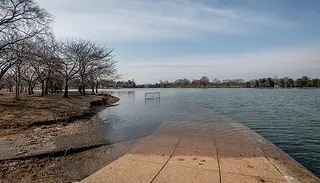
photo by: Sam Kittner
Tidal Basin prior to seawall reconstruction.
On December 10, 2025 the National Park Service announced the completion of the Tidal Basin sea wall reconstruction, raising the seawalls of approximately 6,800 linear feet along the Tidal Basin and West Potomac Park.

photo by: Kelly Paras
The Tidal Basin reconstructed seawall with wider pathways in December 2025.
One of Washington, D.C.’s iconic sites, the Tidal Basin has long been a destination for its remarkable views and the cherry blossom trees. However, in 2019, the site was included as part of the National Trust for Historic Preservation’s list of America's 11 Most Endangered Historic Places due to a variety of infrastructure issues, including persistent flooding along the sea wall. That same year, the National Trust, along with the Trust for the National Mall in partnership with the National Park Service (NPS), launched the Tidal Basin Ideas Lab. The lab leveraged public input, private-sector expertise, and philanthropic support to develop long-term recommendations for NPS to consider, many of which were included in the final planning document.

photo by: Kelly Paras
View along the newly constructed Tidal Basin seawall in December 2025.
Thanks to advocacy by the National Trust and our partners, the Tidal Basin project received federal funding which included $112.76 million from the Great American Outdoors Act. The Tidal Basin project is now expected to be fully complete eight months ahead of schedule and under budget.
Up Next: The National Park Service will plant 426 trees, including 269 cherry trees, to replace the 306 trees that had to be removed as part of construction. To allow these new trees time to establish themselves in the landscape, the project area will remain closed until after the 2026 National Cherry Blossom Festival.