11 Most Endangered Historic Places
Stonewall National Monument
In the summer of 1969, members of New York City’s LGBTQ+ community and allies took a stand, challenging authorities that were unjustly targeting their public and private social spaces and gathering spots. Demonstrators in the multi-night uprising that started at the Stonewall Inn gay bar demanded that their country live up to its values – recognizing their full humanity and extending the promise of equality to groups long marginalized. At Stonewall, American ideals inspired collective action that changed the course of the nation.
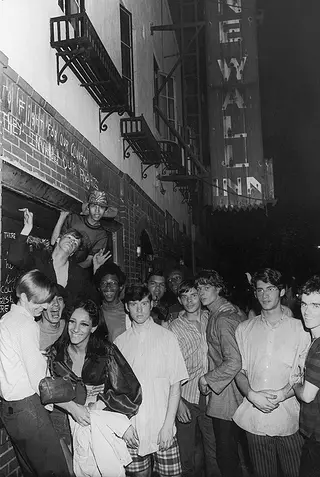
photo by: Fred W. McDarrah/The New York Historical via Getty Images
An unidentified group of young people celebrate outside the boarded-up Stonewall Inn (53 Christopher Street) after riots over the weekend of June 27, 1969.
The Stonewall Inn gay bar opened in 1967 and served as a vital social refuge for LGBTQ+ New Yorkers, in a moment when this community was experiencing systemic discrimination and police harassment.
Two years later, in the early morning hours of June 28, 1969, a routine police raid at the Stonewall Inn triggered an unexpected and historic response. Rather than quietly dispersing, patrons and neighborhood residents resisted. The confrontation grew into several nights of demonstrations centered on the bar and the surrounding blocks.
This resistance, now known as the Stonewall Uprising, energized a more visible wave of organizing that included the formation of hundreds of new groups dedicated to the fight for gay liberation, and led directly to the first Pride marches in June 1970.
In recognition of this significant history, the land within Christopher Park became federally owned when it was designated in 2016 as the Stonewall National Monument, the only unit of the National Park Service specifically dedicated to LGBTQ+ history.
The boundaries of the monument include the streets where the Uprising took place, as well as the two privately owned buildings that once housed the original Stonewall Inn, which closed in 1969.
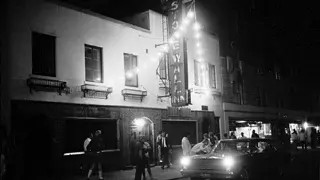
photo by: Larry Morris/The New York Times/Redux
Historic photo of Stonewall Inn, New York City, July 2, 1969
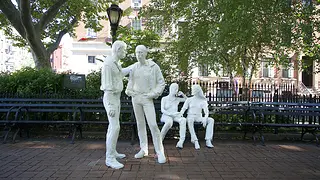
photo by: Whitney Browne, National Parks Conservation Association
Stonewall National Monument, New York City
Today, these two buildings have been designated as individual landmarks by the New York City Landmarks Preservation Commission for their significance to LGBTQ+ history and the events of 1969. They remain privately owned and operated, and continue to serve the public and the LGBTQ+ community as the Stonewall Inn bar and the Stonewall National Monument Visitor Center.
By anchoring this history in a specific preserved and protected place, the Stonewall National Monument at Christopher Park helps ground abstract civil rights themes into a tangible public story that visitors can see and experience.
The National Monument faces federal actions and policy changes that endanger the site’s historically accurate interpretation, community representation, and educational impact, including the participation of the full range of LGBTQ+ people in the Stonewall Uprising. After recent litigation, the federal government returned the Pride flag to the National Monument. To date, however, interpretative materials referencing transgender historic narratives have not been restored.
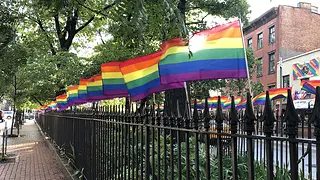
photo by: Timothy Leonard, National Parks Conservation Association
Stonewall National Monument, New York City.
Allies and partners are preparing to celebrate the 10th anniversary designation of the National Monument in 2026, including NPCA, Stonewall+, NYC LGBTQ Historic Sites Project, Christopher Park Alliance, Making Gay History, the City of New York, and many others; but sustained advocacy is necessary to ensure that the full and accurate LGBTQ+ history of the Stonewall Uprising remains publicly visible.
Stonewall’s history is intertwined with the history of other LGBTQ+ historic sites across the country, so it is essential to safeguard accurate interpretive materials at the National Monument, as well as expand public interpretation and awareness about why the Stonewall Uprising matters, in order to contextualize historic LGBTQ+ places throughout the entire nation.
Stonewall National Monument was named to the National Trust's list of America's 11 Most Endangered Historic Places for 2026.
Support our work to save places that matter.
Donate NowVisit the Stonewall Inn.
Plan Your VisitStay connected with us via email. Sign up today.
Related Stories
-
Reel Places Reel vs. Real: Stonewall


Explore More Places
Senate Bill S. 5653 would limit a process that considers how federal projects affect historic places and make community consultation optional for many projects. Urge your senators to oppose the bill as written and demand meaningful changes to its provisions.
Send Letters