Celebrating the Best in Preservation for 2026
The 2026 National Preservation Awards were presented on September 22, 2026, at a gathering of more than 500 preservation leaders in Washington, D.C. The annual awards program—the industry’s highest honor—recognizes distinguished individuals, nonprofit organizations, public agencies, and corporations that enrich and honor their communities through dynamic preservation practices.
Let's celebrate these remarkable winners!
Louise du Pont Crowninshield Award
The Louise du Pont Crowninshield Award is the National Trust for Historic Preservation’s highest recognition. Named for one of the National Trust's founding trustees, the award honors superlative achievement in the preservation and interpretation of our historic, architectural, or maritime heritage.
Dr. Elizabeth Alexander | New York, New York
Elizabeth Alexander is a poet, scholar, and cultural advocate who currently serves as president of the Mellon Foundation, the largest funder of the arts, culture, and humanities in the United States. A nationally recognized thought leader on race, justice, and American society, she has held distinguished professorships at Yale and Columbia Universities, and previously served as the director of Creativity and Free Expression at the Ford Foundation. Dr. Alexander is the author or co-author of sixteen books, including most recently Signals Across Vast Distances, and has twice been a finalist for the Pulitzer Prize. She composed and delivered the poem "Praise Song for the Day" for President Barack Obama's 2009 inauguration, and among her many honors she has been recognized as one of Time’s 100 Most Influential People.

photo by: Sharif Hamza
Dr. Elizabeth Alexander
Richard H. Driehaus Foundation National Preservation Awards
The Richard H. Driehaus Foundation National Preservation Awards, the nation’s most coveted and prestigious preservation awards, are bestowed on historic preservation efforts that demonstrate excellence in execution and a positive impact on the vitality of their towns and cities.
San Diego County Administration Center Renovation | San Diego, California
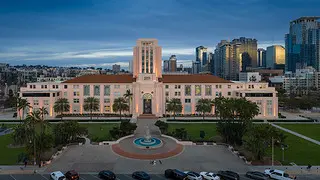
photo by: Alex Nye
Exterior of the San Diego County Administration Center.
The County of San Diego’s rehabilitation of the 315,000+ square foot County Administration Center (CAC) represents an extraordinary act of civic stewardship. In 2019, aging systems and seismic limitations threatened public operations and the building’s historic fabric. The County chose preservation over demolition and replacement, and after seven years and more than twenty phases of fully occupied renovation, the County was able to protect one of America’s most significant Great Depression-era civic landmarks. Since its dedication in 1938 through President Frank D. Roosevelt’s federal public works program, the CAC has continuously served as the administrative center of County governance—an uncommon continuity among large historic civic buildings nationwide.
American Lofts at Silo City | Buffalo, New York
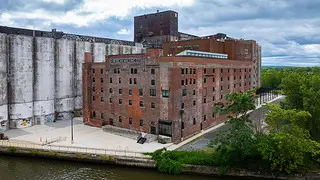
photo by: Scott Gable Photography
Exterior of the American Lofts at Silo City.
American Lofts at Silo City demonstrate how preservation can extend beyond traditional building types to engage the monumental infrastructure that shaped America’s industrial history. Developed between 1905 and the 1940s, the American Grain Complex is an intact group of grain processing and shipping buildings that helped establish Buffalo as the largest grain port in the world. American Lofts introduced a permanent residential population to Silo City for the first time through adaptive reuse, transforming an abandoned 230,000 square foot industrial facility into 168 residential units with ground-floor commercial space. The project, supported by Federal and New York State Historic Tax Credits alongside affordable housing financing, provides a replicable preservation model for cities grappling with the future of their aging industrial infrastructure.
Oregon Supreme Court Rehabilitation | Salem, Oregon
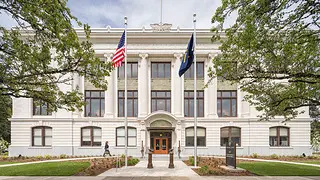
photo by: Josh Partee
Exterior of the Oregon Supreme Court.
The meticulously rehabilitated 1914 Oregon Supreme Court Building is one of only two LEED Gold-certified historic base isolated (earthquake resistant) buildings in the nation, and the first in Oregon. Home to the Oregon Supreme Court, Oregon Court of Appeals, and State Law Library, the three-story building features terra cotta, marble, and mahogany, with an abundance of classical detailing, a grand staircase, and a historically significant Povey Brothers stained-glass laylight in the courtroom. The design and construction of a project that disconnects an existing building from its site and allows it to move independently during an earthquake, all while preserving historic materials and features, required extraordinary design and engineering, exacting execution, and creative problem solving.
The National Trust/Advisory Council on Historic Preservation Award for Federal Partnerships in Historic Preservation
This award, presented in partnership with the Advisory Council on Historic Preservation, honors a project or program in which a federal agency and one or more non-federal partners, including tribes, have together achieved an exemplary preservation outcome.
San Antonio Missions National Historical Park | San Antonio, Texas
Through an extraordinary partnership among the National Park Service, youth-serving AmeriCorps programs, community partners, and local supporters, San Antonio Missions National Historical Park has advanced the preservation of one of the nation’s most significant cultural landscapes. Five San Antonio Missions, including The Alamo, were formed around historic acequias—three century-old irrigation systems that remain essential to the integrity of the UNESCO World Heritage Site today. Facing mounting pressures from urban development, stormwater impacts, and deferred maintenance, the Park and its partners have leveraged more than $2 million in funds since 2022 to restore and maintain these historic waterways while reclaiming mission farmlands for active agricultural use. Preserving these acequias has ensured that the Missions continue to deliver the oldest water right in Texas, sustaining the cultivation of crops that feed the community and strengthen public understanding of the cultural traditions that shaped San Antonio.

photo by: National Park Service and American Youth Works/Texas Conservation Corps
Collage of photos of youth interns and volunteers in San Antonio Missions National Historical Park.
Stay connected with us via email. Sign up today.
Trustees’ Award for Organizational Excellence
The Trustees' Award for Organizational Excellence recognizes a nonprofit organization, large or small, that has demonstrated sustained and superlative achievement in historic preservation.
Historic New England | Haverhill, Massachusetts
Historic New England is the nation’s oldest and largest regional preservation organization, stewarding 38 diverse historic properties across 5 states—from rural farmsteads and urban residences to industrial complexes and designed landscapes—while maintaining one of the country’s most significant collections of material culture and historic archives. Established in 1910, Historic New England has advanced preservation through rigorous stewardship, civic engagement, financial integrity, inclusive leadership, and innovative programming. For more than a century, Historic New England has safeguarded the architecture and stories of New England. Today, it stands as a national model for how preservation organizations can lead in the 21st century.
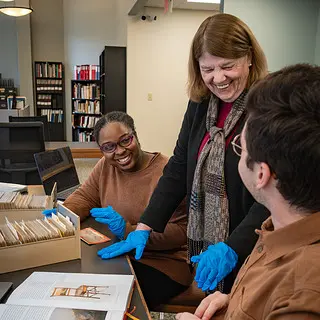
photo by: Jeff Bousquet Photography
Two researchers with Chief Curator Lorna Condon in the Historic New England Library and Archives.
Trustees Emeritus Award for Historic Site Stewardship
The Trustees Emeritus Award for Historic Site Stewardship recognizes success and innovation in historic preservation, management, and programming at historic sites.
Arthurdale Heritage, Inc. | Arthurdale, West Virginia
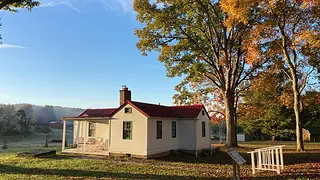
photo by: Arthurdale Heritage, Inc.
Restored E-2 homestead used as an artist-in-residence and vacation rental.
For more than four decades, Arthurdale Heritage, Inc. (AHI) has demonstrated exceptional stewardship of the nation’s first New Deal homestead community. Established under Franklin D. Roosevelt at the height of the Great Depression, Arthurdale fell into decline and neglect in the 1940s following its return to private ownership. In 1985, a group of determined volunteer residents formed AHI to restore the town, transforming it into a vibrant heritage campus. By connecting visitors to the stories of the original homesteaders, embracing a more inclusive interpretation of the site’s history, and keeping traditional crafts alive, AHI has established Arthurdale as a nationally significant site.
John H. Chafee Trustees’ Award for Outstanding Achievement in Public Policy
The John H. Chafee Award for Outstanding Achievement in Public Policy recognizes an individual or group of individuals who have done outstanding work in preservation advocacy.
National Trust Advisors
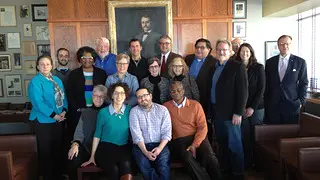
photo by: National Trust for Historic Preservation
National Trust Advisors at a 2014 Midwest Advisors Meeting in Chicago.
Now celebrating their 60th year of service, National Trust Advisors are an influential network of volunteer preservation leaders whose advocacy, expertise, and leadership have helped shape preservation policy and strengthened the National Trust for Historic Preservation’s impact nationwide. Since the program’s founding in 1966, Advisors have advanced preservation priorities at the federal, state, and local levels while helping broaden the field to include more inclusive storytelling, innovative policy solutions, and new approaches to community engagement.
Save Historic Places That Tell Our Full American Story
When you join the National Trust, you help save historic and culturally significant places nationwide.