Meet the New Co-Directors of the African American Cultural Heritage Action Fund
Tiffany Tolbert and Erica Smith Goetz were promoted to lead the Action Fund in June 2026.
In June 2026, following the appointment of Brent Leggs to President and CEO of the National Trust for Historic Preservation, the African American Cultural Heritage Action Fund underwent a leadership transition of its own. Leggs, who established the Action Fund in 2017, appointed Tiffany Tolbert, then the Action Fund's Senior Director of Preservation, and Erica Smith-Goetz, the Action Fund's Chief of Staff, to become the division's new co-directors.
"The Action Fund's success has always been grounded in the incredible talent we've brought together over nearly a decade: from preservationists to architects to communications and administrative professionals," said Leggs. "This division has set a standard of excellence not only within the National Trust but in the field. That would not have been possible without Tiffany's decades of preservation leadership and expertise, and the critical operational and business acumen Erica has brought to the table. The Action Fund could not be in better hands and I remain excited to advocate for its work from my new position as CEO."
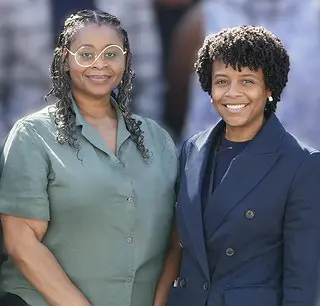
photo by: Morgan Forde
Tiffany Tolbert (left) and Erica Smith Goetz (right).
As the Action Fund celebrates a new chapter for its outgoing executive director and the elevation of two of its own senior leaders, we sat down with Tiffany and Erica to learn more about their careers at the National Trust and what they are looking forward to most as the Action Fund prepares for its tenth anniversary in 2027.
What brought you to the African American Cultural Heritage Action Fund?
Tiffany Tolbert: I was already working at the National Trust supporting African American heritage projects as a senior field officer in our Field Services department, and I came over to the Action Fund through Brent Leggs in 2020. I was very proud to lead what became our signature projects: the restoration of the Nina Simone Childhood Home, the launch of our HBCU Cultural Heritage Stewardship Initiative, and our restoration and stewardship work at the John and Alice Coltrane Home.
It's really been full-circle for my career as I started out focused on African American preservation in Alabama and Georgia, but being here 20 years later, focusing on that preservation work in a national context has been really amazing.
Erica Smith Goetz: I came to the Action Fund in April 2025, from a long career in management consulting. That may seem, from the outside, like a night and day difference from this work but for me, I'll echo Tiffany's words about it feeling full circle. I grew up in Atlanta. My mom is a historian and I was a history major in undergrad. Black history, and my family's history, [and] my city and community's history has been a grounding force for me for a long time. Joining the Action Fund was an amazing opportunity to marry that critical aspect of my passions with what I've been trained to do professionally as a project manager, an operational leader, and as a team leader. It's been a huge honor to see those two halves of my heart and soul come together and to get to know this incredible team.
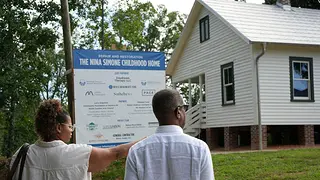
photo by: Morgan Forde
Tiffany Tolbert (left) and Brent Leggs (right) at the Nina Simone Childhood Home in Tryon, North Carolina.
What aspect of historic preservation are you most passionate about and why?
Tolbert: I grew up in Montgomery, Alabama in a historically Black community. I've always been intrigued by understanding physical spaces and how they come to be in terms of their design and construction, how those design decisions are made, and their influence on society and culture. Sometimes we look at a building as a building, but really there's a story there. The work we do at places such as Nina Simone's childhood home is a great example where we're looking at a very simple vernacular house. It doesn't tell us anything we don't already know about vernacular homes of the early 20th century in North Carolina, but it's about understanding the culture of the community where it sits in Tryon and of the Waymon family and how they came to be there.
Goetz: For me, it's so powerful to see how preservation becomes an affirmation of a community's values. I often hear people say that the things that we preserve tell us a lot about who we say matters or whose stories matter. But I think it's not just that, it's an invitation for everyone to be a part of shaping those answers. Preservation is an active force. That feels special to me. I think about the Action Fund team’s experience this year at Brown Chapel AME Church in Selma, Alabama commemorating the anniversary of Bloody Sunday and seeing what it meant to the folks in that congregation to be back in that space for the first time in so many years. It's not just because of the nostalgia, although that's a big part of it, it is also about seeing the power of all of the ideals around justice and the ability of a community to stand up for itself and for others to shape something better. There's a magic that this work can harness.
.webp)
photo by: Kisha Bari
National Trust CEO and the Action Fund's Founding Executive Director Brent Leggs with the Action Fund team at the division's Cultural Preservation Leadership Summit in 2025.
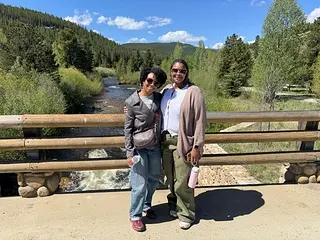
photo by: Erica Smith Goetz
Erica Smith Goetz (left) and Tiffany Tolbert (right) on an Action Fund site visit in Colorado.
As the Action Fund approaches its 10th anniversary in 2027, what are you most excited about for the division's future?
Goetz: One of the themes Brent has really emphasized since I joined the team is around permanence —in our impact, in the kind of bonds we're building as a team, and in the institution of the National Trust itself and its ability to do the work that it does and for the Action Fund as well. I think the Action Fund's 10-year moment invites reflection on that. You get permanence by continuing to replicate and refine what works. Our task now is to do that, and continue to ask ourselves, what can we do to accelerate the innovation that animated our first 10 years? I'm excited to explore what that continued innovation means, especially with Brent as our President and CEO. It's just an incredible opportunity to work together with all of our colleagues at the National Trust in service of that broad permanence and impact.
Tolbert: I'm excited that we're starting to see the Action Fund’s model be replicated by other organizations, not only in the way we approach preservation practice through stewardship planning, but also through grant making, technical assistance, and capacity building. That is really making our impact in the field recognizable, but it’s also been a meaningful opportunity to help other organizations strengthen their working models. As partners, we all succeed when we’re working together and learning from each other so I'm very excited about that. I'm also really looking forward to working with Erica. I am very fortunate to have her as a partner in this co-director role and as a friend. I'm looking forward to coalescing together in our leadership and taking the Action Fund into the next decade with the broader team.
This is the fun part! Through the communities we're working with, stakeholders, and partners, the Action Fund team can make possible what a lot of people didn't think was possible. Being able to bring our expertise, financial resources, and our connections to bear is changing so many people's lives and really validating the work they've been doing for so long without support. We, and the Action Fund team, wouldn't trade that for anything in the world.
Save Historic Places That Tell Our Full American Story
When you join the National Trust, you help save historic and culturally significant places nationwide.