5 Oscar-Nominated Films That Use Place to Tell Their Stories
Imagine a metropolis in which every animal’s needs are met through efficient urban planning. In Zootopia 2, the titular setting is just that—a place that seems to have achieved harmony through thoughtful design. But what happens when some animals are forgotten? What if the built environment reflects inequality?
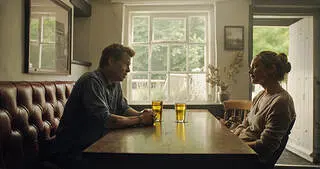
photo by: Warner Bros. Pictures / Apple Original Films
In the film “F1,” racer Sonny takes refuge in quiet, historic spaces, including a scene filmed in The Globe Inn in Leighton Buzzard, Bedfordshire.
On-screen, the spaces in which stories unfold can signal deeper themes to the audience. In Frankenstein, the unnamed creature Dr. Frankenstein creates seeks refuge in the woods and later in a rustic house adorned with foliate heads, motifs that typically symbolize a connection to the earth and its cycles. His surroundings quietly communicate that, despite his unusual origin, he is very much a part of the natural world. Similarly, in Zootopia 2, the city's design casts doubt on the idea that all animals are valued, as there is no district for reptiles. In both films, physical spaces and structures intensify the story’s meaning.
Read on to explore how five of this year’s Academy Award-nominated films use the built environment to tell their stories. For more on the relationship between historic preservation and the silver screen, check out our film and television stories.
Gothic Labs, Juke Joints, and Buried Districts: Built Environments That Expose Injustice
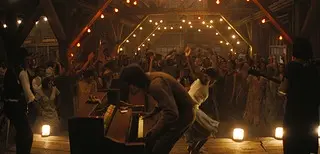
photo by: Warner Bros. Pictures
Partygoers gather inside a reclaimed juke joint in the film “Sinners,” set in the Jim Crow-era Mississippi Delta.
Nominated for sixteen Academy Awards, Sinners follows twin brothers Smoke and Stack as they convert a sawmill into a juke joint for a party that same night. The site has a violent history, yet Smoke and Stack transform it into one that houses music, joy, and community. As the night unfolds, a supernatural threat descends upon the party. In protecting the Black and Chinese American partygoers within its walls, the reclaimed juke joint becomes a contested space that reflects the racial tensions of the Jim Crow-era Mississippi Delta. For more on Sinners, watch Brent Leggs, executive director of the African American Cultural Heritage Action Fund and strategic advisor to the CEO of the National Trust for Historic Preservation, reflect on its powerful storytelling. For additional insight into the representation of Chinese Americans, learn more in this article by the American Arts Alliance.
Sinners: Official Trailer
Set in 1932, Sinners follows twin brothers Smoke and Stack as they convert a sawmill into a juke joint for a party.
Nominated for nine Academy Awards, Frankenstein is an adaptation of Mary Shelley’s 1818 novel. The fateful scene in which Dr. Frankenstein awakens his unnamed creature unfolds in the doctor’s Gothic laboratory, inspired by the National Wallace Monument in Stirling, Scotland. A towering structure, it stands alone. This remote setting is a fitting origin point for a story about profound loneliness. Both Dr. Frankenstein and the creature struggle to forge connections in society, and while they share that experience, they fundamentally differ. The doctor, raised in opulent Baroque homes by his dysfunctional aristocratic family, chooses to isolate himself in his lab. The creature is born there but escapes and seeks refuge in a simple mill house near a family he becomes attached to from afar. Neither character comfortably exists in society, and the built environment highlights why.
Frankenstein: Official Trailer
Gothic and Baroque architecture with Art Nouveau touches appears in the trailer for Frankenstein, the most recent adaptation of Mary Shelley’s classic novel.
Zootopia 2: Official Trailer
Zootopia 2 explores a society in which animals’ needs are met through thoughtful urban planning.
Nominated for Best Animated Feature, Zootopia 2 explores how the built environment can reflect and reinforce systemic inequality. Organized into districts that cater to the needs of different animals, the city of Zootopia initially seems to have achieved harmony through urban planning. However, that belief is challenged when Judy Hopps and Nick Wilde meet a displaced pit viper. As they investigate, they discover that reptiles have been surviving in a secret settlement they constructed underground. While safe, the reptiles are removed from Zootopian society and effectively erased from its history. As the story progresses, Judy, Nick, and pit viper Gary work together to expose the prejudice and corruption behind the reptiles' displacement and reclaim the land that was stolen from them.
Stay connected with us via email. Sign up today.
Observatories and Racetracks: Built Environments That Slow Us Down and Speed Us Up
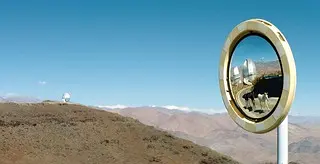
photo by: Nicolas Canniccioni
A mirror reflects three donkeys and Chile’s La Silla Observatory, the two focal points in the film “Perfectly a Strangeness.”
Perfectly a Strangeness (2024)
Nominated for Best Documentary Short Film, Perfectly a Strangeness follows three donkeys as they traverse La Silla Observatory in the Coquimbo region of Chile. The observatory, enigmatic and nonthreatening, provides a place for the donkeys to rest and scratch their necks against its barrier posts. As night falls, the donkeys watch as the facility seems to wake up: it hums quietly, equipment begins to move, and its astronomical purpose is suddenly contextualized under the starry sky above it. The observatory’s round dome mirrors the round domes of the donkey’s eyes, which are frequently focused on. This unusual short film serves as a reminder that the built environment humans create is one that animals must also navigate and inhabit.
Perfectly a Strangeness: TIFF Trailer
Perfectly a Strangeness explores the relationship between three donkeys and a Chilean observatory.
F1: Main Trailer
Filmed during live Formula One races around the world, F1 blends real tracks and venues with a fictional story about a veteran racer.
Nominated for four Academy Awards, F1 was filmed on location at active Formula One circuits and venues across the world. It follows racer Sonny Hayes, who returns to Formula One racing at the request of his friend, the owner of a struggling team. Disheveled and aged, Sonny stands in stark contrast to the sport's pristine suites and offices. He lives in a van and decompresses in a thatched-roof pub, while Joshua, his much-younger teammate, resides in a luxurious modernist home. These contrasting environments visually reinforce the divide between the two drivers. As the story progresses, it becomes increasingly clear that victory requires both sensibilities—pristine and greasy, optimistic and realistic, new and old.
Save Historic Places That Tell Our Full American Story
When you join the National Trust, you help save historic and culturally significant places nationwide.