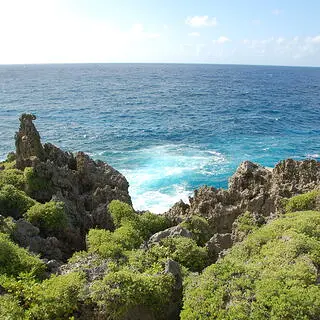
The island of Guam, the westernmost United States territory in the Pacific, is home to the Chamorro people who maintain a thriving culture dating back thousands of years.
A Spanish colony from 1668 until its surrender to the U.S. in 1898, Guam and the neighboring Northern Mariana Islands retain a unique concentration of resources that are central to the cultural identity of the Chamorro.
Dating to 700 A.D., Pågat, one of Guam's most treasured cultural sites, contains remains of prehistoric structural stone foundations, known as lattes, freshwater caves, medicinal plants, as well as stone mortars, pottery and tools of the Chamorro people. One of the island's last remaining and best preserved Chamorro settlements, Pågat is revered by native people who continue to perform thousand year-old traditional cultural practices at the site, and serves as a popular destination for hikers, tourists, and students who are drawn to the area's serpentine beachfront forest and sparkling underwater caves.
Pågat was included on the Trust's 11 Most Endangered Historic Places list for 2010.
Stay connected with us via email. Sign up today.
Related Stories
-
Climate & Culture Preservation Is Climate Action: Nine Ways to Make a Difference -
National Historic Preservation Act The Past, Present, and Future of the National Historic Preservation Act -
Preservation Magazine A St. Louis Park Renews Its Set of Whimsical Victorian Pavilions



Explore More Places


Senate bill S. 5653 would limit a process that considers how federal projects affect historic places and make community consultation optional for many projects. Urge your senators to oppose the bill as written and demand meaningful changes to its provisions.
Send Letters