11 Most Endangered Historic Places
The Ben Moore Hotel
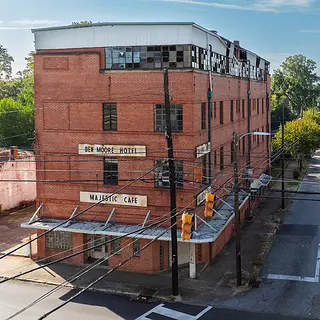
Once frequented by Civil Rights leaders including Dr. Martin Luther King Jr., the Ben Moore Hotel in Montgomery, Alabama was a cultural refuge for Black Americans facing the restricted realities of daily life under Jim Crow. The Black-owned hotel created a space for the Black community to assert their humanity, agency, and right to participate fully in American culture and leisure.
The Ben Moore Hotel helps bridge the gap between American founding ideals and lived experiences, reminding the nation that equality has always required both resistance to injustice and institution-building rooted in dignity and self-determination.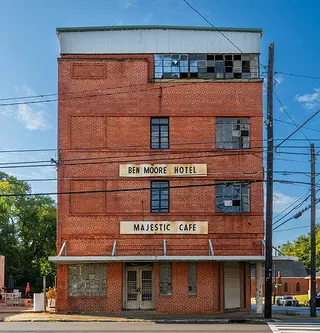
photo by: The Conservation Fund | Jay Brittain
The Ben Moore Hotel, Montgomery, Alabama.
The Ben Moore Hotel, built by Matthew Franklin Moore, formally opened in 1951 and was named after the proprietor's father, who had formerly been enslaved. Located in the historic Centennial Hill neighborhood, it was a hub for Montgomery’s Black community, and the hotel was listed in the Green Book as a safe haven for Black travelers barred from white-owned hotels.
The building housed a wide set of iconic institutions, including the Majestic Café, the Malden Brothers Barber Shop, and the rooftop Afro Club, which hosted performers including Billie Holiday, B.B. King, Little Richard, and Tina Turner. Located near many other nationally significant Civil Rights sites, including the Dexter Avenue Baptist Church parsonage, the Aurelia Browder Home, the Dr. Richard Harris House and carpool pickup stops during the Montgomery Bus Boycott, the hotel tells an earlier story of the Black institution-building that made Civil Rights organizing possible.
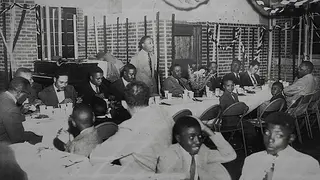
photo by: The Conservation Fund
Dr. Martin Luther King Jr. at an event inside the Ben Moore Hotel, 1960s.
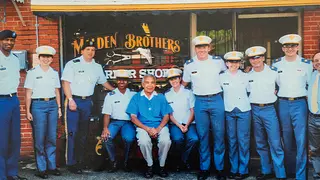
photo by: The Conservation Fund
Historic photo outside Malden Brothers Barbershop, the Ben Moore Hotel, Montgomery, Alabama.
Over time, disinvestment, changing travel patterns, and structural racism led to the decline of many Black-owned hotels, including the Ben Moore. Today, the hotel is not open to the public, and years of vacancy have led to structural deterioration, including water intrusion. As deterioration progresses, the cost of rehabilitation increases significantly, making preservation efforts more difficult and less financially feasible. Development pressures in the neighborhood pose a more complex threat. While the hotel is located in the historic Centennial Hill Historic District, the building is not locally protected to prevent demolition or non-compatible renovations.
In 2025, The Conservation Fund (TCF) acquired the Ben Moore Hotel to prevent demolition and enable initial stabilization. However, additional investment and partnerships are required to reestablish the hotel’s use, rehabilitate the structure, and transition it to long-term community-centered stewardship. TCF is working with the Landmarks Foundation of Montgomery and the City of Montgomery to begin community conversations about the future use of the hotel and identify the immediate stabilization needs.
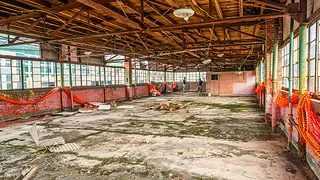
photo by: The Conservation Fund | Jay Brittain
Location of the former Afro Club at the Ben Moore Hotel, Montgomery, Alabama.
Reuse ideas include a reopened Majestic Café and barber shop, community-serving office space, restored hotel rooms, and a revived Afro Club that would serve as a cultural venue. Rehabilitation of this scope will require a combination of public-private partnerships, historic tax credits, and philanthropic investment.
Revitalization of the Ben Moore Hotel would illuminate the hotel as a symbol of African American perseverance and enterprise and allow for public interpretation focused on Black travel during Jim Crow, Green Book sites, African American entrepreneurship, and Montgomery’s broader Civil Rights landscape.
The Ben Moore Hotel was named to the National Trust's list of America's 11 Most Endangered Historic Places for 2026.
Stay connected with us via email. Sign up today.
Related Stories
-
African American Cultural Heritage Action Fund History Made Visible: Bryan Stevenson on Lynching and Memorialization


Explore More Places


Senate Bill S. 5653 would limit a process that considers how federal projects affect historic places and make community consultation optional for many projects. Urge your senators to oppose the bill as written and demand meaningful changes to its provisions.
Send Letters