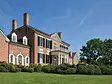
9 Historic Black Women's Homes You Should Know About
For centuries, Black women have used their homes as places for revival and resilience.
There’s something special about the way Black women build and curate their homes. There are the colors and textures of artwork and lamps, the softness of rugs and plushy couches. There’s the sacredness of their bedrooms and studios.
America has not always been a haven for Black women to thrive, but time has shown they have used their homes as centers of rest, revival, and resilience. Black women have long been able to establish community wherever they go, and their homes became safe spaces for them and their families to rest.
The National Trust for Historic Preservation's African American Cultural Heritage Action Fund has provided grants to help restore and preserve the homes of several incredible Black women, keep reading to learn more about nine of these historic sites.
1. The Lucille Clifton House
Baltimore, Maryland
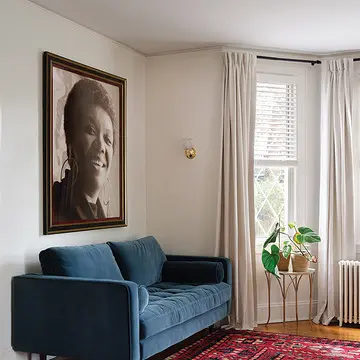
Lucille Clifton was a poet and author who drew inspiration from living in Baltimore. Her home on Talbot Road became the place where she did her most legacy defining work. The home was where she produced poems including her now widely known poems such as “homage to my hips,” “won’t you celebrate with me,” and “the lost baby poem.” Her work eventually earned her two Pulitzer Prize nominations and the title of Maryland’s Poet Laureate.
In the years since her death, Clifton’s family has been working to preserve the home to become a center for artists. Family members, writers, and students visited the house while Clifton wrote her works and taught. In 2020, the Action Fund awarded The Clifton House a project planning grant to begin the process of restoring the home and supporting its long-term growth into a cultural arts space.
2. Anne Spencer House & Garden Museum
Lynchburg, Virginia
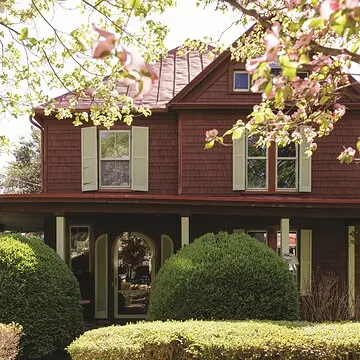
Renowned Harlem Renaissance poet Anne Spencer’s home and garden weren’t only places of reflection but also a green working sanctuary where she welcomed greats such as W.E.B. Du Bois, Martin Luther King, Jr. and Zora Neale Hurston. While Lynchburg, Virginia was a segregated city at the time she was there, Spencer managed to cultivate a living space where her and other Black intellectuals’ creative lives could gather and thrive. Today, the site’s power is in its specificity: the domestic scale, the garden paths, and the sense of a life made intentionally.
In 2022, the Action Fund provided funding to support the museum’s organizational capacity through the hire of an executive director.
3. Faith Ringgold Home & Studio
Englewood, New Jersey
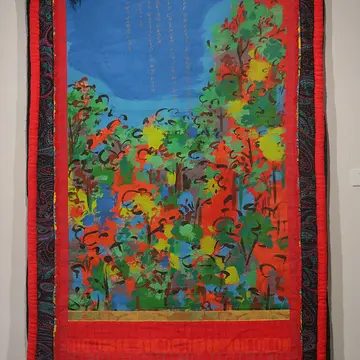
Faith Ringgold was a world-renowned artist who used a variety of creative pursuits to tell the story of life in Black America. She was known for her quilts, fabric masks, costumes, painting, performances, and children’s literature. Her Englewood, New Jersey home and studio was a private place for creative autonomy and expression. After Ringgold passed away in 2024, her family has worked to honor Ringgold’s artistic legacy.
In 2022, the Action Fund provided funding to support the family’s efforts to transform Ringgold’s home and studio into a space to showcase the work of artists from the African diaspora.
4. Unita Blackwell Freedom House
Mayersville, Mississippi
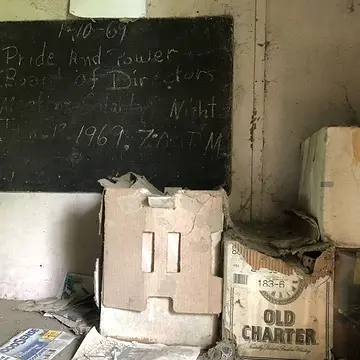
Unita Blackwell the first Black woman elected mayor in Mississippi in 1976 and a major figure during the Civil Rights Movement where she worked closely with the Student Nonviolent Coordinating Committee and led voting rights marches.
Her property is historically unique. The Freedom House, where she and her family lived, was also used as a meeting place during the Civil Rights Movement, hosting groups including the Mississippi Freedom Democratic Party, the Council of Federated Organizations, and SNCC. However, it also includes the Ranch House where Blackwell conducted her mayoral work, and her neighbor’s shotgun-style house. Through grant funding, the Action Fund is currently supporting much-needed construction and rehabilitation work to preserve the buildings and Blackwell’s tangible legacy.
.webp)
5. Erma Hayman House
Boise, Idaho
Erma Hayman lived in her Boise home for more than 60 years after purchasing it in 1948, becoming a steady force in Boise’s small Black community. She and her husband purchased the house after racial discrimination prevented them from buying property elsewhere in the city. The house is one of the few remaining physical reminders of Boise’s historic River Street neighborhood and the Black families who lived there.
Hayman served on the River Street Neighborhood Council, acting as its chairperson from 1973 to 1974. She was also known for being a caring neighbor who would offer her home as a place to stay and bring people meals.
Resources from the Action Fund are supporting the site’s organizational capacity, including hiring a community coordinator to expand programming, strengthen partnerships, and deepen public engagement with the site’s history.
Hayman passed away in 2009 at the age of 102. Her house has been under the stewardship of the City of Boise’s Department of Arts & History since 2018 and open to the public since 2022.
6. Nettie Asberry House
Tacoma, Washington
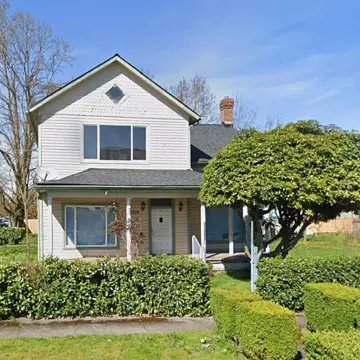
Nettie Asberry was a music educator, civil rights activist, and founder of the Tacoma chapter of the National Association for the Advancement of Colored People. Throughout her life, Asberry led efforts that opened doors for Black musicians, educators and community organizers to thrive, especially Black women.
She lived in her Victorian home for 63 years and died in 1968 at the age of 103. The Tacoma City Association of Colored Women’s Clubs, the steward of the site received grant funding from the Action Fund in 2022 to support hiring the site’s first executive director. The association has been working for years to convert the home into a museum and cultural center.

7. Azurest South
Petersburg, Virginia
Amaza Lee Meredith was a trailblazing architect and educator who built her home and studio, Azurest South, on the Virginia State University campus (where she established its fine arts program) in 1934. She and her life partner Dr. Edna Meade Colson lived there for decades. The white curved home celebrates their love and historic careers, and is filled with color through the building's mosaic tiles and colorful floors, walls, and ceilings.
The home and studio was designated a National Historic Landmark in 2024, and received funding from the Action Fund’s Conserving Black Modernism Initiative to support the implementation of a conservation management plan.
In 2020, Azurest South received a fresh coat of paint thanks to the support of Benjamin Moore.
8. L.V. Hull Home & Studio
Kosciusko, Mississippi
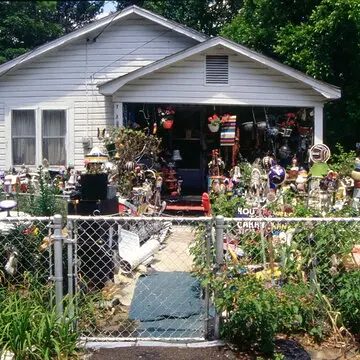
L.V. Hull bought her 900-square-foot home in 1974 and created a colorful haven where everything from buttons to tires were not left untouched by her brushstrokes. While she called her art “unusual”, her home and yard became an open exhibit for family, friends and community members to stop in and be amazed by her work, creating conversations through art.
The home and studio received funding from the Action Fund in 2023. The Keysmith Foundation, the steward of the site, will use the funds for capital projects focused on the stabilization and rehabilitation of the building. The foundation’s long-term goal is to incorporate the structure into the future L.V. Hull Legacy Center. The center would show Hull’s work alongside other artists', offer housing for an artist-in-residence, children’s programs, and more.
In 2023 the studio was included on the National Trust for Historic Preservation’s America’s 11 Most Endangered Historic Places list. In 2025 the site became an Affiliate Member of the National Trust's Historic Artists’ Homes and Studios program.
9. The Pauli Murray Center for History and Social Justice
Durham, North Carolina
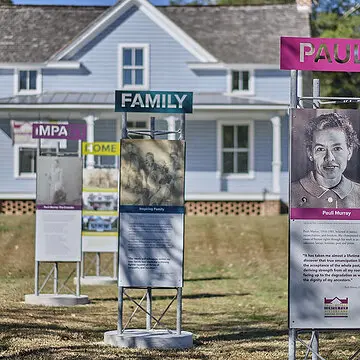
Rev. Dr. Pauli Murray grew up a the two story home built by their grandparents in the historically Black, working-class West End neighborhood in Durham, North Carolina. Murray was a person of multitudes: a civil rights lawyer, poet, historian, activist, and Episcopal priest. Their legal scholarship helped lay the groundwork for arguments about sex discrimination that would later influence civil rights and gender equality law in the United States.
The home was designated National Historic Landmark by the National Park Service in 2016 and is now the home of the Pauli Murray Center for History and Social Justice. In 2019, the Action Fund supported restoration work to bolster the site’s role as an educational and community resource dedicated to Murray’s legacy.
Across the nation, and throughout history, Black women have fought housing discrimination or built homes themselves in order to have the community they wanted in the areas they lived. They were homemakers, community workers, artists, civil rights activists, mothers, daughters, aunts, and the neighbor people turned to in times of need. To learn more about the National Trust's work to support sites of women's history, visit the Where Women Made History initiative.
Save Historic Places That Tell Our Full American Story
When you join the National Trust, you help save historic and culturally significant places nationwide.