Abuzz in the Berkshires: Amid Recent and Ongoing Updates, Chesterwood Brims with Creative Energy
In summer 1896, the sculptor Daniel Chester French (1850–1931) and his writer wife, Mary (1859–1939), first saw the sloped farmland and forests in western Massachusetts that would become their summer retreat for the next three decades. “I think it belongs to us,” Daniel announced, as the sun sank near a rocky peak known as Monument Mountain.
The Frenches gave the name Chesterwood to their newly purchased Stockbridge acreage, after an ancestral family home in Chester, New Hampshire. The sculptor’s arrival at the property helped usher in an impressively prolific period that gave rise to masterpieces such as the seated Lincoln figure at the Lincoln Memorial, writes the scholar Harold Holzer in his 2019 biography Monument Man: The Life & Art of Daniel Chester French. Daniel and Mary’s only child, the sculptor Margaret French Cresson (1889–1973), meticulously stewarded Chesterwood and later entrusted it, fully furnished, to the National Trust.
Visitors today may think that little has changed since the French family sculpted, socialized, and gardened there. In the skylit studio building, a plaster model of Lincoln overlooks other models and disembodied cast-plaster limbs. In the main residence the pantry shelves gleam with cranberry-tinted glassware, and in the study, alongside a period typewriter, bound volumes bear bookplates depicting a view into Chesterwood’s garden.
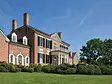
As part of the National Trust’s many onsite improvements over the years, infrastructure on the buildings and grounds has been invisibly upgraded. Outbuildings have been repurposed for public access. All the while, scholars keep making discoveries about the Frenches and their possessions, their fascinating circle of friends, and their legacy. The main residence, a Colonial Revival house with Georgian and Italian influences, has recently undergone key restoration and renovation work so it can better serve visitors and researchers. And ever busier rounds of events, classes, and exhibitions have engaged growing audiences.
“Chesterwood is often called ‘the hidden gem of the Berkshires,’” says Miguel A. Rodríguez, the site’s executive director since 2024. “Our goal now is to make it not hidden anymore.”
I started visiting in the 2010s, on assignment for The New York Times. I have returned again and again, while vacationing in the Berkshires with my family or researching topics including Daniel’s frequent model Hettie Anderson (1873–1938), believed to be the first Black woman to pose for figures on public monuments and murals nationwide.

photo by: Underwood & Underwood/Chesterwood Archives, Chapin Library, Williams College
Daniel Chester French in the studio in 1925 with his 6-foot model of Lincoln.
I never stop being amazed at the quantity of stories that Chesterwood can tell, and from fresh angles: about, for instance, how the Frenches and their contemporaries documented real and idealized worlds in various media; adapted ancient artistic precedents and influenced generations of mentees; and grappled with changing attitudes about ethnicity, gender, politics, patriotism, war, and grief, in works that resonate today.
But sometimes I just stop thinking much at Chesterwood and meditatively immerse myself in the views from the studio’s piazza. One exterior wall contains plaster reliefs of figures that Daniel created for a memorial in Boston to the historian Francis Parkman. During my visit in October, Monument Mountain is headed into peak fall polychrome, and Rodríguez and his team are buzzing about ways they can build on the Frenches’ enjoyment of art forms such as music, dance, poetry, theater, photography, gardening, and cooking.

photo by: Don Freeman
The studio's exterior today.
They are laying groundwork for new programs and displays throughout the site’s 122 acres, while returning more features to their original appearance and purpose. Rodríguez tells me that he and his colleagues base decisions on whether the Frenches might approve: “They appreciated and mentored all kinds of creativity, and this remains a place where creativity is mentored, encouraged, expressed, experimented, and explored.”
“Our goal now is to make it not hidden anymore.”
Miguel A. Rodríguez
Daniel and Mary French wintered at their homes in Manhattan, at first a townhouse in Greenwich Village and later an apartment overlooking Gramercy Park. During their Chesterwood summers, they were often accompanied by Margaret and her husband, William Penn Cresson (1873–1932), an architect, author, and diplomat. The family often extended their stays in the country to bask in what Daniel called “the whole gorgeous procession of autumn.” The stuccoed main residence and studio were designed by his architect friend Henry Bacon (whose masterpiece is the Lincoln Memorial). Some older farm buildings onsite were preserved, and Daniel laid out formal and agricultural gardens. The property was studded with statuary, columns, a fountain, and a pergola, and hiking trails meandered along meadows, forests, and a tennis court. He called his natural and manmade scenery “beautiful as fairy-land.”

photo by: Don Freeman
The Little Studio is now known as the Meadowlark.
A well-worn driveway leads to a wood-clad, skylit building that the Frenches named the Little Studio—there Daniel may have found occasional escape from teeming houseguests, curiosity seekers, journalists, architects, models, mentees, and household staff. The many extra pairs of hands helped him finalize his works before they were sent to be cast or carved. He liked to roll his full-size plaster models for outdoor commissions into the garden, to consider how they looked in different kinds of daylight.
Although he was a perfectionist who likely needed time alone to dream, he defied his era’s stereotypes of the tormented, scandal-plagued artist. “Be thankful that you were good,” one of his models teased him upon handing him her memoir. As Mary noted in her own 1928 memoir of a happy marriage, Daniel’s childhood had been largely idyllic, with none of “the struggles of poverty and misunderstanding which have been considered … necessary to the development of genius.” (She had known him since childhood, as they were first cousins.) Daniel grew up in various New England towns, in a family distinguished in the realms of law and politics. They socialized with intellectuals including the Alcotts and the Emersons. The boy known as “little Dan” showed artistic tendencies by experimenting with carving a turnip into the shape of a frock-coated frog.
“He was a consummate perfectionist. He only worked with the best of the best.”
Gerry Blache
By his early 20s, after briefly studying at MIT and with artists Abigail May Alcott and John Quincy Adams Ward, he sculpted his first nationally lauded public artwork, The Minute Man, unveiled in 1875 in Concord, Massachusetts. It was commissioned to honor the centennial of the Battle of Concord. The larger-than-life bronze depicts a young farmer grabbing his musket at the outset of the Revolutionary War. Perfecting the design required many sketches, maquettes, and sessions with live models—Holzer describes an “army of miniature clay models” piling up in the Frenches’ Concord home. Ralph Waldo Emerson called The Minute Man “the first serious work of our young townsman.” By the end of the 1880s, the young townsman had trained at ateliers in Italy and France, married Mary, and attracted portrait sitters and patrons as elite as Emerson himself, Harvard University, and government agencies scattered nationwide.

photo by: Don Freeman
Part of Hettie + Audrey (2024) by DeWitt Godfrey, shown at Chesterwood in 2025.
Chesterwood displays paintings and sculptures throughout the main residence and studio as well as a barn converted into a gallery and visitors center. With my every visit, I realize more about how often I have spent time in the presence of Daniel Chester French’s works elsewhere in bronze and stone. As a Harvard undergrad in the 1980s, I would touch the quaint left shoe of French’s seated John Harvard statue for good luck. I entered the Boston Public Library via French’s bronze doors containing draped allegorical reliefs based on Hettie Anderson, among other models. I have lived in New York since then, exploring the city from French’s throned Alma Mater on Columbia University’s campus to his allegorical figures at the Custom House downtown and the Brooklyn Museum. And I have made lifelong frequent visits to the Metropolitan Museum of Art, which has displayed French’s works since he served as a museum trustee. (He also helped his model Hettie Anderson find work there as a museum classroom attendant.)
Stay connected with us via email. Sign up today.
Margaret French Cresson and William Penn Cresson had no surviving children. She often immortalized babies, toddlers, and youths in stone and bronze, and “she was godmother to many of the children of Stockbridge,” says Dana Pilson, Chesterwood’s curatorial researcher and collections coordinator. In widowhood, Margaret methodically retrieved many of her father’s pieces and juxtaposed them at Chesterwood with artworks by friends, mentees, and collaborators such as the Piccirilli family of stone carvers (their masterwork is French’s Lincoln) and the sculptors Augustus Saint-Gaudens, Evelyn Beatrice Longman, and Bessie Potter Vonnoh. Margaret’s cousin, landscape architect Prentiss French, and his architect wife, Helen, occasionally stayed on the property. By the time Margaret suffered a fatal heart attack in 1973, the staff had documented her memories of life onsite. Her voluminous papers are now stewarded by the Library of Congress and the Chapin Library at Williams College.

photo by: Don Freeman
The mostly-restored main residence dates to 1901.
“She scarcely threw anything out” over the years, says Gerry Blache, Chesterwood’s senior buildings and grounds superintendent, who started working there soon after Margaret’s death. (He currently ranks as the National Trust’s longest serving employee.) He has overseen phase after phase of improvements, as the barn’s carriage house was converted to a collections gallery, for instance, and a former garage adapted to a studio and exhibition space. During one of my recent visits, I watched the sculptor Heidi Wastweet give a public demonstration in the latter, creating models for bronze medals based on Daniel’s monumental relief sculpture Mourning Victory.
Blache, who plans to retire this year, has explored the deepest chasms of the property’s buildings, reinforced by quantities of old-growth timber. In the Frenches’ time, he explains, “no corner-cutting was done here whatsoever, and it shows to this day.” Blache says that as Daniel selected materials and collaborators, “he was a consummate perfectionist. He only worked with the best of the best.”
Major projects in recent years have included replacing cedar-shingled roofs and restoring cinder-flecked stucco cladding on the main residence and studio; adding state-of-the-art collection storage spaces, offices, climate-control systems, and an ADA-compliant ramp and lift to the main residence; and transforming second-floor bedrooms into galleries for changing exhibitions. The team has set out, Rodríguez explains, “to make this a fresh experience for everyone, every time.”

photo by: Gregory Cherin
The 2025 exhibit Modeling Women included the 1925 bronze bust Catherine Doeller (shown in foreground), also by Cresson.
Mark Stoner, the Trust’s senior director of preservation architecture and Graham Gund Architect, says that during the replacement of the studio roof, he feared for the safety of the plaster ceiling striped in wooden rafters. His team documented it with photos and videos, kept a plaster conservator on call, and stretched a canopy across the room to catch any loosened chunks. But the historic fabric was so well constructed that when the workers finished and removed the canopy, Stoner says, “there was only a little bit of dust on it.” At the end of some Chesterwood workdays, he adds, he longs to stay and admire the view from the piazza for a little while longer, even when he has a plane to catch: “Sometimes I just cannot pull myself away.”
During my October tour, Rodríguez points out where gold-flecked wallpaper—re-created in 2024 by Zuber, the same France-based company that made the original—is being returned to the main residence’s parlor. The room’s spherical green glass vase appears in a photo and paintings of the Frenches at home. “We’re not interpreting how they lived—this is how they lived,” Rodríguez says; most of the original furnishings have hardly been moved over the years. His team is now strategizing to repair bulging plaster in the stairwell, where Daniel playfully topped some Corinthian columns in ears of corn. The original F. Schumacher & Co. wallpaper depicting forest glades will also be conserved sometime soon.
In the adjacent garden, Ben Perrett, the assistant buildings and grounds manager, shows me where new irrigation systems will underlie soon-to-be-restored beds of garden phlox, peonies, and lilies along a newly rebuilt fieldstone wall. Chesterwood’s dazzling flowerbeds provide backdrops these days for around eight weddings each year—in 1920, Daniel’s mentee and friend Evelyn Beatrice Longman became the first bride to pose for photos at the site. The Frenches’ original fairyland planting schemes are slated for restoration this year.
Plans are afoot to resurrect the family’s apple orchards and the kitchen garden where they grew vegetables and fruit on land now used as a grassy gravel parking lot. The barn and woodshed are slated to be insulated for year-round use; currently the site is open from mid-May to late October. Rodríguez has already added opening days during December holiday times, which have drawn hundreds of people, and overall visitation has increased 40% during his tenure. He envisions increasing the endowment from its current $2.8 million to $15–20 million: “You have to think big,” he says.
He sometimes eavesdrops on visitors touring the property; he loves hearing repeat guests enthusing about exploring the second floor that had long piqued their curiosity, and newcomers realizing how many public sculptures that they recognize were all designed by one man at Chesterwood. Rodríguez says that he delights in overhearing even the most basic epiphanies, along the lines of “that Lincoln dude lived here!”

photo by: Don Freeman
The study contains a 1934 plaster bust by Margaret French Cresson of her father, as well as his desk, chair, and books.
“Sometimes I just cannot pull myself away.”
Mark Stoner
The collection keeps growing, with recent gifts of Daniel’s work ranging from an 1870s porcelain owl to a 1920s plaster model for a figure of Victory made for a memorial honoring World War I soldiers. A descendant of sculptor and French family friend Henry Augustus Lukeman has donated two artworks by Daniel, found in Lukeman’s former studio down the road. Pilson says that when she discovers sculptures unknown to generations of scholars at Chesterwood, “it is truly like bells going off; it’s so exciting.” Her 2025 exhibition inaugurating the second-floor galleries focused on important, underappreciated women in French’s orbit, including Margaret, Hettie Anderson, and Evelyn Beatrice Longman.
For this year’s celebrations of the Declaration of Independence’s 250th anniversary, Pilson is planning a show centered on The Minute Man, exploring past and present views of patriotism, liberty, anarchy, authority, and tyranny. Henry Bacon, she tells me, also deserves his own exhibition in the future. She adds that Rodríguez is “a master at generating ideas and putting them in motion.” Stoner similarly says Rodríguez “is really set to take this site soaring into the ether, the atmosphere, the stratosphere.”
Rodríguez tells me that the restored flowerbeds will serve as backdrops for a new tradition of hosting reunions of couples married on the property. Pilson has found a list of the French family’s favorite desserts in their menu book—for instance, ice cream laced with strawberries or grated chocolate—which could be served on site someday if a farm-to-table cafe is set up in the woodshed. Countless inimitable performers, such as Marian Anderson, gave concerts at the Lincoln Memorial, and those playlists can be adapted for performances at Chesterwood.
During my visit, I get into the spirit of Chesterwood brainstorming, with all synapses firing at the foot of Monument Mountain. I imagine what could be done simply by harvesting vegetables when the parking lot is turned back into a kitchen garden. Why not see if children can carve turnips into portraits of frogs in frock coats?
Save Historic Places That Tell Our Full American Story
When you join the National Trust, you help save historic and culturally significant places nationwide.