Explore Seven Historic Sites from the African American Civil Rights Network
Ask Congress to pass the Renewing the African American Civil Rights Network Act.
Established through bipartisan legislation in 2018, the African American Civil Rights Network (AACRN) is a National Park Service program that links together more than 130 National Park Service units, non-federal historic sites, and research programs related to the African American Civil Rights Movement. The AACRN connects these interrelated sites to encourage sites to learn from each other, increase public awareness, and support members with technical assistance. Together, these resources create a nationwide network that connects Americans with the history of one of the nation's most transformative movements.
Today, the Network faces the urgent need for reauthorization after the program lapsed in January 2025. During this time, numerous sites across the nation that otherwise would have joined the Network have been unable to participate. A bipartisan and bicameral effort, led by Congressman Jim Clyburn (D-SC), Congressman Mike Carey (R-OH), Senator Tim Scott (R-SC), and Senator Lisa Blunt Rochester (D-DE) will enable the continued operation of the national network of sites, activities, and research that commemorate, honor, and interpret the history of the modern Civil Rights Movement.

Reauthorize the African American Civil Rights Network
Send your members of Congress a letter asking that they cosponsor and support the Renewing the African American Civil Rights Network Act.
As Preservation and Planning Director at the 16th Street Baptist Church, Theodore Debro said, “Being a part of the African American Civil Rights Network affirms the enduring legacy of 16th Street Baptist Church in the ongoing struggle for justice, equality, and human dignity. The network helps ensure that future generations understand the sacrifices made during the Civil Rights Movement and the importance of preserving these sacred historic spaces.”
Explore the AACRN sites below and take action to preserve this important program.
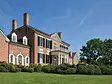
Brown Chapel AME Church (Selma, Alabama)

photo by: Ron Cogswell/Wikimedia Commons
Exterior of the Brown Chapel AME Church.
Built by formerly enslaved Black builder A.J. Farley in 1908, Brown Chapel AME Church has been a house of worship and a hub for civil rights activism for generations.
On March 7, 1965, led by future Congressman John Lewis, congregants and community members left Sunday service and marched roughly 54 miles toward Montgomery, Alabama to advocate for equal voting rights. While crossing the Edmund Pettus Bridge, sheriff’s deputies and state troopers deployed dog attacks, tear gas, baton beatings, and other horrific tactics against the peaceful protesters, injuring approximately 50 people. The tragic events that transpired that day became known as “Bloody Sunday.”
The ensuing national outrage galvanized efforts for equal voting rights, leading to the passage of the Voting Rights Act, which President Lyndon B. Johnson signed into law on August 6, 1965.
Designated a National Historic Landmark in 1997, Brown Chapel AME Church closed its doors in 2020 due to extensive structural damage. In 2022, the National Trust listed the site as one of America’s 11 Most Endangered Historic Places. Funds from the African American Cultural Heritage Action Fund and the National Park Service supported restoration of its historic sanctuary, with scheduled reopening slated for spring 2027.
Freedom Riders National Monument (Anniston, Alabama)
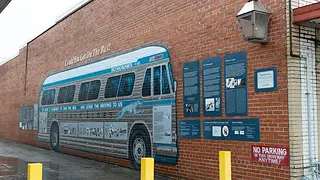
photo by: National Park Service
Mural at the Freedom Riders National Monument in Anniston, Alabama.
In spring 1961, a group of integrated individuals began bus journeys from Washington, D.C. to New Orleans. Calling themselves Freedom Riders, the group split between Trailways and Greyhound buses. They intended to travel through the Deep South to challenge discriminatory laws and local customs around interstate travel and the continued segregation of public facilities despite U.S. Supreme Court rulings.
Near Anniston, Alabama, the Greyhound bus group encountered violence. A white segregationist mob, which included members of the Ku Klux Klan, attacked the riders and firebombed the bus in which they were riding.
This was not the only moment of violence the Freedom Riders faced along the way. Images and news coverage of the attacks enraged parts of the American public and increased political pressure. As a result, the Freedom Rider movement gained over 400 participants over the summer of 1961.
On May 29, 1961, Attorney General Robert Kennedy petitioned the Interstate Commerce Commission (ICC) to ban segregated interstate travel. The ICC then issued a decree that bus carriers and terminals serving interstate travel had to be integrated by November 1, 1961.
The Freedom Riders National Monument was established in 2017 by President Barack Obama.
16th Street Baptist Church (Birmingham, Alabama)
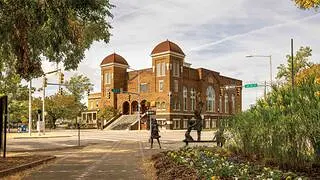
photo by: Lynsey Weatherspoon
View of the 16th Street Baptist Church from Kelly Ingram Park.
Established in 1873, 16th Street Baptist Church is the oldest church in Birmingham, Alabama. Wallace Rayfield, the nation’s second licensed Black architect and Alabama's first Black architect, designed the modified Romanesque and Byzantine building. The church played a key role in the Civil Rights Movement. It served as a meeting place and an organizing center for many local and national marches and civil rights-related activities.
In 1963, the Ku Klux Klan bombed the church, resulting in the deaths of four girls: Addie Mae Collins, Cynthia Wesley, Denise McNair, and Carole Robertson. More than twenty people inside the church were injured. This event, in addition to the violence faced by Freedom Riders and those who marched on Bloody Sunday, fueled national outrage, and helped the passage of the Civil Rights Act of 1964 and the Voting Rights Act of 1965.
The 16th Street Baptist Church received funding from the National Trust for Historic Preservation, National Fund for Sacred Places, and the Action Fund. In 2026, the church was included in the Action Fund’s Preserving Black Churches cohort.
Little Rock Central High School National Historic Site (Little Rock, Arkansas)

photo by: WikimediaCommons/Adam Jones, PHD/CC BY-SA 3.0
Exterior of Little Rock Central School.
In the fall of 1957, under a federal court order, the Little Rock School District was mandated to admit Black students to Central High School. Ten Black students were prepared for admission.
In response to the federal orders, Governor Orval Faubus deployed Arkansas National Guard troops to prevent the students' repeated attempts to enter the high school. On one occasion, the students did successfully enter. The gathered crowds began to riot.
In response, Little Rock police escorted the Black students out of the school's back entrance to safety, and President Dwight D. Eisenhower ordered federal troops into Little Rock to control the mob violence.
On Sept. 25, dubbed by the media as the "Little Rock Nine,” nine Black students formally integrated Central High School and attended their first full day of classes.
Central High School was listed on the National Register in 1977, and designated a National Historic Landmark in 1982.
Daisy Bates House (Little Rock, Arkansas)

photo by: Daisy Bates House/Wikimedia Commons
View the home of Daisy and L.C. Bates in Little Rock, Arkansas.
The Daisy Bates House was the home of Daisy and L.C. Bates. Daisy Bates was deeply involved in the Civil Rights Movement. She and her husband owned and operated the weekly Arkansas State Press from 1941 to 1959, a leading voice for civil rights and one of the most influential Black newspapers in Arkansas. She served as the president of Arkansas' National Association for the Advancement of Colored People (NAACP) in 1952. In 1957, she championed the integration of Central High School by the "Little Rock Nine."
Her home served as a meeting and organizing space for the students and other civil rights leaders. Consequently, it was a frequent target for segregationists and white supremacists who fired shots through the windows, burned Ku Klux Klan hate symbols on the home's front lawn, and threw an incendiary bomb on the property.
Daisy Bates continued civil rights and social justice work until her death on November 4, 1999. In 2001, her home was listed on the National Register of Historic Places and designated as a National Historic Landmark.
Second Baptist Church (Los Angeles, California)
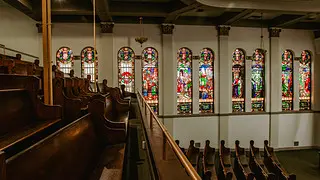
photo by: Vivian Chan
Interior of the Second Baptist Church of Los Angeles.
Organized in 1885, renowned Black architects Paul Revere Williams and Norman Marsh designed the Second Baptist Church’s current Mediterranean Revival style building (completed in 1926). The building seats up to 2,500 people and was the largest meeting space owned by Black Americans in the western United States until World War II.
For many Black people traveling to Los Angeles during the Great Migration, the church served as a safe space to worship and find community. Playing a pivotal role in American civil rights history, it hosted multiple NAACP conferences, speeches, and lectures by notable figures such as W.E.B. DuBois, Malcolm X, and Mary McLeod Bethune. Rev. Martin Luther King, Jr. frequently spoke at Second Baptist Church and called it his "West Coast home."
In 2009, Second Baptist Church was added to the National Register of Historic Places. The church received grant funding from the Action Fund in 2022, and an Intervention Fund grant from the National Fund for Sacred Places in 2024.
COFO Civil Rights Education Center (Jackson, Mississippi)

photo by: COFO Civil Rights Education Center
Interior of the COFO Civil Rights Education Center.
Established in 1961, the Council of Federated Organizations (COFO) was an umbrella organization designed to unify the increasing number of civil rights organizations in Mississippi. It included the Congress of Racial Equality (CORE), the Student Nonviolent Coordinating Committee (SNCC), the Southern Christian Leadership Conference (SCLC), the National Association for the Advancement of Colored People (NAACP), and other local organizations.
In 1963, the COFO moved to 1017 John R. Lynch Street. A hub for civil rights activity in Jackson, the area includes Jackson State College (now Jackson State University), the Masonic Temple that housed NAACP field secretary Medgar Evers' offices, and multiple Black businesses. The COFO office became the headquarters for the Mississippi civil rights movement.
The COFO played a crucial role in organizing the 1963 Freedom Vote, the Mississippi Freedom Democratic Party, and the 1964 Mississippi Summer Project. In 2011, Jackson State University reopened the site as the COFO Civil Rights Education Center, with a mission to preserve the past while also inspiring future leaders.
Save Historic Places That Tell Our Full American Story
When you join the National Trust, you help save historic and culturally significant places nationwide.