Restoring Langston Hughes’ House in Harlem
The Langston Hughes House in Harlem has maintained the legacy of Hughes’ widespread influence on American culture. Born on February 1, 1901, the visionary author, poet, and playwright was a co-owner and resident of the three-story brownstone at 20 East 127th Street from 1947 until his death in 1967.
Often called the “poet laureate of Harlem,” Hughes loved the neighborhood filling his work with the joys and resilience of Black life and community. Hughes portrayed this experience in all its diversity, and extolled a form of Black pride and awareness that recognized social justice as a priority—championing working-class lives in a way that made him both part of and ahead of his time.
.webp)
photo by: Morgan Forde
Front facade of the Langston Hughes House in Harlem.
.webp)
photo by: Morgan Forde
Hughes' typewriter sits atop the marble mantle in the home's front room.
Hughes’ time at the property is inseparable from the two people that became his adopted family: William Emerson and Ethel “Toy” Dudley Brown Harper, whom he affectionately called “Aunt” Toy. His mother’s close friend, Toy Harper worked as a seamstress and costume designer. Hughes co-purchased 20 East 127th Street with the Harpers for $12,500. While living there, he produced many of the works for which he is still recognized, including Montage of a Dream Deferred and I Wonder as I Wander, writing from his private study on the third floor.
The site’s history extends beyond the building itself into the sense of place, setting, and feeling that was the inspiration for Hughes’ powerful work. He spoke to the lives, thoughts, and ambitions of Black America and penned timeless critiques of American life and politics.
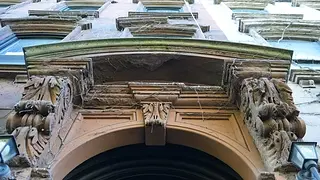
photo by: Morgan Forde
The home's brownstone facade and original architectural details, including this front archway will be restored.
Stewarding an Iconic Home
Upon Hughes’ death in 1967, the house stayed with the Harpers. In 1980, Emerson Harper transferred the property to his son, James Emerson Harper, who saw the home designated a New York City Landmark in 1980 and listed in the National Register of Historic Places in 1982. In 1985, he sold the house to its current owner, Dr. Beverly Prince, who is a practicing physician and a public historian.
Today, the home remains Hughes’ tangible legacy, stewarded by Dr. Prince and her husband Les Rolfe, for current and future generations to experience and be inspired by.
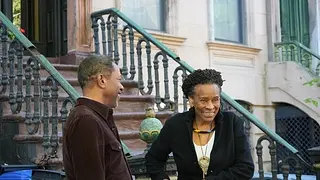
photo by: Morgan Forde
AACHAF Executive Director Brent Leggs (left) and Dr. Beverly Prince (right).
The Langston Hughes House, constructed in 1869 by real estate developers James Meagher and Thomas Hanson, is one of a pair of three-story, brownstone-fronted residences designed by architect Alexander Wilson in the Italianate style.
Beginning in 2021, in partnership with Dr. Prince, the National Trust’s African American Cultural Heritage Action Fund staff collaborated with a diverse consultant team to study the over 150-year-old building’s condition and recommend preservation approaches.
While in need of conservation, most of the historic character-defining features and materials of the home are still in place on both the exterior and interior. These include the ornate brownstone elements, the metal cornice on the facade, the extensive interior wood moldings and ornate plaster ornamentation, original hardwood floor planks, elaborate ceiling details and fireplaces with carved marble mantles, and a stained glass laylight above the staircase on the interior. There is also evidence of the original green paint in Hughes’ private room and office spaces.
This initial phase of work culminated in the Langston Hughes House Stewardship Plan, which evaluates various treatment options retaining the home’s historic character and significance while ensuring it remains structurally resilient and operationally sustainable for another century.
Download: Stewarding the Langston Hughes House
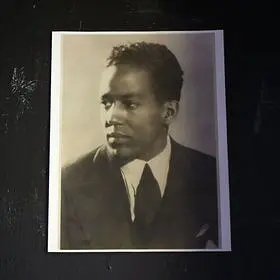
Download the Langston Hughes House Stewardship Plan to learn more about this project.
Exterior Restoration Project
In 2024, the Action Fund engaged AYON Studio Architecture and Preservation, P.C. and Excellent General Contracting Corp, which also specializes in historic brownstone restoration, to lead documentation, administration, and construction for the next phase of stabilization and exterior work on the home. The immediate focus is on ensuring the long-term integrity of this nationally significant landmark.
This phase, starting in early 2026, will include the full resurfacing of the brownstone facade, protection of significant architectural features, masonry restoration, sheet metal repairs, and roofing work. This restoration will secure the building's envelope, ensuring it remains resilient against weather and temperature changes, and lay the groundwork for a dynamic future to come as a center of Harlem's cultural legacy and community.
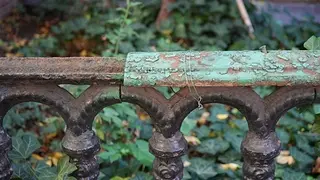
photo by: Morgan Forde
Original iron railings in front of the home will be restored and replicated.
To learn more about the long-term plans for the Langston Hughes House in Harlem and its history, download the Action Fund’s stewardship plan. The Action Fund and the National Trust are grateful to Dr. Prince and Les Rolfe for their ongoing partnership and devotion as stewards of this remarkable asset and history.
Project Partners and Funders
- Dr. Beverly Prince and Les Rolfe
- The Mellon Foundation
- The Ford Foundation
- The Illumination Fund
- AYON Studio Architecture and Preservation, P.C
- Excellent General Contracting Corp
- MASS Design
Save Historic Places That Tell Our Full American Story
When you join the National Trust, you help save historic and culturally significant places nationwide.