Creating a Gathering Space at a Site of Religious Freedom
A historic adobe church in a rural south Texas town home to only tens of people joined more well-known sites, such as the Stonewall National Monument and the President’s House Site, on the National Trust for Historic Preservation’s list of America’s 11 Most Endangered Historic Places in 2026. Advocates working to preserve the church, called El Corazón Sagrado de la Iglesia de Jesús, meaning the Sacred Heart of the Church of Jesus, or just the Ruidosa Church in the town of Ruidosa, said the recognition reflects that American histories are made in every part of the nation and by its many diverse communities.
“We make a concerted effort to choose places that reflect the lived experience of people in our country, and the lived experience of people in somewhere like Ruidosa is just as significant,” said Jennifer Sandy, senior director of preservation programs at the National Trust. “They all hold stories that help us reflect on where we’ve come from, where we’re going, and who we are as a country.”
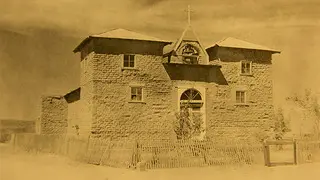
photo by: Marfa & Presidio County Museum
Historic image of El Corazón Sagrado de la Iglesia de Jesús.
This year’s list, announced in May, was uniquely curated to mark the 250th anniversary of the adoption of the Declaration of Independence. It was built to honor the foundational principle that everyone is created equal. “We were also looking for places that provided examples of the ways that Americans have pushed back against injustice, fought for this principle, and struggled to realize that ideal over time,” Sandy said.
The Ruidosa site is the only church on the list and one of three sites tied to the theme of religious freedom. It was also featured on Latinos in Heritage Conservation’s list of endangered Latinx landmarks in 2025.
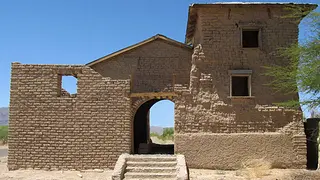
photo by: Sarah Vasquez for Friends of the Ruidosa Church
Exterior of El Corazón Sagrado de la Iglesia de Jesús in 2026.
Along the Rio Grande
Ruidosa Church’s path to national recognition has been a winding one. The church was completed in 1915, and for decades, it served Latino-majority farming communities that dotted the borderlands on either side of the Rio Grande. The river comes within several hundred yards of the church as it curls southeast toward a prominent bend in the river, for which the surrounding Big Bend area is named. The Chinati Mountains can be glimpsed through the great arch at the church’s back door.
The church’s location along the Rio Grande and its historic role in serving communities on both sides of the border are part of what makes the site so unique. “People in Texas often forget that we were once part of Mexico, and they are our neighbors, and they have a very large influence on who we are as a state today, and Ruidosa Church is a testament to that,” said Jordan Martinelli, a board member of the nonprofit Friends of the Ruidosa Church, which stewards the historic site.
Stay connected with us via email. Sign up today.
It is also a significant site because of its traditional adobe architecture. The building is a scaled-down frontier version of a traditional Catholic church floor plan featuring two pyramidal-roofed towers flanking a central entrance hall. Its four arches are believed to be the largest freestanding adobe arches left in Texas.
But that adobe construction also meant the church deteriorated quickly after it was abandoned in the 1950s, following a decline in the area’s farming population due to a lack of water for irrigation. By the 1990s, one of the building’s towers had collapsed and the Catholic Diocese of El Paso, which owned the property, announced plans to demolish what remained of the church.
“Our mission beyond just restoring the structure is to create a space for the community to gather.”
Jordan Martinelli
A Community Comes Together
An outpouring of local support prevented the church’s demolition, but without an organized community group dedicated to its preservation, it continued to deteriorate. It was not until 2004 that Friends of the Ruidosa Church secured support from the Texas Historical Commission, the National Trust, and the Presidio County Historical Commission to undertake stabilization and partial restoration. Eventually, in 2020, the organization took title to the property after the diocese transferred it to Presidio County, which in turn transferred it to the nonprofit.
Now, more than half a century after it was abandoned, Ruidosa Church has been stabilized enough to host community events again. None is more beloved in the Big Bend area than an annual autumn gathering, where attendees learn about progress on the site and are dazzled with an exhibition of regional art and traditional Matachín dancing. Many also gather in either Ruidosa or Marfa for regular adobe-making workshops, forming hundreds of bricks per session to contribute to the church’s restoration. “Our mission beyond just restoring the structure is to create a space for the community to gather,” said Martinelli. “Ultimately, we are providing a community space in a region that does not have one.”
A New Threat
But just as life returns to the historic sacred site in rural Ruidosa, the site is also facing a new threat: The Mexico–U.S. border wall that President Donald Trump campaigned on is slated for construction only about 400 yards away from the church. The wall would cut the church off from the Rio Grande and communities across the border whose histories are also deeply rooted in what is now Texas. Martha Stafford, another board member of Friends of Ruidosa Church, said experts are also concerned that vibrations from heavy equipment hauling past the church, as well as from border wall construction itself, could destabilize the fragile adobe structure.
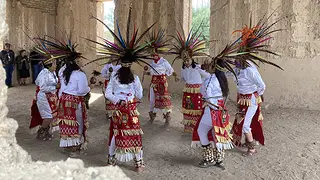
photo by: Jessica Lutz for Friends of the Ruidosa Church
Community members perform traditional Matachín dancing at El Corazón Sagrado de la Iglesia de Jesús.
Recognition on this year’s list of 11 Most Endangered Historic Places, which came with a one-time $25,000 grant in recognition of America 250, as well as individual donations that have become more frequent since Ruidosa Church’s earlier recognition as a Latinx endangered landmark, will help the nonprofit raise the alarm about this new threat. The funds will also be used to market the organization’s community programming, make progress on rebuilding the collapsed tower, and cover other restoration work.
Stafford said the support “really validates all the blood, sweat, tears, and work we have put into this, and it gives us more national recognition that these tiny border communities matter to United States history.”
Save Historic Places That Tell Our Full American Story
When you join the National Trust, you help save historic and culturally significant places nationwide.