A Modernist Icon to Flight Saved to Fly Another Day
Section 106 Success Story: TWA Terminal (Queens, New York)
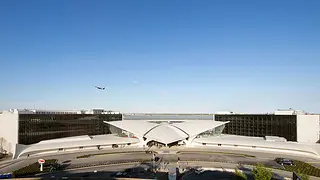
photo by: TWA Hotel/David Mitchell
Exterior of the TWA Hotel.
Designed by Finnish American architect Eero Saarinen, the TWA Terminal at New York’s John F. Kennedy International Airport is an icon of Modernist architecture. It opened in 1962 and was later designated a New York City Landmark and listed in the National Register of Historic Places. After TWA went out of business in 2001, the Port Authority of New York and New Jersey, operator of the airport, proposed building a large new terminal behind the TWA Terminal. While the main portion of the TWA Terminal would remain untouched, two satellite gate structures linked to the main building by connector tubes would be demolished.
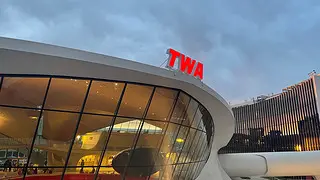
photo by: Anuraag Baxi
Detail view of the entrance of the TWA Hotel.
The public raised concerns that the historic terminal would be isolated from its airfield context, and that no use for the historic building was identified as part of the plan, nor was there a funding commitment for rehabilitation of the site.
To move forward with its proposal, the Port Authority needed the Federal Aviation Administration (FAA) to approve a change to the airport’s Airport Layout Plan. Consequently, the FAA was responsible for conducting the Section 106 consultation process under the National Historic Preservation Act. Thirteen consulting parties worked together to explore alternatives to the Port Authority’s plan.
The project’s final Memorandum of Agreement (MOA) set forth measures that protected the site: The two historic connector tubes would be retained, the Port Authority would seek a developer to adaptively reuse the old terminal (and in the meantime, they would fund its maintenance), and a Redevelopment Advisory Committee would be established to review and consult on future plans and designs as they were developed.
What We Would Have Lost
After being threatened with demolition, today the TWA Terminal at John F. Kennedy International Airport is a unique gathering spot for travelers, providing a historic glimpse into air travel in the middle of the 20th century. By bringing together 13 consulting parties that together worked out the site’s future, the Section 106 regulatory process ensured an outcome that met the needs of an important present-day travel hub while retaining a key piece of aviation history and iconic midcentury architecture. If the Advisory Council on Historic Preservation’s July 2026 proposed changes to the Section 106 regulations were in place, the outcome would likely have been different. The unique “consultation” dynamic, which led to this collaborative solution, would no longer be required. Consulting parties like state and local governments and other stakeholders may not have had the opportunity to comment and contribute to a solution.
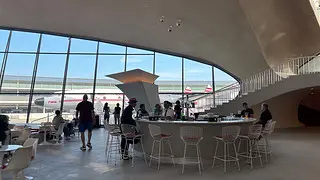
photo by: Anuraag Baxi
Bar area of the TWA Hotel.
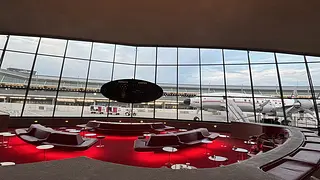
photo by: Anuraag Baxi
View of the retro departures and arrivals sign from the TWA Terminal.
In 2008, the new terminal building opened to the public. In addition to preserving the TWA Terminal, the Port Authority also funded a $19 million restoration of the building and later secured a private developer to adaptively reuse it. The TWA Hotel opened to the public in 2019. The MOA created during the Section 106 review process provided the foundation for this achievement and assured the future of this modern architectural masterpiece. As a result, visitors can stay, dine, and explore the splendor of this era of aviation history.