Convention Center Construction Project Minimized Impact on Historic Neighborhoods
Section 106 Success Story: Walter E. Washington Convention Center (Washington, D.C.)
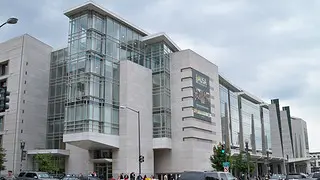
photo by: Matthew Bisanz via Wikimedia CC BY-SA 3.0
The Walter E. Washington Convention Center in Washington, D.C.
In 1994, the D.C. Council chose a vacant parcel just north of Mount Vernon Square in downtown Washington, D.C., as a site for a new convention center to restore the city's competitiveness in the meetings and events industry.
Because the project required approval from the National Capital Planning Commission (NCPC), a federal agency, the undertaking triggered Section 106 review. NCPC determined the project would adversely affect properties eligible for or listed in the National Register, including the L'Enfant Plan of the City of Washington, along with historic residential neighborhoods immediately surrounding the proposed site.
The Section 106 consultation process did not hinder the construction of the convention center project. Rather, this process produced a mutually beneficial outcome where the convention center was able to advance on schedule and negative impacts to the historic character of the surrounding neighborhoods were minimized.
Beginning in 1996, NCPC, the D.C. State Historic Preservation Office (D.C. SHPO), and the Advisory Council on Historic Preservation consulted with a wide range of interested parties, including the D.C. Preservation League, the National Trust for Historic Preservation, the Committee of 100 on the Federal City, the Greater Shaw Consensus Group, neighborhood business associations, and Advisory Neighborhood Commissions.
What Would Have Been Lost
Without Section 106 of the National Historic Preservation Act, the construction of the Walter E. Washington Convention Center would have significantly changed the Shaw and Mount Vernon Square historic neighborhoods. The Section 106 process directly engaged in public consultation with more than a dozen neighborhood associations, business groups, and Advisory Neighborhood Commissions to protect the neighborhoods’ historic character and the L'Enfant Plan of DC. Under the Advisory Council on Historic Preservation's proposed regulatory changes, federal agencies would no longer be required to consider the reasonably foreseeable cumulative effects of major new development projects on adjacent historic districts or properties.
The result of the consultation process, finalized in August 1997, was a Memorandum of Agreement establishing a detailed mitigation package: $1 million for the exterior preservation of the historic Carnegie Library; $1 million for landscape improvements to Mount Vernon Square and surrounding L'Enfant Plan reservations; funding to prepare National Register nominations that expanded the Blagden Alley/Naylor Court Historic District to create the larger Shaw Historic District that better recognized the full neighborhood; a temporary demolition moratorium protecting eligible historic properties from speculative teardown during the review process; and a $1 million preservation grant fund for owners of historic properties within the affected historic districts.
This grant fund alone engaged hundreds of residents through community workshops, resulting in more than 250 applications. The fund has supported 73 preservation grants totaling nearly $585,000 for property owners in the Shaw, Blagden Alley, and Mount Vernon Square Historic Districts.
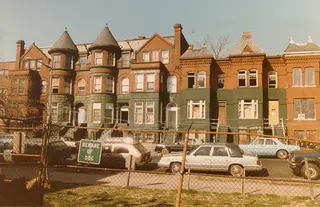
photo by: D.C. State Historic Preservation Office
1246 10th Street NW in Washington, D.C. in 1989. The homeowner was one of the recipients of the grants set up for historic properties within the affected historic districts.
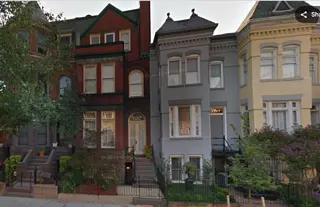
photo by: Google Street View
1246 10th Street NW in Washington, D.C. in 2011.
The preservation grant fund had an extended impact. The D.C. SHPO modeled their Homeowner’s Grant Program after the program in the MOA because it showed the potential of direct cash grants and encouraged the SHPO to amend the low-income rehab tax credit in the city’s preservation law. The result: a program that issued almost $5 million grants to low-income homeowners in historic districts across the District of Columbia.
The convention center opened in 2003, and the historic districts it once threatened remain protected and intact today, a lasting example of Section 106 turning a potential conflict into shared community investment.
Prepared with additional information from the D.C. State Historic Preservation Office. Visit Section 106 Under Threat for more success stories, information, and to take action.