Protecting Archaeological Resources of Native American Heritage in Mesa
Section 106 Success Story: Union Pacific PIRATE Project (Mesa, Arizona)
The landscape east of Mesa contains archaeological resources that connect contemporary Native American communities to their ancestors and to places of longstanding cultural and religious significance. Four such historic properties were identified within the corridor of the proposed Union Pacific Railroad Pecos Industrial Rail Access and Train Extension, or PIRATE, project.
The Project
The PIRATE project involves approximately six miles of new rail line intended to support economic development in Mesa’s Pecos Advanced Manufacturing Zone while reducing transportation of hazardous materials on U.S. roads.
Because the rail corridor could not avoid four archaeological sites, the project would have an adverse effect on historic properties considered sacred and religiously important to multiple federally recognized Tribes.
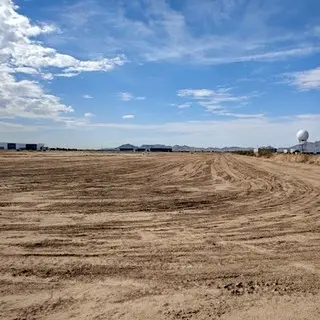
photo by: Arizona SHPO
The PIRATE project area is located within the boundaries of a large ancestral village site of the Akimel O'odham and Piipash people, the descendants of whom are members of the Four Southern Tribes of Arizona (Gila River Indian Community, Salt River Pima-Maricopa Indian Community, Tohono O'odham Nation, and Ak-Chin Indian Community).
During development of a Memorandum of Agreement, Union Pacific inadvertently approved access for an adjacent developer into the project area. Two archaeological sites were significantly damaged, generating serious concern among the affected Tribes.
The Section 106 Process
The Surface Transportation Board suspended Section 106 review while it examined whether the damage constituted anticipatory demolition under the National Historic Preservation Act. After the Board concluded that it could not determine that Union Pacific had willfully engaged in anticipatory demolition, consultation resumed in September 2025.
The process created an opportunity not simply to address the immediate damage, but to examine why it happened.
What We Would Have Lost
The Section 106 consultation process enabled this important infrastructure project to be constructed in a manner that preserves the Tribes' cultural and religious ties to the site. When inadvertent damage to the site occurred prior to construction, the communication channels that were established between the Surface Transportation Board, Union Pacific, and the Tribes provided a framework for productive dialogue on best practices for future rights-of-way management and cultural sensitivity training.
The Success
Union Pacific acknowledged failures in its internal communication, requested meetings with SHPO and the affected Tribes, and apologized for what had occurred.
More importantly, the parties created a working group focused on improving communication and refining Union Pacific’s right-of-way management practices. The goal is to minimize future unintentional disturbance of archaeological sites while strengthening relationships between the railroad, SHPO, and Arizona Tribes.
Here, the success of Section 106 is not measured by avoiding every conflict. It is measured by creating a structured process through which a serious mistake can lead to better practices, greater accountability, and stronger relationships.
Submitted via the National Preservation Partners Network. Visit Section 106 Under Threat for more success stories, information, and to take action.