A Simple Water Bottle at the Hotel de Paris Museum Provides a Clue to Its Past
Tuberculosis (TB) tore through the United States during the 19th and early 20th centuries. Records from 1900 show that the disease, also historically known as consumption, was one of the country’s leading causes of death that year. Doctors often prescribed exposure to fresh air as a treatment, so TB patients flocked to high-elevation areas like Colorado.
Louis Dupuy, the proprietor of the Hotel de Paris in Georgetown, Colorado, likely hosted guests who suffered from TB. The former hotel is a National Trust Historic Site, and Executive Director Kevin Kuharic says its bottles of water dating to around 1900 serve as a key clue. The bottle shown—still filled and sealed with a cork—features a paper label claiming the “saline-alkaline” water could help heal maladies such as indigestion; eczema; and scrofula, a typically TB-related lymph node infection.
Other possible signs of a TB connection abound. In Dupuy’s well-stocked library, Kuharic found the 1890 book Professor Koch’s Cure for Consumption by H. Feller, about German microbiologist Robert Koch’s discovery of the bacterium that causes TB. Dupuy brought doctors to the hotel to provide free health consultations to guests, and purchased items that were thought to have overall medicinal benefits, such as cherry bitters, meat extract, and seltzer water.
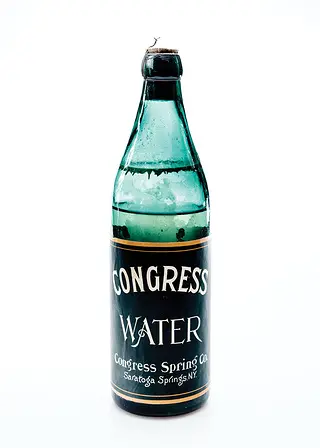
photo by: Benjamin Rasmussen
As a former miner and avid cook, he may have been intrigued by the idea of trying to treat lung disease through food and drink. “Everything points towards his interests in health, fitness, hygiene,” Kuharic says. The water bottles and thousands of other artifacts from the polymathic Dupuy’s period of ownership are on display at the Hotel de Paris Museum, about 45 miles from Denver.