Act Now
11 Most Endangered Historic Places
Greater Chaco Cultural Landscape
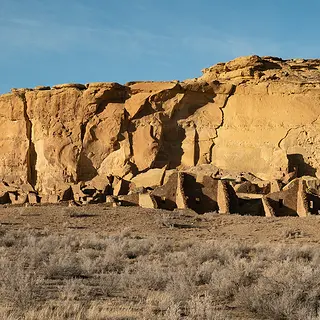
The Greater Chaco Cultural Landscape, an ancestral homeland sustained by Pueblo people for over a millennium, is a place of deep meaning for modern Pueblo and Hopi nations. Actions to safeguard public land and respond to ongoing threats like industrial development are part of a broader history of American land, including the dispossession and destruction of Indigenous sites. Those organizing to protect this landscape demonstrate that Indigenous histories and enduring relationships with the land are not secondary to economic gain, but rather essential, equal, and permanent threads in American history.
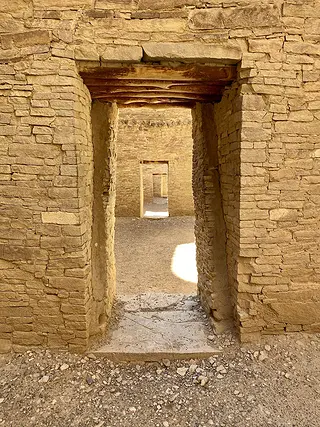
photo by: Pueblo of Acoma
Door entryway in Pueblo Bonito, in the Chaco Culture National Historical Park, New Mexico.
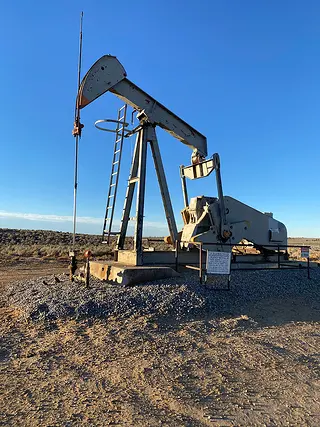
photo by: Pueblo of Acoma
Oil well in the Greater Chaco Cultural Landscape.
Encompassing thousands of square miles across northwestern New Mexico and extending into Arizona, Colorado, and Utah, the Greater Chaco Cultural Landscape includes federal lands such as the Chaco Culture National Historical Park, state trust lands, tribal lands, and private lands. While best known for its monumental stone houses built between 850 and 1250 A.D., the significance of Chaco lies in the vast system of communities it connected across what is now northwest New Mexico and beyond, and it remains an ancestral homeland and place of ongoing cultural and ceremonial importance for today’s Pueblo and Hopi nations. Its architecture and famed petroglyphs (aligned to solar and lunar cycles) illuminate oral traditions passed down through generations, maintaining vital links to ancestors.
The site also serves educators, researchers, and visitors, seeking a fuller understanding of world history, including at Acoma Sky City, which is a National Trust Historic Site owned and operated by Pueblo of Acoma. Pueblo of Acoma is a member of the All Pueblo Council of Governors, a collective voice of the 20 Pueblo Nations of New Mexico and Texas that has long advocated to protect this significant area. The landscape also provides critical context for understanding related ancestral sites across the region, including Mesa Verde National Park, Aztec Ruins National Monument, and Bears Ears National Monument, reflecting a broader interconnected system rather than isolated places.
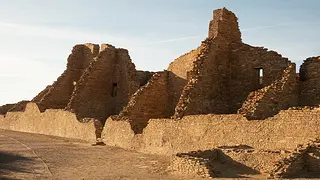
photo by: Avi Farber
Pueblo Bonito in the Chaco Culture National Historical Park, New Mexico.
Federal and state management of the cultural landscape have historically treated Chaco as an isolated archaeological park, ignoring the broader landscape and the living Indigenous communities who continue to hold cultural responsibilities to these places. This fragmented approach has left the majority of Greater Chaco vulnerable to industrial development and irreversible damage. In 2025, the federal administration initiated the process to fully revoke Public Land Order (PLO) No. 7923, which had placed a ban on new leasing for gas and mineral extraction. Without the PLO, lands outside the protected park boundaries could open to oil and gas development, damaging the integrity of the landscape and limiting continued cultural access and use by Pueblo communities.
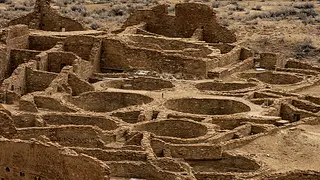
photo by: Avi Farber
Pueblo Bonito in the Chaco Culture National Historical Park, New Mexico.
If protected and interpreted holistically, the Greater Chaco Cultural Landscape could serve as a national model for Indigenous-led stewardship, intertribal collaboration, and public education grounded in respect and consent. Permanent protections, restoration of robust tribal consultation, coordinated land-use planning, and recognition of the landscape as a living place are all essential strategies to save the landscape. The public can support protections for the Greater Chaco Cultural Landscape by asking their representatives in Congress to support the Chaco Culture Heritage Areas Protection Act and oppose policies to rescind PLO No. 7923.
The Greater Chaco Cultural Landscape was named to the National Trust's list of America's 11 Most Endangered Historic Places for 2026. It was also named in 2011.
Support the preservation of the Greater Chaco Cultural Landscape.
Send LettersSupport our work to save places that matter.
Donate NowStay connected with us via email. Sign up today.
Related Stories
-
Preservation Magazine 14 Travel Destinations Recommended by Preservation Experts -
Preservation Magazine In Southwest Colorado, Archaeologists Find Key Clues to the Lives of Ancestral People

Explore More Places


Senate Bill S. 5653 would limit a process that considers how federal projects affect historic places and make community consultation optional for many projects. Urge your senators to oppose the bill as written and demand meaningful changes to its provisions.
Send Letters