Heritage Now! Decarbonizing the Built Environment Through Heritage
A new toolkit provides a practical resource for education, advocacy, and policymaking.
Built heritage is not just a connection to the past—it is a source of powerful climate action solutions for the future. Heritage-informed decarbonization solutions that blend technical and cultural approaches are needed in a sector striving to meet increasingly urgent climate targets. And yet, policies and regulations often leave aside or actively create barriers to decarbonization through cultural heritage.
.webp)
photo by: City of San Antonio Department of Historic Preservation
The City of San Antonio’s pioneering deconstruction and salvage policy demonstrates a city-level approach to develop regulatory mechanisms and accompanying training and economic initiatives to jumpstart a circular economy.
.webp)
photo by: Agnes Scott College.
Agnes Scott College is a private liberal arts college for women located within metro-Atlanta, Georgia, committed to achieving carbon neutrality by 2037.
Climate policy continues to center on new construction, even though most emissions come from operating the buildings that already exist. Heritage is often treated as an afterthought, despite offering approaches that apply across buildings of all ages. And while many strategies rely on technical solutions alone, heritage brings cultural knowledge and lived experiences that can drive broader adoption and long-term change.
To elevate the opportunity and impact of heritage-informed decarbonization solutions, the Climate Heritage Network—a voluntary, mutual support network of government agencies, NGOs, universities, businesses, and other organizations committed to tackling climate change and achieving the ambitions of the Paris Agreement—launched the Decarbonizing the Built Environment through Heritage (DBTH) initiative. It’s goal? To integrate transformative, cultural heritage-based solutions into climate policy at all scales.
Decarbonizing the Built Environment Through Heritage
DBTH is led by Built Buildings Lab and supported by the University of Lagos Urbanism Research Hub, the National Trust for Historic Preservation, and Architecture 2030. Project funding is provided by the Mellon Foundation and the 1772 Foundation. DBTH is one of five initiatives within the Climate Heritage Network’s (CHN) project, Imagining Low Carbon, Just, Climate Resilient Futures Through Culture and Heritage.
The DBTH project collects and elevates proven examples of heritage-informed decarbonization—approaches to built environment decarbonization rooted in the wisdom, practices, and places of the past—from around the world. The project began by collecting information from CHN members, community advisors, and publications, including a scan of global policies and examples of projects, programs, and initiatives.
From this initial groundwork, the project team developed a policy framework that identifies how policies intersect across climate, built environment, and heritage agencies to advance heritage-informed decarbonization solutions. A collection of over 100 examples of heritage-informed decarbonization was whittled down to 14 for development into detailed case studies that illustrate a diverse range of approaches, geographies, and scales.
Outcomes of the DBTH initiative include both the DBTH Toolkit—a practical resource to understand, communicate, and implement heritage-informed decarbonization—and the Heritage Now! Campaign—a coalition campaign bringing together policymakers, advocates, practitioners, and community leaders to advance the policy agenda.
Preservation Leadership Forum: Heritage Now! Three-Part Webinar Series Recordings
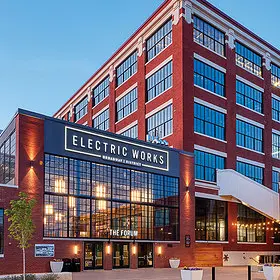
The National Trust in partnership with Built Buildings Lab presented a three-part series on a global campaign advancing heritage-informed decarbonization strategies.
Building a Coalition
Launched at COP30 in Belém, Brazil, the Heritage Now! Campaign is a coalition of heritage and climate practitioners committed to amplifying the benefits and principles of heritage-informed decarbonization. The goal of both the DBTH Toolkit and the Heritage Now! Campaign is to call for a transformative approach to decarbonization initiatives that recognizes heritage as a climate strategy and prioritizes genuine inclusion of cultural and Indigenous voices. By embracing this approach, policymakers can unlock new pathways for environmental sustainability and social equity, ensuring that climate strategies not only reduce greenhouse gas emissions but are also deeply rooted in the cultures and histories of those they serve.
Stay connected with us via email. Sign up today.
DBTH is grounded in five core principles for heritage-informed decarbonization:
- Learn from the greatest living laboratory for climate adaptation – the existing built environment.
- Prioritize continued building reuse and care.
- Implement place-based solutions to build, maintain, and live sustainably.
- Reframe building as a resource.
- Include heritage and Indigenous voices in climate planning and policymaking.
Heritage is often treated as an afterthought, despite offering approaches that apply across buildings of all ages.
The Decarbonizing the Built Environment Through Heritage Toolkit
While the benefits of heritage to decarbonizing the built environment are clear, policy transformation is needed to enable the implementation and scaling of heritage solutions. In many jurisdictions, modifications are needed to the existing, and sometimes complex, regulatory frameworks governing the built environment to align governance across heritage, buildings, and climate action. In other regions, such policies are just being developed, giving urgency to aligning heritage, building, and climate policies now.
The Decarbonizing the Built Environment Through Heritage Toolkit is a practical resource for education, advocacy, and policymaking to assist advocates and policymakers in meeting this policy transformation. It brings these principles together with materials that help users understand and apply them in different contexts.
The toolkit includes:
- Principles of Heritage-Informed Decarbonization, including prioritized policy levers and illustrations of successful policy examples.
- Case Studies of heritage-informed decarbonization that illustrate buildings, programs, and policies from diverse contexts.
- An atlas of over 100 examples of heritage-informed decarbonization examples from around the world.
- Context prompts to guide conversation about how global concepts and examples apply within local contexts.
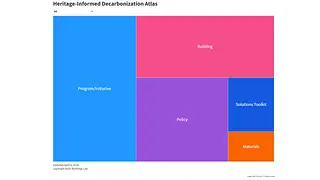
photo by: Heritage Now
A screenshot of the Toolkit Atlas.
Together, these resources support education, advocacy, policymaking, and community decision-making. Through heritage-informed decarbonization, communities have the opportunity to invest in whole-life solutions that catalyze the cultural response needed to address the climate crisis.
Lori Ferriss is the co-founder and executive director of Built Buildings Lab. With a background spanning architecture, engineering, preservation, and sustainability, her internationally recognized work focuses on leveraging existing and historic buildings for a sustainable, resilient, and equitable future.
Elizabeth Rowe is policy lead at Built Buildings Lab. With a background in climate policy and GHG emissions tracking, her work focuses on integrating existing buildings and cultural heritage into equitable, community-informed decarbonization strategies.
Save Historic Places That Tell Our Full American Story
When you join the National Trust, you help save historic and culturally significant places nationwide.