6 Tips for Using Your Historic Site as a Teaching Tool
Explore lessons learned from the 2026 Ann Norton Sculpture Garden STEAM Day.
You don’t expect to see young students petting a robotic dog named Spot while enjoying the tropical oasis that is the Ann Norton Sculpture Gardens (ANSG) in West Palm Beach, Florida. That atmosphere of curiosity defines ANSG’s annual “STEAM Day,” which provides a unique opportunity for students to explore the arts and sciences in a historic place.
In January, ANSG’s “From Stone to STEAM”— short for Science, Technology, Engineering, Art, and Math—built bridges between disciplines by using hands-on activities to encourage students’ creative thinking.
Ann Norton Sculpture Gardens STEAM Day
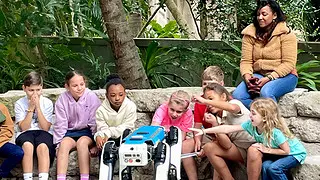
photo by: Chris Morris
Third-graders from Forest Hill Elementary School were excited to see Spot, Florida Power & Light's "dog drone."
The Dorothy C. Radgowski Learning through Women's Achievement in the Arts Grant Program, a joint project of the National Trust for Historic Preservation’s Where Women Made History initiative and the Historic Artists' Homes and Studios program, supported “From Stone to STEAM.” The grant funding helped ANSG bus in 150 third-graders from Forest Hill Elementary School, a local institution primarily serving economically disadvantaged students. A full day of learning and exploration, prepared by ANSG staff and community partners, awaited them.
ANSG staff overheard students enthusiastically declaring STEAM Day "the best day ever!" What makes STEAM Day such a success—and how can its successes be replicated elsewhere? Whether your site serves fifteen students or five hundred, a combination of hands-on activities, holistic learning, and place-based inquiry at a historic place can be a transformative experience for children.
Here are six tips to help you get started on planning your own STEAM-based educational event.
Build practical skills.
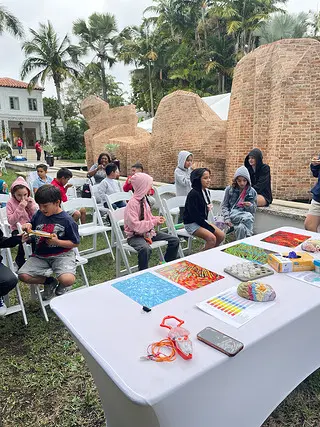
photo by: Chris Morris
STEAM Day stations were placed among Norton's art, introducing students to her creative work.
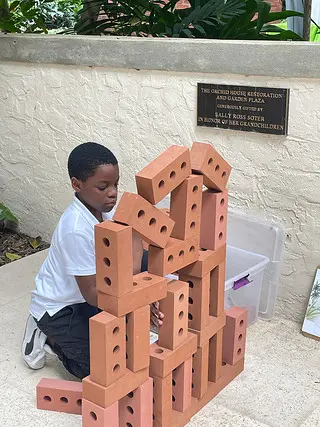
photo by: Chris Morris
At one of the stations students constructed sculptures out of foam bricks along the lines of Norton's artwork.
Students can practice life skills while engaging with STEAM learning.
“Shopping" for building materials with play money during the Greene School's Math Marketplace Challenge gave students the opportunity to build real-world skills like managing a budget. Kids “bought” Legos, building blocks, cups, and popsicle sticks to use as they designed structures that would be both tall and strong.
Think hands-on.
Prioritizing hands-on learning supports neurodivergent students (those whose brains work differently from what is considered typical, such as students with ADHD or dyslexia), who might struggle with reading or active listening but blossom when presented with tactile projects. Hands-on activities can also be excellent options for students who speak English as a second language.
Florida Atlantic University's Stiles-Nicholson Brain Institute's STEAM Day Station showed students which parts of the brain fuel creativity and influence emotions. Students then made "brain caps" by cutting out paper diagrams of different regions of the brain and taping them together into a hat. Kids enjoyed wearing their “brain caps” throughout the day!
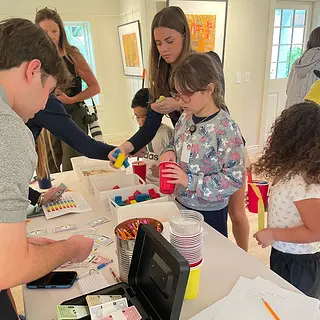
photo by: Chris Morris
Students shopped using play money, guided by local high school students.
Connect topics.
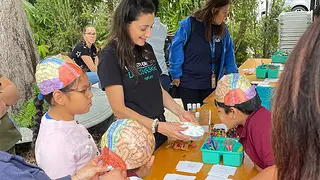
photo by: Chris Morris
Kids constructed "brain caps" that taught them about the brain's anatomy.
Connecting different academic subjects—like art and math—can help students who consider themselves good at one subject but not another see that their skills are more transferable than they realized.
Build a Band: Engineering Our Own Instruments, led by music and art therapists from Creative Art Therapies of the Palm Beaches, showed students how different building materials fit together to create sound. Using their engineering skills and imaginations, students made and played their own original instruments.
Nurture students’ whole selves.
Kids learn best when they feel valued and supported.
At the station Bead Yourself, led by A.D. Henderson University School educator Lindsey Wuest, students created bead art celebrating their unique personalities. Wuest encouraged students to come up with positive affirmations that they could repeat to themselves during difficult moments, building healthy patterns that reinforce their self-esteem.
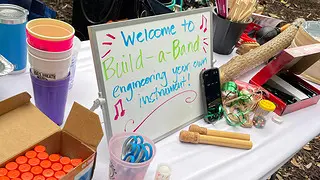
photo by: Chris Morris
The Build-a-Band station invited students to experiment with engineering.
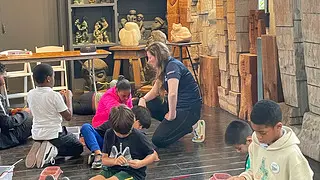
photo by: Chris Morris
Students worked on beading projects on Norton's studio floor, surrounded by her artwork.
Demystify mental health.
To paraphrase the beloved children's television host Fred Rogers, it is important that children know their feelings are both mentionable and manageable.
The Cox Science Center & Aquarium taught kids about how different regions of the brain work together, describing the brain as the "control center" responsible for helping us make sense of the world around us. Learning about the brain’s functioning shows its power and gives students insight into why their emotions work as they do, demonstrating that those emotions are something they can understand and manage.
Stay connected with us via email. Sign up today.
Use your unique space to your advantage.
Assess your space for its assets. What parts of your site might be especially handy when working with school groups?
During STEAM Day, students were divided into several small groups that cycled through eleven available activity stations. ANSG's landscape architecture and layout gave each group the space to focus intently on each activity, an asset worth considering when designing your own program.
Other resources for learning more about STEAM learning and student engagement:
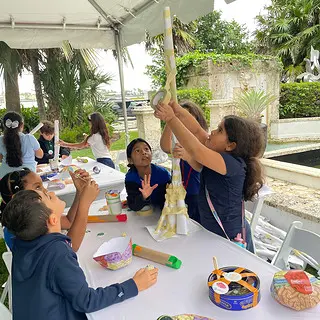
photo by: Chris Morris
Students constructed towers and experimented with engineering principles in ANSG's gardens.
Save Historic Places That Tell Our Full American Story
When you join the National Trust, you help save historic and culturally significant places nationwide.