How Three New National Trust Leaders are Approaching Preservation at Former Sites of Enslavement
At three National Trust Historic Sites, new leaders are bringing bold ideas and fresh approaches to preservation. Within the last year, Ruki Neuhold-Ravikumar took the reins at Woodlawn & Frank Lloyd Wright’s Pope-Leighey House in Alexandria, Virginia; Margaret Salazar-Porzio became executive director at Oatlands in Leesburg, Virginia; and Adam Foreman stepped into the directorship at Shadows-on-the-Teche in New Iberia, Louisiana.
All three places are former sites of enslavement, each striving to tell the complex stories of their past. At Woodlawn & Frank Lloyd Wright’s Pope-Leighey House, two homes and their distinct narratives—one a former plantation built on land that was once part of George Washington's Mount Vernon, the other a relocated Usonian masterpiece—come together into one landscape. At Oatlands, visitors learn about the generations of enslaved people who sustained the wheat farm’s agricultural operations, and descendants’ voices are depended upon as the site envisions its future. And at Shadows-on-the-Teche, where the lives of the former sugar plantation’s enslaved individuals are centered in its interpretation, new technology will soon allow visitors to gain a deeper understanding of how they lived.
We sat down with Neuhold-Ravikumar, Salazar-Porzio, and Foreman, to learn more about their visions for the future.
What did your career look like prior to joining the National Trust, and what drew you to your respective sites?
Ruki Neuhold-Ravikumar: I began as an artist and a designer, spent many years in higher education, and then moved into museums and cultural institutions, including the Smithsonian. The throughline has been education, design, and people.
What attracted me to Woodlawn and Pope-Leighey House was the opportunity to bring all of those things together through the power of place. The two houses allow us to explore architecture and design, but also much bigger questions about home and community, labor and belonging, and how Americans have imagined their future.
Margaret Salazar-Porzio: My PhD is in American studies and ethnicity from the University of Southern California. I eventually came into the museum field and worked at the Smithsonian at the National Museum of American History for 12 years. Then I transitioned to the President’s Committee on the Arts and Humanities for a little over a year, and from there, I worked with the Institute of Museum and Library Services.
I was thinking about how to transition into a role that would allow me to do the on-the-ground work that I really love doing with communities. That’s what attracted me to being at a site like Oatlands, a place that has built a strong community of descendant leaders. The ability to be working in the community with people was really exciting.
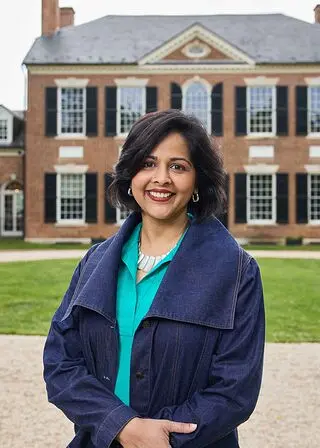
Ruki Neuhold-Ravikumar
Adam Foreman: I actually started my career here at Shadows in 2002. I worked here for about 10 years as an interpreter and tour guide, then visitor services coordinator. I was a director at another historic site for a couple of years, did grad school, and landed at the National World War II Museum in New Orleans for about eight years.
In 2023, I heard that there was an opening at Shadows. It was an opportunity to really change this site—the interpretation, the exhibits, the entire visitor experience—with the new vision of telling that more complete story throughout the site. I rejoined as the senior manager of interpretation and education. In January 2025 I became interim executive director, and then in July it became official.
What aspects of your site are you looking to adapt and grow?
Neuhold-Ravikumar: When I first came on board, I was really struck by both the beauty of the place and the complexity of the stories that it holds. There are stories here about George Washington’s family and the people who were enslaved at Woodlawn, but also stories about Quakers and the free Black community. There are stories about citizen preservationists and landscape and design, and stories of strong women like Nelly Custis and Marjorie Leighey, who shaped and preserved these places.
Our team here is interested in expanding the ways people discover this place. Right now, our “Friends Gather Here” exhibition allows us to explore Woodlawn’s Quaker history through objects, such as a recently conserved 19th-century signature quilt. We’re beginning to develop that conversation between contemporary art and historical objects: for example, making a connection between the Quaker quilt and the geometry of the Pope-Leighey House.
Salazar-Porzio: What really attracted me to this site is that they have been working with descendants on honoring the history of the ancestors who were enslaved here on the property. That kind of work with the community is something that you can’t easily replicate, so this was hugely important to me.
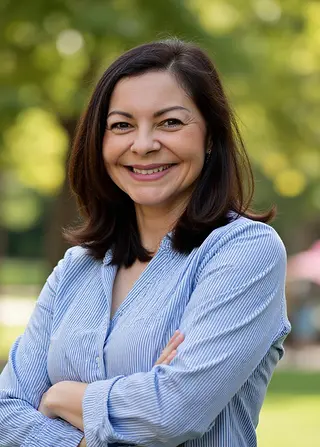
Margaret Salazar-Porzio
Since I got here, we went through a strategic planning process. It’s grounded in the organization’s mission and reflects a shared commitment to stewarding the land and the histories and our community connections, including the descendants, to define Oatlands for its next chapter.
Working directly with descendants, we developed an ethical stewardship policy, which is helping us figure out the guiding principles for how our site is interpreted, experienced, and cared for. We’re going to continue building the infrastructure for descendant engagement to make it an institutional priority.
Foreman: When I came back to Shadows in 2023, we implemented a new strategic framework for our interpretation. We incorporated more stories of slavery, stories of freedom and resistance and survival, into our narrative. The approach that I took was to really center people. We focus on what happened here in this space, how these people learned to survive the system of slavery, how they had families, and how they built their own communities within this space.
We’re continuing our evolution. Coming up very soon, we’re going to be launching an augmented reality experience in our garden. With augmented reality, we’re able to “rebuild” structures that aren’t there anymore. We’re able to dive deeper into personal stories because our visitors will see the structure and then they’ll interact with objects through the screen that will tell the story of the person who either lived or worked in that structure.
You’re starting this role at an exciting time for the National Trust, with Brent Leggs’ recent appointment as CEO and president. He often emphasizes that preservation is about people. How do you see this concept unfolding at your site?
Neuhold-Ravikumar: I want Woodlawn and Pope-Leighey House to become a place of discovery. I want people to understand preservation as an active practice, rather than something that simply protects the past.
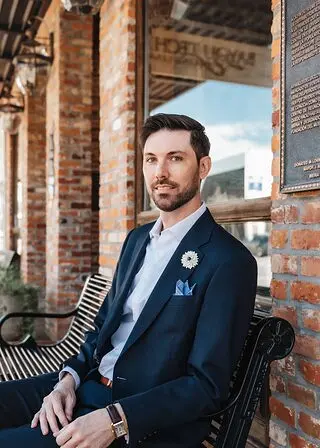
Adam Foreman
We can preserve these buildings, the landscapes, the objects, and the stories so that people can discover the past. But why do we do that? It’s to help people engage with the present more deeply and to imagine a better future.
Salazar-Porzio: The landscape and buildings are important, and they're part of our legacy: They are the largest relics and artifacts that we have of the history of enslavement.
But we give it meaning, and we need to make sure that the stories of the people who were here are what we’re highlighting. It's about sharing the power of the place itself, and what happened here, and whose lives unfolded here.
Foreman: We are actively centering the Shadows as a place for our local community, to view ourselves as more than just a tourist destination. Not only are we changing the stories that we’re telling, but we’re changing who we’re telling those stories for. I want people to feel curious when they visit. I want people to understand that history is deeply complex, and that it has a direct impact on the lives that we’re living today.
Save Historic Places That Tell Our Full American Story
When you join the National Trust, you help save historic and culturally significant places nationwide.
.webp)