The Past, Present, and Future of the National Historic Preservation Act
Celebrating and fighting for this landmark law as it turns 60.
Along the Mississippi River in modern New Orleans is the 85-square-block original footprint of the city now known as Vieux Carré, or the French Quarter. Known for its music, food, and mix of Spanish, French, Creole, and American architectural styles, it sits at the confluence of Indigenous, colonial, and American history. Today, many would be surprised to realize that this vibrant historic district was nearly cut off from the river by a proposed expressway, a severing that would have changed the heart of the district forever.
What saved it? A determined public and the National Historic Preservation Act (NHPA).

photo by: Ron Reiring/Flickr/CC BY 2.0
Aerial view of New Orleans along the Mississippi River.
When the expressway was first approved in 1966, the NHPA did not exist, and important stakeholders such as the Advisory Council on Historic Preservation (ACHP), state historic preservation offices (SHPOs), tribal historic preservation offices (THPOs), and the community did not have a clear voice in the process. However, final funding was to be disbursed after the passage of the NHPA, triggering Section 106 and broad community consultation, which led to the ultimate cancellation of the project. It was the work of those local voices and other consulting parties that protected this important neighborhood and community in New Orleans.
The fight for the French Quarter is also one of the earliest and best pieces of evidence of why the now 60-year-old NHPA still matters. However, as we celebrate this milestone anniversary, this law, and the voices of those in communities large and small, are facing enormous pressure. It’s up to us to speak up.
The Will of the Public
“...the preservation of this irreplaceable heritage is in the public interest so that its vital legacy of cultural, educational, aesthetic, inspirational, economic, and energy benefits will be maintained and enriched for future generations of Americans.”
Section 1 of the National Historic Preservation Act, Pub. L. No. 89-665, as amended by Pub. L. No. 96-515
At its heart, the National Historic Preservation Act (PDF) is about collaboration. It is a law that gives communities an opportunity to designate sites that matter to them (through the National Register and National Historic Landmarks (NHL) Program) and protect them (through regulatory processes like Section 106). It asks us to “stop, look, and listen” in partnership with individuals, organizations, state and tribal historic preservation offices (which ensures voices at the local level are heard), and other governmental entities to decide what is best for a community and its people. It is that “public interest” that is in Section 1 of the NHPA that is core to the legislation’s provisions. Below are just a few examples of how Section 106 and the NHPA have protected places, large and small, in the last 60 years.
.webp)
photo by: Rhododendrites via Wikimedia CC BY-SA 4.0
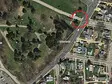
Governors Island in New York City.
Governors Island (New York): Sitting just 800 yards from New York City, Governors Island has a history that goes back centuries with the Lenape people. It has at times served as fortifications during the Revolutionary and Civil Wars, and until 1995 served as a base for various branches of the U.S. military. The closure of the Coast Guard Bases started the Section 106 process bringing together a variety of different community members and organizations to establish long-term protection for the island’s historic resources. Today, “Not only does New York City greatly benefit from tourist dollars which are bolstered by the preservation of critical sites like Governors Island, but residents get to enjoy these places and make use of them in creative and mundane ways.”

photo by: Andy Donaldson
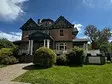
The Village of Zoar in Ohio.
The Village of Zoar (Ohio): The Village of Zoar was settled in 1817 by German immigrants fleeing religious persecution in their home country. Founded on the principles of religious freedom and equality, women and men both had equal voting rights in the society. In the years that followed, the community became largely self-sufficient. The village has since become a state historic site and an NHL. However, the majority of Zoar’s historic buildings are protected by a levee built in the 1930s by the U.S. Army Corps of Engineers (USACE), and in 2005, heavy flooding raised concerns about its integrity. In response, the USACE proposed solutions, one of which was to remove the levee and relocate most of the historic village. Through Section 106 consultation with the community, they came to an alternative solution that preserved Zoar while addressing flood concerns.
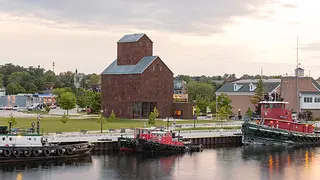
photo by: Kevin J. Miyazaki/Sturgeon Bay Historical Society.
The Door County Granary in Wisconsin.
Door County Granary (Wisconsin): Located on the shores of Sturgeon Bay since 1901, the Door County Granary is one of only two wooden grain elevators remaining that served the transportation of grain through the Great Lakes and via the railroad. When it was earmarked for federal appropriation, the Wisconsin SHPO via Section 106 worked with the community to preserve critical elements of the site to not only save costs to the project, but also to keep its historic aesthetic. Today, the Door County Granary is open to the public as a living history museum, five days a week, free of charge, and acts as a public gathering space for community-wide events on the waterfront.
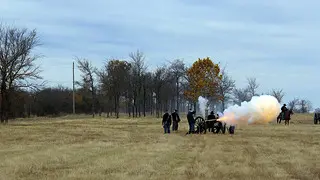
photo by: Oklahoma State Historic Preservation Office
Honey Springs Battlefield in Oklahoma.
Honey Springs Battlefield Pipeline (Oklahoma): When the proposed Diamond Pipeline required federal permits from the U.S. Army Corps of Engineers, the planned route crossed the nationally significant Honey Springs Battlefield, an NHL and the site of the largest Civil War battle fought in Indian Territory. Through the Section 106 consultation process, the Oklahoma SHPO, federal agency, and project sponsor worked together to find a better solution. Without Section 106, the battlefield could have suffered unnecessary damage with little opportunity to consider alternatives.
Out of Crisis, a Movement
On January 1, 1966, the Special Committee on Historic Preservation of the U.S. Conference of Mayors released With Heritage So Rich, a call to action that looked at the transformational changes facing the country and their impact on cultural heritage. For the committee, it was clear that something had to be done. Just over ten months later, on October 15, 1966, President Johnson would sign the NHPA—into law.
It was in that moment that Americans came together to call for protections for the cultural heritage of the United States. They had seen the destruction of iconic landmarks like Penn Station in New York, and the post-World War II construction boom and asked legislators for the tools to move forward with these actions with the communities’ needs being heard. They recognized not only that cities and towns were stronger economically with their historic fabric intact, but also the inherent power of place.
In the decades since, the field of historic preservation has worked to expand that definition of heritage even further, proving that these tools built by the NHPA (while imperfect) provided baseline mechanisms for protecting places that tell the full American story.
“[It was] in an atmosphere of crisis…where the [Special Committee] called on Americans to broaden their vision of what preservation really is or could be.”
Richard Moe, past President and CEO of the National Trust for Historic Preservation (With Heritage So Rich, 1999 ed.)
But now there are two separate threats facing the critical components of this all-important law, both of which look to upend and make optional the voice of the public in these processes.
Section 106 Regulation Revisions: In July 2026, the Advisory Council on Historic Preservation (ACHP) advanced a sweeping and damaging proposal to rewrite the regulations for Section 106 of the NHPA, one that would make consultation with the public and Tribal nations optional.
The proposal is now under review by the Office of Information and Regulatory Affairs (OIRA). While there are actions and steps you can take now to spread the word, it is just as important to be ready to speak up when the public comment period opens.
Permitting Reform: In October 2026, the Senate released a permitting reform bill (S. 5653) which would make much of Section 106 consultation optional. While there is much in this bill to support, these specific changes would alter the underlying premise of the National Historic Preservation Act—ask the community first.
Tell Your Senators: Don’t discard our history. Protect Section 106 and seek meaningful changes to the bill’s historic preservation provisions.
At the National Preservation Summit in September, Ira Matt of the National Association of Tribal Historic Preservation Officers described how we have a responsibility to think “seven generations out.” It is a philosophy that encourages us to look beyond our own personal interests and to center the people who will inherit the world created by our choices. Sixty years ago, a group of Americans did just that, and as we mark the anniversary of the National Historic Preservation Act, it is up to us to work to preserve our cultural heritage for generations to come.
Save Historic Places That Tell Our Full American Story
When you join the National Trust, you help save historic and culturally significant places nationwide.