Introducing K-5 Students to Women's History at 4 Historic Sites
The 2026 Dorothy C. Radgowski Learning Through Women's Achievement in the Arts grantees are all members of the Historic Artists' Homes and Studios Program.
Where Women Made History (WWMH) and Historic Artists' Homes and Studios (HAHS), both programs of the National Trust for Historic Preservation, are proud to announce the latest recipients of the Dorothy C. Radgowski Learning Through Women's Achievement in the Arts Grant Program. Four grants of $18,000 each are supporting historic artists' homes and studios in their efforts to introduce K-5 students to the women who significantly influenced their sites, from the abstract expressionist artist Lee Krasner to the artist Shona-Hah.
Each project will introduce young learners to STEAM (Science, Technology, Engineering, Arts, Math) by exploring complex topics like environmental stewardship, conservation, nature-based design, and puppet construction. “We continue to be amazed by the level of innovation and experimentation in these projects,” said Chris Morris, director of WWMH “These grantees excel at bringing students together in positive, joyful ways to experience how women have made their mark on the arts and sciences, and on historic places.”
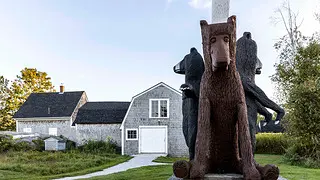
photo by: Maura McEvoy
Langlais Art Preserve, protected by Georges River Land Trust, Cushing, Maine, October 2022.
“The inspiring women celebrated through these new projects were all instrumental in preserving the stories of these sites of creativity,” said Valerie Balint, director of HAHS. “Their contributions are the very reason why everyone, including the young students who will participate in this program, can engage with these places today.”
These four grantees and their ambitious projects join an impressive cohort of past Radgowski recipients. The website Teaching Students with Women's History currently features content created by three previous Radgowski grantees, available at no cost to inspire other historic places to pursue similar student programs centering the historical contributions of women at their sites.
New educational materials from all the completed Radgowski projects, including virtual lesson plans, on-site field trips, mobile workshops, art crates, and intergenerational activities are coming in 2026, creating an accessible archive of effective and transformative programs that can be adapted at historic sites of all types across the country.
The 2026 Radgowski Grantees are:
The Georges River Land Trust (Cushing, Maine) for "The Art of Stewardship: Experiential Learning Field Trips at the Langlais Art Preserve." At the former homestead of artist Bernard Langlais and elementary school educator Helen Friend Langlais, K-5 students will participate in a field trip program designed to inspire them to be caretakers in their communities. After Bernard's death, Helen dedicated her life to sustaining his artistic legacy, which was profoundly shaped by the landscape they called home. Helen's own legacy reflects the crucial—and frequently overlooked—roles women played in historic preservation. Through guided exploration and hands-on activities, students will engage in processes such as observing change over time, documenting collections, and understanding ecosystems. Integrating art, natural science, and math, the program highlights how creativity, attention, and care support the long-term stewardship of special places.
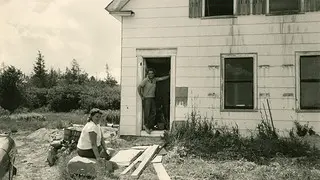
photo by: Martin Leifer
Bernard and Helen Langlais in Cushing, Maine, summer 1966.
The Lelooska Foundation and Cultural Center (Ariel, Washington) for "Art, Structure, and Stewardship: Learning through the Dolls of Shona-Hah at the Lelooska Museum.” Third- and fourth-grade students will interact with and be inspired by dolls made by Shona-Hah, an artist who became part of the Sewide lineage of the Kwakwaka'wakw (Kwakiutl) and was given the name Tl'alihilugwa ("Whale Rising").
The dolls she created show the influence of many diverse Indigenous artistic traditions. Students will learn how her dolls were carved from wood and dressed in clothes made from natural materials, highlighting how knowledge of the natural world informed Shona-Hah's art and storytelling. Program activities will bridge art, science, environmental engineering, and storytelling to create an educational experience steeped in the Indigenous cultures of the Pacific Northwest.
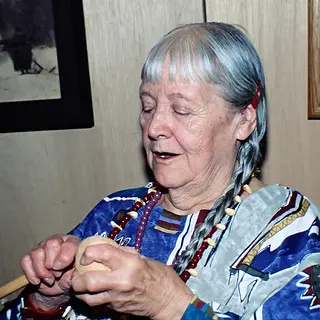
photo by: Rick Edwards
Lelooska Foundation matriarch Shona-Hah, carving in the 1990s.
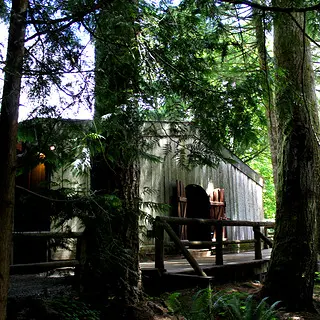
photo by: Lelooska Foundation
The Lelooska Foundation & Cultural Center's Ceremonial House.
The Pollock-Krasner House and Studio (East Hampton, New York) for "Learning Through Puppetry: STEAM Programs on Lee Krasner at the Pollock-Krasner House." The Pollock-Krasner house welcomes puppeteer Liz Joyce to lead students through a special “puppet camp" and develop an original puppet show based on the life and art of abstract expressionist painter Lee Krasner. Participants will learn how to develop, construct, and present a real puppet show. Characters will be inspired by the wildlife thriving in the wetland landscape surrounding the Pollock-Krasner House—lands that were preserved thanks to the efforts of Krasner. The finished puppet show will become a recurring live performance at the site at other local venues, sharing insights about Krasner's legacy and the Eastern Long Island ecology that inspired her.
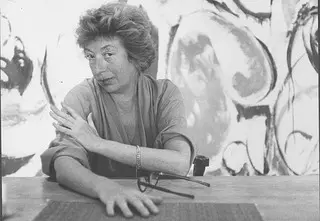
photo by: Archives of American Art, Smithsonian Institution
Halley Erskine, Lee Krasner, 1959, Jackson Pollock and Lee Krasner Papers, 1914 – 1984.
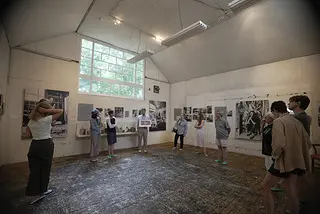
photo by: Archives of Pollock-Krasner House and Study Center
Bill Delano, Pollock-Krasner Studio, 2024.
Pope's Museum Preservation (Ochlocknee, Georgia) for "Applying Inspiration from the Women Honored at Laura Pope Forester’s Pope’s Museum." In partnership with 4-H clubs across several rural counties, students will explore Laura Pope-Forester’s remarkable outdoor folk art, much of which celebrated women's historical activism and service to their country. Through historical and scientific inquiry, live performance, and found-object artmaking, program participants will create their own artistic tributes to notable women in their lives, inspired by Pope-Forester's example. Their work will be showcased at an annual 4-H banquet.
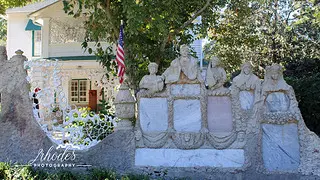
photo by: JRhodes Photography
Pope's Museum with WWII memorial in the foreground.

photo by: Pope's Museum
Historical photo of Laura Pope Forester.
Save Historic Places That Tell Our Full American Story
When you join the National Trust, you help save historic and culturally significant places nationwide.