Prehistoric Oberly Island Archaeological Site
A community-submitted Section 106 Success Story in Northampton County, Pennsylvania.
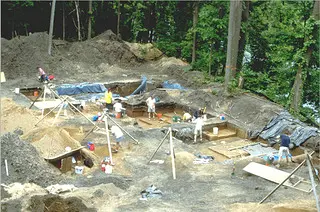
photo by: Peter Siegel
A view of the large block excavation of the levee portion of Oberly Island when it was in progress.
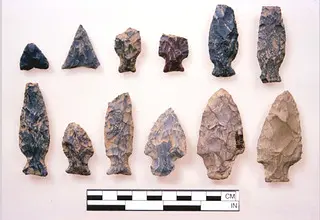
photo by: Peter Siegel
Assorted artifacts from the Late Terminal/Archaic and Woodland occupations of Oberly Island site.
Based on traffic studies, transportation needs, and community engagement, the Pennsylvania Department of Transportation (PennDOT) determined that a bridge was needed to connect Interstate 78 to areas north of the Lehigh River in Northampton County. In doing so, one of the bridge footers would go through the large prehistoric Oberly Island archaeological site.
Based on Section 106 guidance, archaeological excavations conducted in the site revealed more than 7,000 years of Native American occupations adding indispensable information to our understanding of precolonial history in the Delaware Valley. Tens of thousands of artifacts were carefully collected and studied and are now curated by the Pennsylvania Historical and Museum Commission in Harrisburg and are available for scholars and students to study. The occupants of Oberly Island ranged from small bands of hunters and gatherers dating to about 7,000 years ago to large, settled communities of farmers who engaged in active trade and exchange networks along the Atlantic seaboard of Eastern North America.
Early in the planning stages of the project, PennDOT sponsored archaeological surveys to identify the presence or absence of archaeological sites in the rights-of-way of the various engineering alternatives. When the preferred alternate was identified, further archaeological studies were conducted for sites in that alternate. Eventually two of the sites were deemed eligible for listing in the National Register of Historic Places, and additional excavations were conducted to recover the significant information about those sites prior to being destroyed.
What Would Have Been Lost
If the proposed changes to Section 106 were in place when the bridge was constructed, then 7,000 years of Native American history in southeastern Pennsylvania most likely would have been destroyed without ever being documented. Approximately 14,500 years of history is not written down but only exists in the form of buried archaeological deposits. Gutting or watering down Section 106 will threaten those resources.
Consultation between all stakeholders resulted in a research design that was followed to everyone's satisfaction in carrying out the excavations and follow-up lab analyses. An important piece of America's history was systematically documented prior to its destruction, and the resulting archaeological collections are curated following National Park Service guidelines in the Pennsylvania Historical and Museum Commission. The Section 106 process was transparent and collaborative, and a perfect example of the balance between the needs of society and development versus the needs of historic preservation. The needs of society were met (the bridge was built) as were the needs of historic preservation (the Oberly Island site was documented and resulting archaeological collections are curated by the State Museum).
Visit Section 106 Under Threat for more success stories, information, and to take action.
Peter Siegel (Montclair State University) is a New World archaeologist with interests in heritage management and preservation and historical ecology. He has conducted projects throughout eastern North America, much of the Caribbean, lowland South America, and eastern Bolivia.