James Island Connector
A community-submitted Section 106 success story in Charleston, South Carolina.
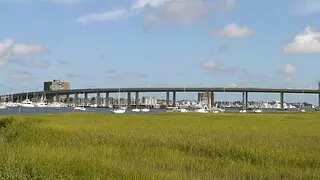
photo by: PennySpender1983 via Wikimedia (CC by 3.0)
Plans to build a connector linking the James Island Expressway with Charleston's Old and Historic District were reconsidered during the Section 106 consultation process.
Transportation projects can have enormous consequences for historic communities, and the James Island Connector provides a powerful local example. The original proposal included an off-ramp onto Broad Street, which would have directed additional traffic into Charleston’s Old and Historic District and had a negative impact on its historic character.
During the Section 106 review, and after strong local opposition, officials heard concerns about the impact of this alignment and considered alternatives. The connector was moved farther north to link with Calhoun Street instead of Broad Street, reducing its impact on the district while still providing an important transportation connection. Without the Section 106 review process, the connector would have funneled 20,000 cars onto Broad Street daily—in the heart of the city’s historic neighborhoods.
What Would Have Been Lost
The Section 106 process allowed the Historic Charleston Foundation to participate as a consulting party, review project proposals, raise concerns about potential impacts, recommend alternatives, and work directly with federal agencies, local governments, and project leaders before a decision about the James Island Connector was finalized. In Charleston, that opportunity made a tangible difference.For Historic Charleston Foundation, Section 106 has provided an important seat at the table when federally involved projects like the James Island Connector could affect Charleston’s historic places and cultural resources.