Protecting a Historic Community Built on Principles of Religious Freedom
Section 106 Success Story: Village of Zoar (Zoar, Ohio)

photo by: Andy Donaldson
The Village of Zoar in Ohio.
The Village of Zoar was settled in 1817 by German immigrants fleeing religious persecution in their home country. In 1819, the Society of Separatists of Zoar was established. Founded on the principles of religious freedom and equality, women and men both had equal voting rights in the society. In the years that followed, the community became largely self-sufficient. It endured until 1898, when members ultimately voted to dissolve the society and allow village buildings to be purchased by individuals rather than communally owned. The village has since become a popular destination for artists and tourists, ultimately becoming a state historic site and National Historic Landmark.
The majority of Zoar’s historic buildings are protected by a levee built in the 1930s by the U.S. Army Corps of Engineers (USACE). In 2005, heavy flooding raised concerns about the levee’s integrity. In response, the USACE proposed solutions, one of which was to remove the levee and relocate most of the historic village. The USACE conducted a request for public comment on the proposed plans, and the public spoke up strongly in favor of protecting the historic village, urging the Corps to design a levee that would save it.
What We Would Have Lost
Without the Section 106 process, the Village of Zoar may have been relocated or lost entirely. By consulting with the public and state and local partners, the U.S. Army Corps of Engineers was able to recognize the national significance of Zoar and the need to repair the levee that protects the historic Village of Zoar from high water events, including flooding.
Because the USACE is a federal agency, it was required to follow the Section 106 process under the National Historic Preservation Act before moving forward. They consulted with state and local parties, including the Ohio State Historic Preservation Office, Ohio History Connection, Zoar Community Association, and the National Trust for Historic Preservation, to reach a solution. In 2013, the USACE announced that they would not remove the levee. Instead, they conducted a $14 million project to repair the levee to preserve the historic village. In 2023, the project was completed.
The USACE’s engagement in the Section 106 process resulted in a solution that preserved the historic Village of Zoar while addressing the levee’s flood-risk concerns. By asking for public comments, the USACE was able to hear from residents and local partners early on and incorporate their feedback into the project’s final design.
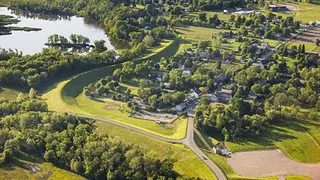
photo by: US Army Corp of Engineers
Overhead view of the Village of Zoar.
Zoar Village NHL Levee Project: 2025 Award for Federal Partnerships in Historic Preservation.