William & Mary's Wren Building Has Lived Many Lives. Now Restored, It Begins Another
When William & Mary set out to restore the Sir Christopher Wren Building—named for the English architect credited with inspiring its design—the Williamsburg, Virginia, university knew it wouldn’t return the structure to its original appearance. Through the centuries, the 1695 academic building underwent major changes that are historic in their own right, says architect Susan Reed of Glavé & Holmes, who led the project.
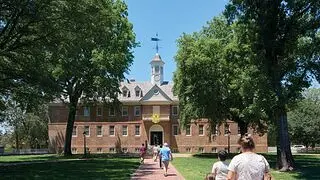
photo by: David Lamb Photography
Soon after its initial construction, which relied on enslaved labor, many of the Wren Building’s original details burned in a 1705 fire. “It was reconstructed, although not exactly as the first building had looked,” says Reed. Two more fires in the 1800s brought additional alterations. Colonial Williamsburg completed a major restoration in 1931 that sought to return the building to its mid-19th century appearance. At the time, the project team used terra cotta tiles to mimic the old wooden shingle roof.
Nearly a century later, the 1931 roof was at the end of its useful life. Reed’s team went back to the original terra cotta manufacturer, Ludowici, which used an identical mold to produce new tiles. The exterior masonry, woodwork, and interior plaster also received in-kind repairs. “We respected the 1695 brick just as much as the 1920s and ’30s work,” says Reed.
Completed in May 2026, the $13.5 million project allows the Wren Building to continue its legacy as the oldest United States academic building, housing classrooms, faculty offices, and campus events for years to come.
Save Historic Places That Tell Our Full American Story
When you join the National Trust, you help save historic and culturally significant places nationwide.