Dear Diary: 4 Historic Journals and Memoirs
Dear Diary...
As autumn leaves fall and a new school season begins, Dear Diary Day encourages people to capture their thoughts on paper. The commemorative day, which takes place each year on September 22, serves as a reminder that personal writing is a creative, expressive act. In a world that is becoming increasingly fast-paced, writing provides people with the opportunity to slow down and reflect on their experiences.
While Dear Diary Day is a recently established observance, the practice of personal writing has existed for thousands of years. As historic sources, diaries and journals are a uniquely intimate source of information, often encompassing details about one’s daily life, thoughts, tasks, and personal notes. They help contemporary readers understand how everyday people lived in the past by capturing what they did, thought about, and ultimately valued.
To celebrate Dear Diary Day, we asked staff at National Trust Historic Sites and Historic Artists' Homes and Studios to share information about the personal writings in their collections. Read on to explore a selection of diaries, journals, and memoirs preserved at historic sites around the country.
Edith Farnsworth House (Plano, Illinois)
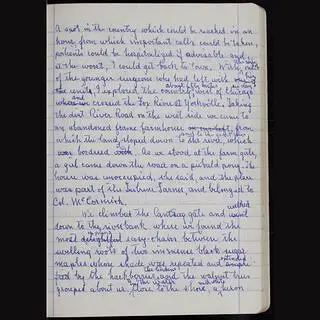
photo by: Edith Farnsworth House
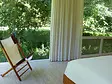
Six of Dr. Edith Farnsworth’s journals are available to view at the Newberry Library in Chicago, Illinois.
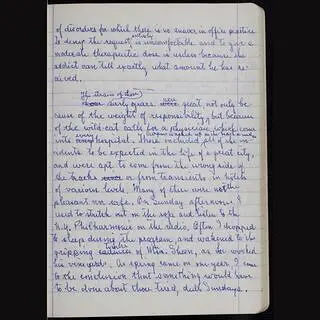
photo by: Edith Farnsworth House
In her journals, Dr. Edith Farnsworth reflects on her life, career, and the construction of her home, the Edith Farnsworth House.
Dr. Edith Farnsworth left six journals behind, all of which are currently available to view at the Newberry Library in Chicago, Illinois. In the first three volumes, Farnsworth writes about her life and career. She also reflects on her work with architect Ludwig Mies van der Rohe during the construction of her home, the Edith Farnsworth House. The remaining three volumes contain Farnsworth’s translations of poetry and prose, including her translation of The Little Locksmith by her friend Katharine Butler. Two recent publications, Nora Wendl’s Almost Nothing: Reclaiming Edith Farnsworth and Michelangelo Sabatino’s The Edith Farnsworth House, use Farnsworth’s journals to recount her perspective on and collaboration with Mies van der Rohe in designing her iconic Modernist home.
“The glass house took on life and became my own home.”
Dr. Edith Farnsworth
Belle Grove (Middletown, Virginia)
Learn about Francis Hunnewell (last private owner of Belle Grove)
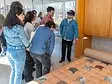
See Belle Grove’s Executive Director Kristen Laise give a presentation on Francis Hunnewell, who bequeathed the property to the National Trust in the 1960s.
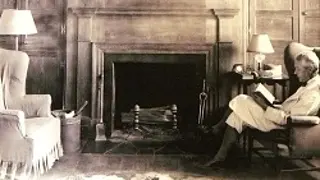
photo by: Belle Grove
Francis Hunnewell, who kept a diary while living at Belle Grove, reads a book in his library.
Francis Hunnewell, the last owner of Belle Grove, left one diary behind. In it, he shares details about his life at Belle Grove, including guest visits and his daily activities. While he worked as a lawyer, in his personal time Hunnewell was a passionate and accomplished botanist. His diary reflects his interest in botany and includes information about plantings on the property, some of which continue to live onsite today. Learn more about Hunnewell in the video above from Belle Grove, which delves into some of the entries in his diary.
“Feb. 23: Min 42 - Max 57 degrees. Clear & windy. Draba verna in blossom, also alders. Silver maples back of house just coming into bloom. Walked along creek in morning. Motored to Elizabeth Furnace in afternoon. ”
Francis Hunnewell
Gari Melchers Home & Studio (Falmouth, Virginia)
In 1908, artist Gari Melchers was commissioned to paint a portrait of President Theodore Roosevelt. Melchers kept a diary during the two weeks he spent at the White House, offering a glimpse into one of the most prestigious commissions of his career. In his letters and diary entries, Melchers documents his observations and experiences at the White House and comments on how his painting is progressing. In a letter to his wife, he recounts, "… Mrs. Roosevelt took me around upstairs and downstairs to find a suitable studio and we decided on the small dining room which has a north light." Melcher’s diary entries, which are available to read online, provide detailed information about his painting process and day-to-day activities as the president’s guest.
“Monday, March 2, 1908 / worked on the head today – but got my beginning too heavy – Mrs Roosevelt came in and entertained the President until later Mr Loeb came in to take her place.”
Gari Melchers
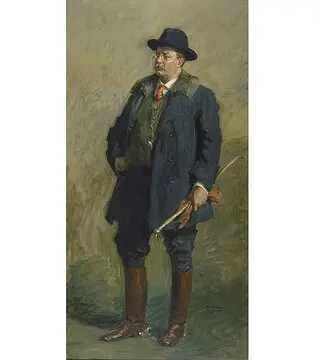
photo by: National Museum of Asian Art, The Smithsonian Institution
While painting President Theodore Roosevelt’s portrait, artist Gari Melchers kept a diary during his two-week stay at the White House.
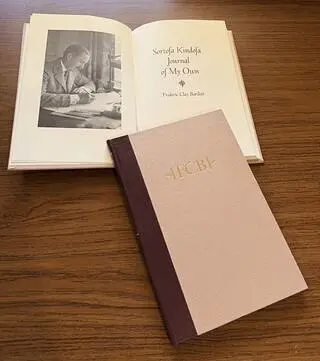
photo by: Bonnet House Museum & Gardens
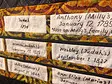
Frederic Clay Bartlett’s reflections on art and travel were published in his memoir “Sortofa Kindofa Journal of My Own.”
Bonnet House Museum & Gardens (Fort Lauderdale, Florida)
During his life, artist and art collector Frederic Clay Bartlett wrote a memoir. Titled Sortofa Kindofa Journal of My Own, it was published posthumously in 1965, 12 years after Bartlett’s death in 1953. In it, Bartlett recounts the wonder he experienced at the World’s Columbian Exposition, also called the Chicago World’s Fair, of 1893. He attended the exposition with fellow artist Robert Allerton. Inspired, Bartlett and Allerton left Chicago to study painting overseas after the exposition. Bartlett, who was born and raised in Chicago, reflects on this pivotal experience in his memoir. He also shares his musings on art and travel, including his time studying fine art in Munich, Germany.
“Tired we were, for as was our custom, we had walked past miles and miles of pictures, a never-ending wild excitement for us.”
Frederic Clay Bartlett
Save Historic Places That Tell Our Full American Story
When you join the National Trust, you help save historic and culturally significant places nationwide.