5 Stories of Women at Work at National Trust Historic Sites
Who springs to mind when you think about the history of labor? These five National Trust Historic Sites strive to ensure that, when we reflect on our collective past, our remembrance will feature strong, creative, and hardworking women whose labor helped build the world we live in today.
Tenement Museum (New York City, New York)
When the Tenement Museum opened in 1988, its determination to highlight working-class immigrants’ dignity and resilience changed the way museum visitors thought about who was central to the American story.
Today, the museum continues to introduce visitors to people whose names might be unfamiliar, but whose stories reflect immigrants’ tenacity. Caroline Schneider and her husband, John, owned and operated a saloon that became a popular gathering spot for mid-19th century German immigrants. Natalie Gumpertz’s work as a seamstress supported her family after her husband’s sudden disappearance in 1873. Mrs. Wong, a Chinese American immigrant, similarly worked in New York City’s garment industry—just a century after Natalie Gumpertz did.
The Tenement Museum offers visitors insights into women’s labor through the objects it preserves, from sewing machines to crockery. Ensuring that women’s work in individual households is conveyed to museumgoers, the site makes sure visitors leave with a vivid picture of what women’s work inside and outside the home looked like across the 19th and 20th centuries.

photo by: Tenement Museum
Mrs. Wong and one of her daughters, Yat Ping.
Belle Grove (Middletown, Virginia)
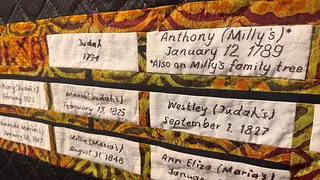
photo by: Belle Grove, Inc.
Detail of one of Belle Grove’s memorial quilts.
Belle Grove was once a plantation owned by the Hite family, who enslaved more than 270 people. Today the site commemorates how Black women strove to keep their families together amid slavery’s brutalities.
Recent research at Belle Grove suggests that Isaac Hite Jr. prioritized purchasing women who had children or were pregnant. Kristen Laise, Belle Grove’s executive director, hypothesizes that Hite wanted to buy potential wet nurses: women who could suckle babies who were not their own. Abba nursed Eleanor Madison Hite’s children; Philis was tasked with breastfeeding Ann Hite’s babies. Being assigned this role may have provided enslaved women with more security from being sold, as lactation wasn’t a service just anyone could provide. The job was as necessary to the plantation’s continued success as harvesting crops and tending cattle.
Between 2021 and 2025, Belle Grove created two memorial quilts commemorating the enslaved people who lived and worked on the plantation. The quilts are designed to highlight their family trees. Collaboratively producing the quilts took four years, which might seem like a long time. However, the work wasn’t simply sewing: it was building new relationships. Laise put it best: “We could have done this faster. But the process had as much value as the product.”
Shadows-on-the-Teche (New Iberia, Louisiana)
According to Adam Foreman, Shadows-on-the-Teche's executive director, “the story at the Shadows is one of strong women.” For example, Charity Polk, an enslaved seamstress, used her skills to care for the children enslaved at the Shadows. When ordered to sew their clothes, she discarded the one-size-fits-all pattern she was given. Instead, she made clothes that appear to have been tailored to fit individual children. She was reportedly punished, but perhaps Charity felt that acknowledging children’s individuality through made-to-measure clothes was worth that risk.
The Shadows was primarily run by the Weeks family matriarch, Mary. Plantation employee John Merriman’s letters make it clear that she ran her business with an iron fist. A letter dated July 5, 1840, expresses Merriman’s dismay at being harshly chastised for supposed inefficiency and idleness, noting that Mary seemed “astonished and displeased from the whole tenure [tenor] of your letter.” As he leaped to his own defense, he wrote that all the log cabin construction he’d overseen “is pretty considerable in two and a half years to be called nothing.”
When Mary was away from the plantation, Louisa Bryant, an enslaved house worker, ensured that the Shadows continued to run smoothly. After the Civil War, Louisa’s youngest daughter, Anne, supported herself as a seamstress and nurse. Her efforts to save money paid off when she became a landowner, purchasing property from the Weeks family.
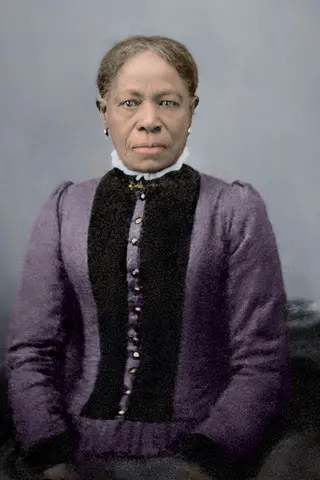
photo by: Shadows-on-the-Teche
Portrait of Anne Bryant, a nurse, seamstress, and landowner.
Edith Farnsworth House (Plano, Illinois)

photo by: William Dunlap/Courtesy David W. Dunlap
Edith Farnsworth with Beth Dunlap at the Farnsworth House in 1951.
Dr. Edith Farnsworth's significance used to recede into the background at the Edith Farnsworth House in light of architect Mies van der Rohe’s legacy. However, during 2021-22's Edith Farnsworth Reconsidered, the site reclaimed her significance as an innovative research physician and kidney specialist. After commissioning van der Rohe to construct her house—intended as a retreat from professional stressors—Farnsworth became the first doctor to successfully treat nephritis using the hormone ACTH. Her subsequent professional success skyrocketed. Farnsworth later remembered that “the simultaneous realization of Mies’ invention in architecture and mine in fluid and salt metabolism seemed to me just as it should be, and absolutely thrilling.”
According to Executive Director Scott Mehaffey, to recognize the house’s 75th year, staff decided, “Rather than looking back, we’d look forward to larger and more diverse audiences, shifting perspectives.” The Edith Farnsworth House is inviting diverse creatives to exhibit their work, expanding the site’s ability to tell stories beyond both Farnsworth and van der Rohe. Following a summer exhibit of architectural photographs taken by Cristina Kahlo (Frida Kahlo’s grandniece), the house will host a collection of midcentury furniture on loan from the University of Mexico’s Contemporary Art Museum.
Hotel de Paris Museum (Georgetown, Colorado)
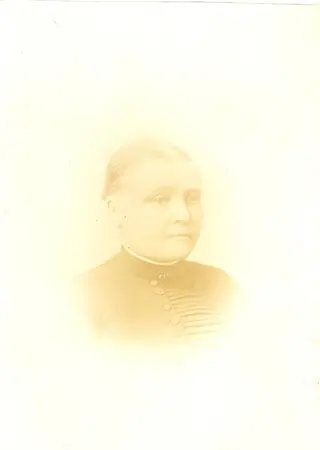
photo by: Hotel de Paris
Portrait of Sophie Gally.
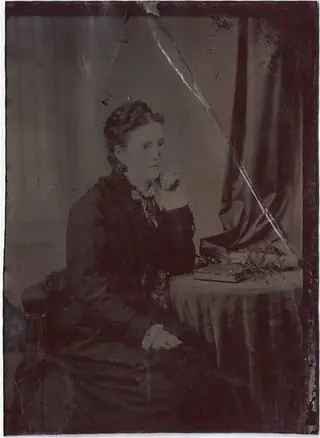
photo by: Hotel de Paris
Portrait of Sarah Curtin.
The Hotel de Paris, founded by French immigrant Louis Dupuy, was a bastion of high-class cosmopolitanism, incongruously smack-dab in the middle of a small mining town. Dupuy hired his aunt, Sophie Bladier Gally, to become the hotel’s housekeeper. She immigrated to the U.S. from Nîmes, France with her husband, Jean-Antoine Gally, but his subsequent disappearance from the historical record suggests she may have been widowed. Gally lived in Room 3 of the hotel, which is now preserved by the museum much as she left it. Her furniture, decor, and personal effects give viewers a window into her everyday life.
Gally oversaw everyday operations in the hotel. Hotel de Paris Museum’s Executive Director Kevin Kuharic suspects that “Sophie took on most duties and was treated by locals as a proprietress” alongside Dupuy. Cleaning the hotel’s rooms, washing and pressing linens, and scrubbing the hotel’s bathrooms and renowned commercial kitchen required diligent attention. A chambermaid, Sarah Curtin, assisted Gally in maintaining guests’ quarters, and the hotel’s porter and gardener, John Touk, may have also been responsible for the hotel’s laundry.
Although Gally reportedly didn’t speak English or know how to read, Dupuy left the hotel to her following his unexpected death in 1900. Sadly, Gally herself died four months after him. Her death may have been caused by long-term exposure to the Red Seal Lye scouring powder she used in her daily work; lye, absorbed through the skin, can trigger liver failure. Gally and Dupuy share a gravestone, reading “Deux Bon Amis”: Two Good Friends.
Save Historic Places That Tell Our Full American Story
When you join the National Trust, you help save historic and culturally significant places nationwide.