Black Hawk Bridge over the Mississippi River
A community-submitted Section 106 success story in Lansing, Iowa.
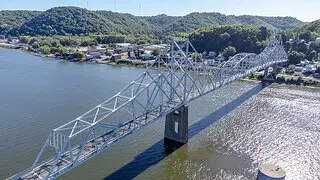
photo by: Wikideas1 via Wikimedia (CC by 1.0)
While Black Hawk Bridge was demolished in 2025, the new bridge that will be constructed in its place will reflect its original design.
Built in 1931, the Black Hawk Bridge, also known as the Lansing Bridge, is a riveted cantilever truss bridge that is named after Sauk leader Chief Black Hawk. Crossing the Mississippi River, the bridge connected Lansing, Iowa with Crawford County, Wisconsin. Its unique design, which included a center arch and two tower-like trusses, was beloved by the communities on either side. The only bridge for 30 miles, it carried about 2,100 vehicles per day.
While the bridge was a familiar landmark, its narrow design impacted the crossing of larger vehicles, and barges on the river navigated it with some difficulty due to the location of the bridge piers. These and other safety issues, including the bridge’s aging steel, resulted in the Iowa Department of Transportation (DOT) and the Federal Highway Administration (FHWA) initiating the Section 106 process to begin exploring options for replacing the bridge.
Through the survey, identification, and mitigation processes, consulting parties surveyed the area, identified several interesting archaeological sites, and were able to document histories that may have otherwise been lost. The affiliated public input sessions ultimately led the Iowa and Wisconsin departments of transportation to a design that was actually quite reflective of the old bridge rather than in one of the current trending styles.
What Would Have Been Lost
While the Black Hawk Bridge was demolished in 2025, the Section 106 process allowed the community to have a say in what replaced it. Public input on the design of the bridge was very important to the local community and went a long way in making the loss of the original bridge more acceptable to local citizens. Additionally, by surveying the local area, several archaeological sites were identified and consulting parties were able to document their histories, which otherwise may have been lost. The story of the Black Hawk Bridge is captured in this documentary on YouTube, which was published by the Iowa DOT in 2024.
Visit Section 106 Under Threat for more success stories, information, and to take action.