The Door County Granary
A community-submitted Section 106 Success Story in Sturgeon Bay, Wisconsin.
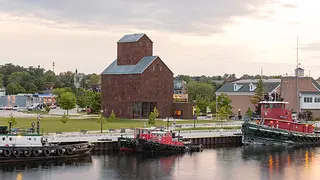
photo by: Kevin J. Miyazaki/Sturgeon Bay Historical Society.
Door County Granary, a former grain silo is now a community space.
The Door County Granary, listed on the National Register of Historic Places as the Teweles and Brandeis Grain Elevator, has been located in the heart of Sturgeon Bay, on the shoreline since 1901. Originally built on a dock, the lakebed around the Granary has been filled in over time and the Granary is a reminder of the once-booming agricultural economy on the waterfront. The Granary is unique as a wooden, port grain elevator which serviced the transportation of grain through the Great Lakes and by railroad. The Granary is one of only two wooden grain elevators that remain on the Great Lakes.
The Sturgeon Bay Historical Society's rehabilitation project, the Door County Granary, located in Sturgeon Bay, Wisconsin, benefited from Section 106 review after it was earmarked for federal appropriations funding through the USDA in fiscal year 23.
During Section 106 review, the Wisconsin State Historical Preservation Office's comments encouraged the project to maintain the building's massing through continuation of its reclaimed siding, avoid too many modern elements, and maintain its utilitarian aesthetic. Changes were made to the final exterior design and the community benefits from the Granary's continuity as it has stood on the shoreline in the heart of Sturgeon Bay for 125 years.
What Would Have Been Lost
Proposed modern elements may have taken away from the building's historic utilitarian aesthetic.
The section 106 process required direct commentary from the Wisconsin State Historic Preservation Office. Their commentary encouraged avoidance of modern elements to the exterior siding especially in areas that remained intact. This helped save cost on the project, acknowledged the historic utilitarian aesthetic as it always has been seen for 125 years, and maintained the building's massing. If enacted, the July 2026 proposed changes to the Section 106 regulations by the Advisory Council on Historic Preservation would not involve stakeholder input until much later in the process, if at all, likely resulting in a different outcome for this project.
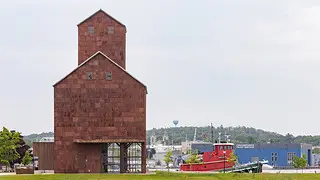
photo by: Kevin J. Miyazaki/Sturgeon Bay Historical Society.
The Granary is one of only two wooden grain elevators that remain on the Great Lakes.
Additionally, maintaining the appropriate siding during the rehabilitation process, protects the future of the grain elevator's interior components. Thanks to the USDA grant, the Door County Granary is open to the public as a living history museum, five days a week, free of charge, and acts as a public gathering space for community-wide events on the waterfront. The Granary provides public restrooms and water filling stations for users of the city's park space.
Visit Section 106 Under Threat for more success stories, information, and to take action.