Drive to Prosperity: Manufacturing Drive and Bluff Boulevard
A community submitted Section 106 Success Story in Clinton, Iowa.
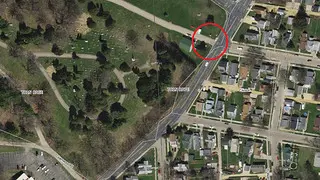
photo by: Drive to Prosperity Project
An aeriel view of the area surrounding Springdale Cemetery. The red circle indicates the location of the roundabout which is still under construction.
The Drive to Prosperity project corridor extends through an area of Clinton containing numerous historic-age properties and cultural resources, including historic buildings, cemeteries, archaeological sites, and historic districts. Cultural resource investigations completed for the project identified and evaluated these resources to determine their eligibility for the National Register of Historic Places and their relationship to the proposed improvements. Among the identified resources was Springdale Cemetery, a historic burial ground located on the northeast side of Bluff Boulevard. City records indicate that a parcel associated with the cemetery was conveyed to the City of Clinton in 1858 for use as a potter's field.
When a proposed roundabout appeared likely to affect Springdale Cemetery and could have required residential relocations, the Section 106 consultation process gave the City, Iowa Department of Transportation, Federal Highway Administration, State Historic Preservation Office, designers, and cultural resource professionals time to reconsider the design and identify a better solution. The resulting smaller roundabout met transportation needs while limiting impacts to the cemetery, retaining the historic function of its entrance portals, and avoiding additional residential relocations.
This project demonstrated that consultation can produce a better project. The roadway improvements were not stopped; the design was refined so that the project could proceed while minimizing effects on historic properties and avoiding unnecessary losses to the important heritage of the surrounding community.
What We Would Have Lost
The most important loss would have been the opportunity for consultation to influence the project while meaningful design alternatives remained available. The consultation process allowed participants to reduce the roundabout footprint and develop an alternative that addressed the roadway needs while retaining the historic function of the contributing entrance portal and protecting the remainder of the cemetery. Without the identification and consultation requirements provided by Section 106, there would have been no comparable federal review process requiring those properties to be considered before construction.
This experience demonstrates why Section 106 matters: it promotes thoughtful problem-solving and can produce better outcomes for historic places and the people who value them.
Consultation produced a design balancing transportation needs, residential concerns, and preservation of Springdale Cemetery.
Submitted via the National Preservation Partners Network. Visit Section 106 Under Threat for more success stories, information, and to take action.