Former Summersville Federal Building and Postal Office
A community-submitted Section 106 Success Story in Summersville, West Virginia.
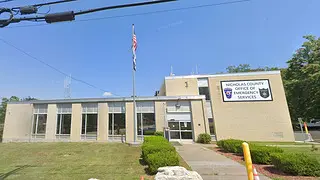
photo by: Google Street View
Exterior of the former Summersville Post Office, which is now the Nicholas County Sheriff’s Department and the Nicholas County Homeland Security and Emergency Management Center.
In 2021, the General Services Administration (GSA) announced the conveyance of the former Summersville Federal Building and Post Office to Nicholas County, West Virginia. The 10,843 square-foot building was determined eligible for the National Register of Historic Places as an example of the federal government in a small rural West Virginia community and the work of the architectural firm, Irving Bowman and Associates. This did not stop the GSA from divesting Summersville of the property after no longer being needed for the U.S. Postal Service, U.S. Department of Agriculture, and the U.S. Army Corps of Engineers used the building.
Instead, Section 106 consultation helped local residents weigh in on the future use of the building and obtain ownership. Recognizing the historic significance and importance of this building, the GSA established a protective covenant that was attached to the deed to provide protection for it. In 2024, the building was transformed into the Nicholas County Sheriff’s Department and the Nicholas County Homeland Security and Emergency Management Center.
During the renovation, the 911 center was upgraded with a full state-of-the-art dispatch equipment, phone system and radio, which shows that buildings do not have to remain as they are for these kinds of agreements to benefit the public. This is a great opportunity for the community to use this property to benefit the public. This conveyance ensures the building continues to serve Nicholas County residents, and GSA is proud to partner with them to make this happen.
What Would Have Been Lost
The building could have been lost or sitting vacant and dilapidated.
The 10,843 square-foot building was determined eligible for the National Register of Historic Places as an example of the federal government in a small rural West Virginia community and the work of the architectural firm, Irving Bowman and Associates. The Section 106 review process, which included community consultation, helped the U.S. General Services Administration (GSA) make efficient use of its real estate assets, as it worked with federal agencies to identify and repurpose unneeded federal property. If enacted, the July 2026 proposed changes to the Section 106 regulations by the Advisory Council on Historic Preservation would not involve community input until much later in the process, if at all, likely resulting in a different outcome for this project.
Visit Section 106 Under Threat for more success stories, information, and to take action.